Last updated October 31, 2026
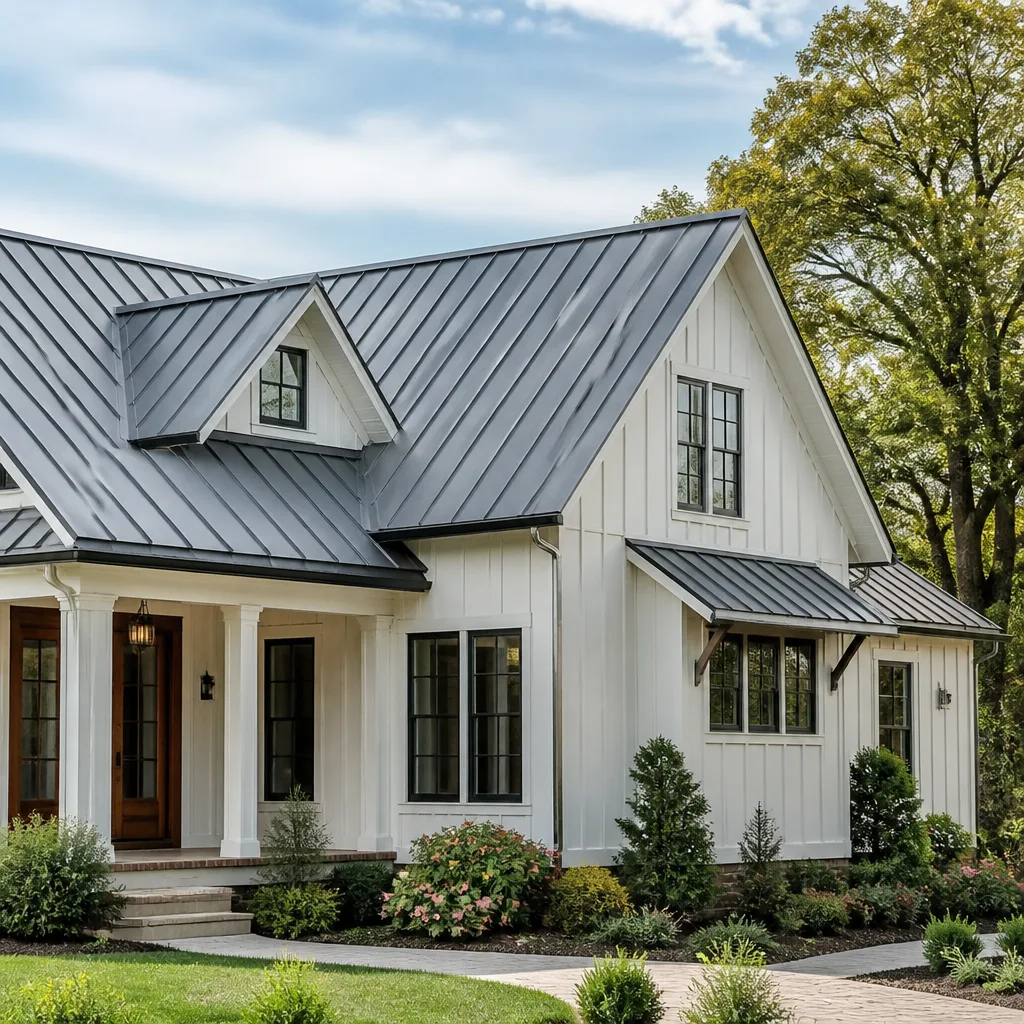 Metal roofing
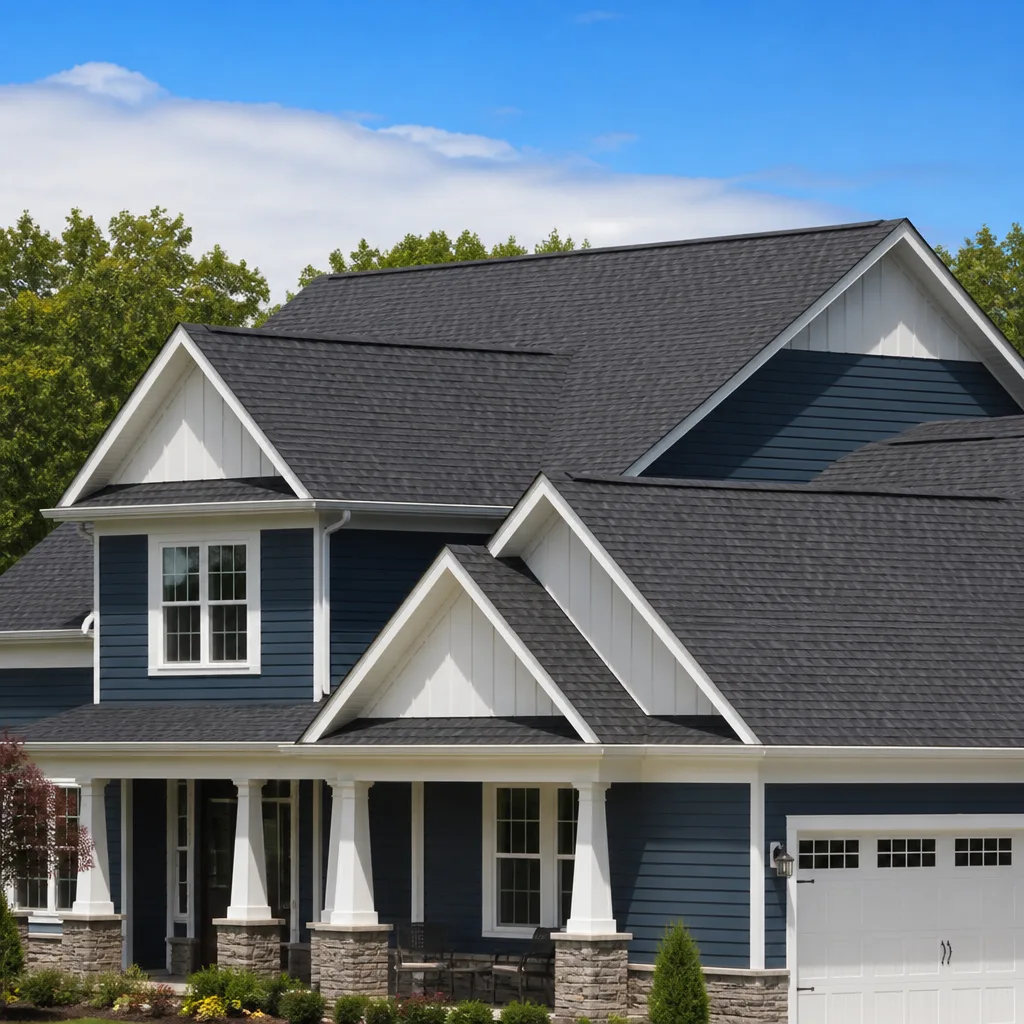
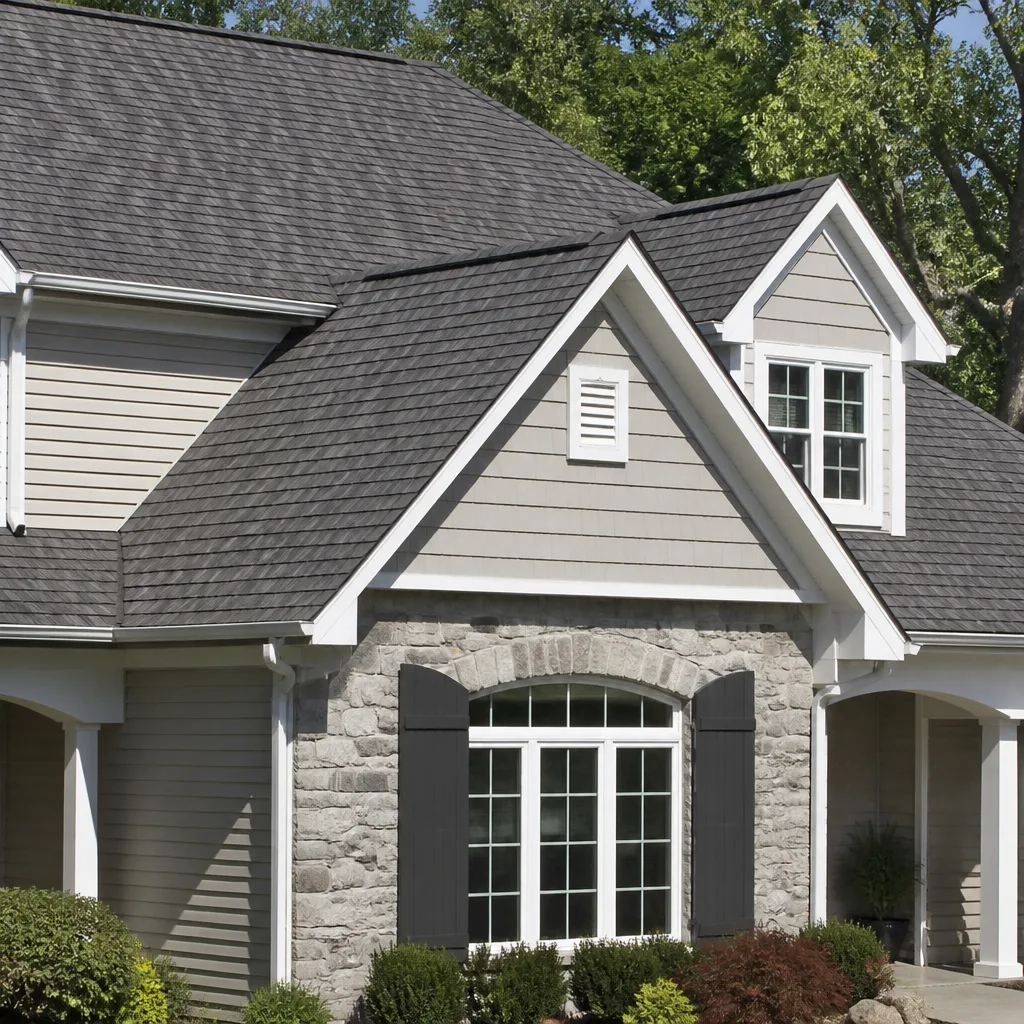 Architectural shingles
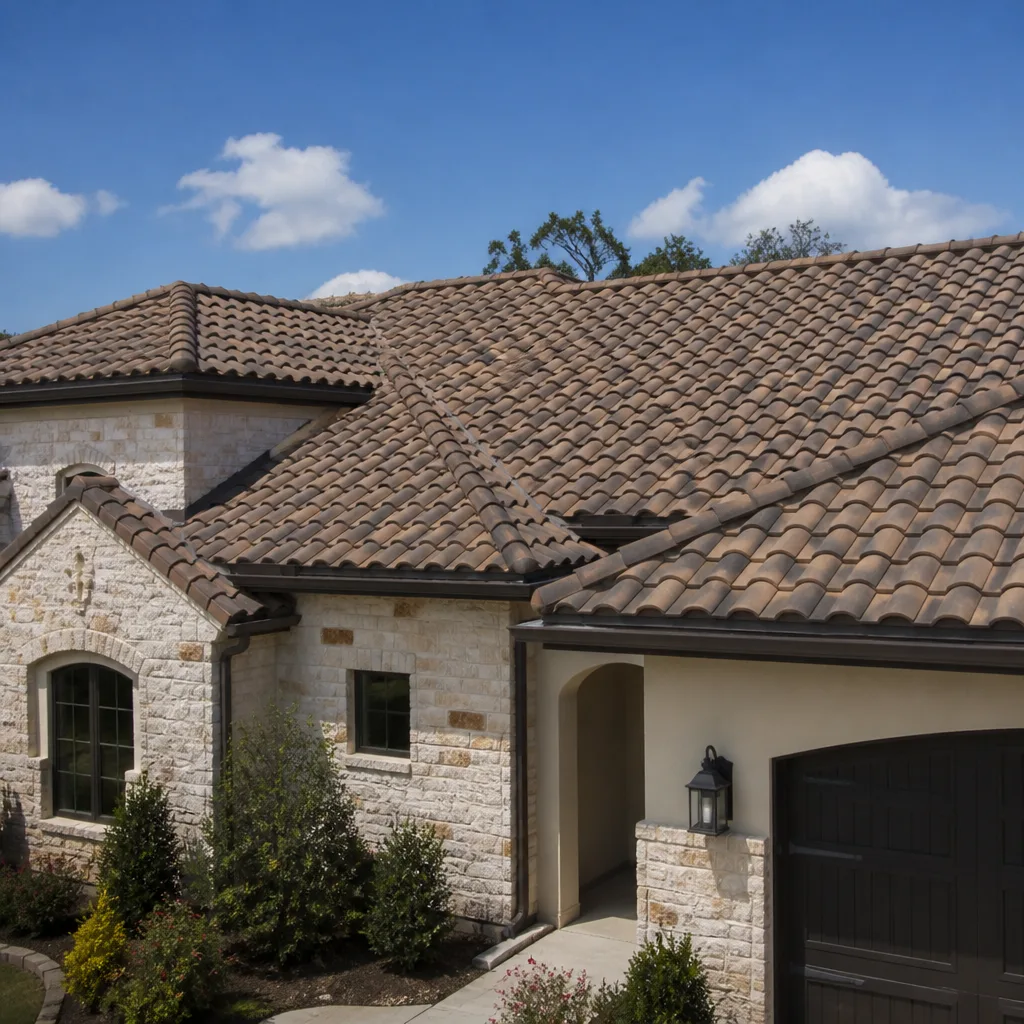 Tile roofing
 GAF
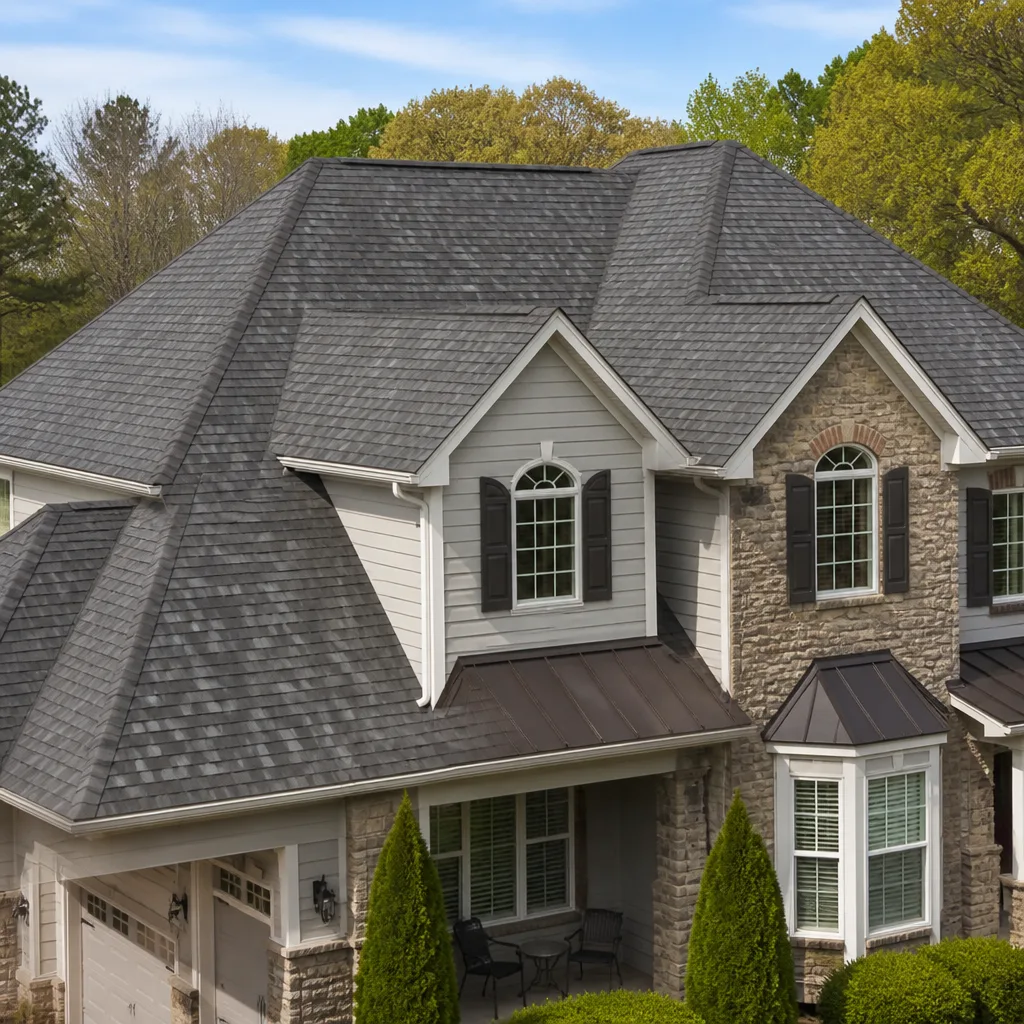 Owens Corning
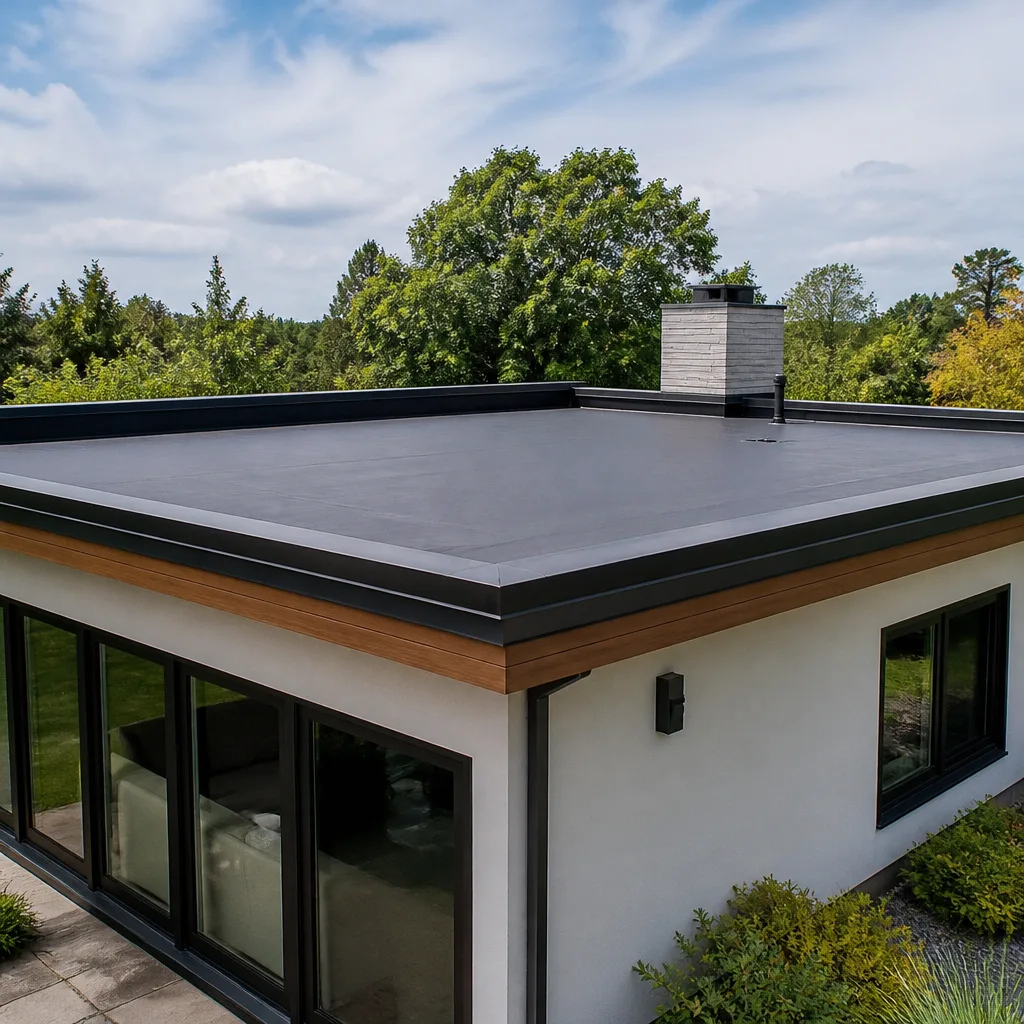 Flat & low-slope
Free roof inspection with deck photos before we talk money - GAF and Owens Corning certified installation
DIY vs Professional Roofing: The Hollywood Homeowner’s Decision Guide
In California, a homeowner can legally reroof their own house without a contractor’s license. What they can’t do is skip the permit, ignore the structural code requirements, or escape the insurance consequences if the job goes wrong. That legal quirk creates a strange situation in Hollywood, where hillside homes with 8/12 and 10/12 pitches sit next to 1920s bungalows with low-slope composition roofs, and the honest answer to “should I do it myself?” depends far less on your handiness than on the geometry of your roof and the paper trail you’re willing to manage. This guide walks through the real decision framework we use with Hollywood homeowners, alongside our Roof Repair Troubleshooting: Common Problems and How to Fix Them for context on typical failures: the California permit rules, the genuine skill thresholds for different roof types, the hidden costs that shrink the DIY savings gap, and the specific tasks where a capable homeowner can genuinely save money without taking on unacceptable risk.
Styles & brands we work with
Quick Answer
DIY roofing in Hollywood makes sense for a specific, narrow set of tasks: minor flashing repairs, surface documentation, and small sealant work on low-slope roofs you can safely walk. Full reroofs, any work on steep-pitch hillside roofs or Spanish tile, and anything involving structural decking repair should be left to a licensed professional, because in Hollywood those projects routinely run into permit requirements, insurance exclusions, and safety conditions that erase the DIY savings entirely.
Table of Contents
- California Law: Where the Line Actually Is
- Hollywood’s Housing Stock: The Geometry Problem
- The Hidden Costs of DIY Roofing
- What’s Genuinely DIY-Appropriate
- Using an Inspection to Make the Call
- Material Selection: Why It Changes Everything
- Common Mistakes to Avoid
- When to Call a Professional
- Frequently Asked Questions
- The Bottom Line
California Law: Where the Line Actually Is
California Business and Professions Code Section 7048 allows a homeowner to perform construction work on their own primary residence without holding a contractor’s license, provided the property is not intended for sale within one year of completion. Roofing falls under this exemption. You, as the owner-occupant of a Hollywood home, can legally tear off shingles, install underlayment, and nail down new roofing material on your own house.
But the permit requirement does not go away. The California Building Code requires a permit for any roof replacement where the sheathing, decking, or structural members are touched, and most municipalities in Los Angeles County enforce this strictly. A simple shingle overlay where you’re not disturbing the deck may not require a permit in some jurisdictions, but any tear-off that exposes the decking does. Hollywood falls under the Los Angeles Department of Building and Safety, and LADBS inspectors are specific about three things: the underlayment class matches the roof pitch, the nailing pattern meets manufacturer specifications, and the roof assembly carries the required fire rating for the Wildland-Urban Interface zones that cover much of the Hollywood Hills.
Here’s the part most DIY guides gloss over. If you pull a permit as a homeowner, you are legally the general contractor of record. That means you are responsible for every code compliance detail, you must schedule and pass the inspections, and if something fails, the correction orders come to you. For a flat-roof bungalow in East Hollywood, that’s manageable. For a steep hillside roof where the inspector requires specific fastening systems for tile, it is a different job entirely.
The insurance picture is even less forgiving. Homeowner’s insurance policies in California generally cover damage caused by sudden events, but they exclude damage caused by faulty workmanship. If you reroof your own Hollywood home and a leak develops because you didn’t properly flash a chimney, your insurer can deny the resulting interior damage claim. And because the work was unlicensed, you have no contractor’s liability policy to fall back on, no workmanship warranty to enforce, and no path to recover the repair cost from anyone but yourself. Professional roofing contractors carry general liability insurance and workmanship warranties precisely because this risk is real. That single distinction, not skill, is the reason many Hollywood homeowners who are perfectly capable with a nail gun still hire a professional for full replacements.
Hollywood’s Housing Stock: The Geometry Problem
Hollywood is not one housing type. It’s a patchwork of at least four distinct roof profiles, and the DIY calculus changes completely depending on which one you own.
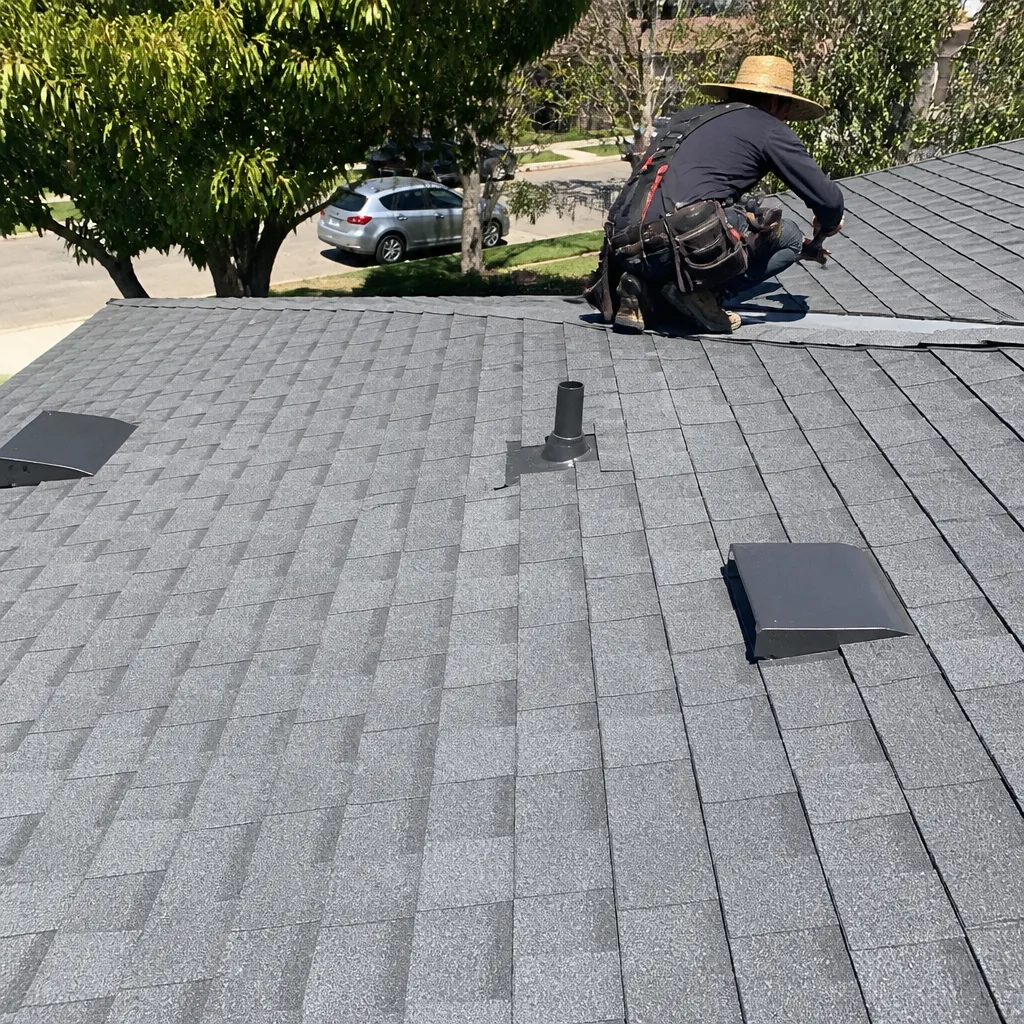
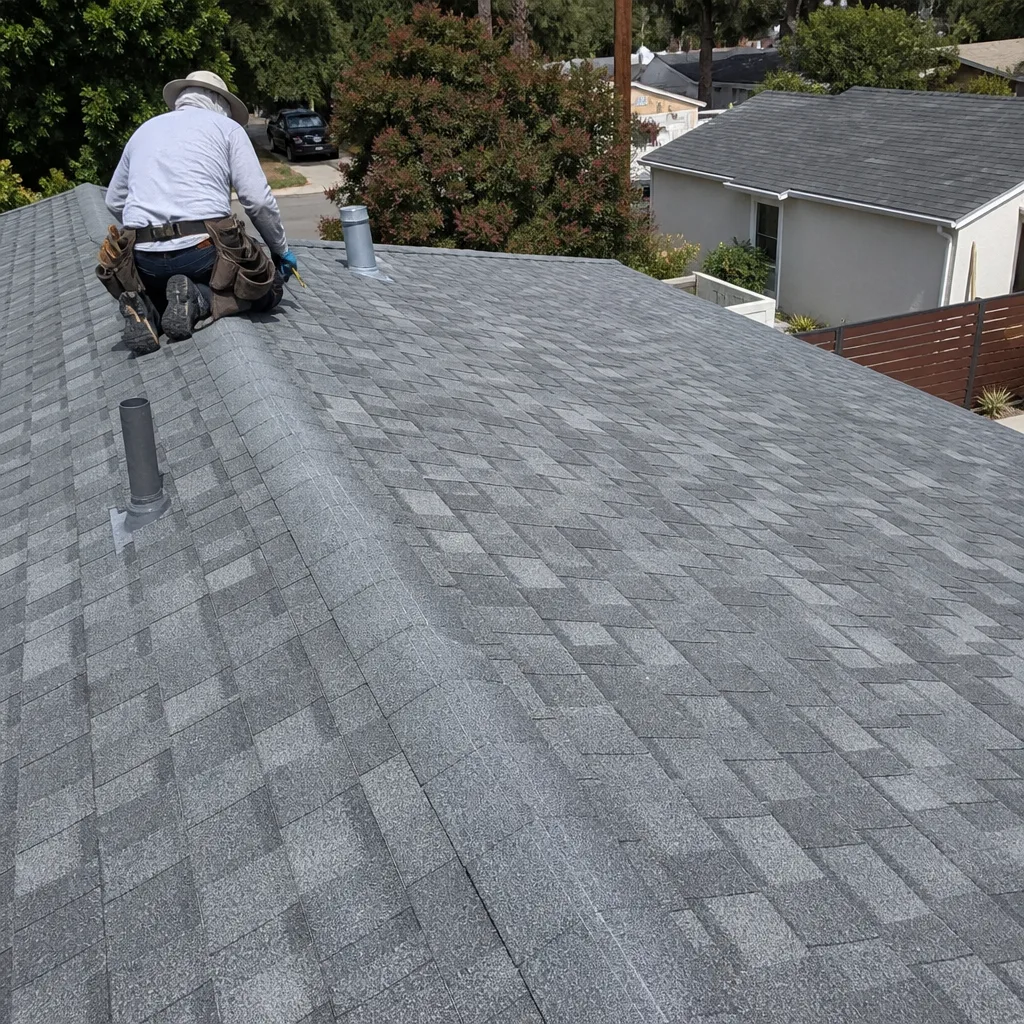
The 1920s and 1930s bungalows clustered around Hollywood Boulevard, Spaulding Square, and the flats north of Melrose mostly carry low-slope composition shingle roofs, often 3/12 or 4/12 pitch. These are, comparatively speaking, the friendliest DIY surfaces in the city. You can stand on them without a harness, the material is forgiving, and the repair logic is straightforward. A careful homeowner with solid instructions can handle isolated shingle replacement or flashing sealant on these roofs.
The hillside homes in Beachwood Canyon, the Hollywood Hills, and the neighborhoods climbing up from Cahuenga Boulevard are a different animal. These roofs frequently pitch at 8/12, 10/12, or steeper, which translates to an angle where standard roofing boots lose traction and a fall from the eave means a 20-to-40-foot drop onto a slope. Safety harnesses, roof jacks, and fall-arrest systems become mandatory, not optional. We’ve seen homeowners in the Hollywood Hills who comfortably handle their own interior renovations decide within ten minutes on a 10/12 tile roof that this particular project is not a weekend job.
And then there’s Spanish tile. Hollywood’s Mediterranean Revival and Spanish Colonial stock, from Hancock Park to the Oaks, was built with clay and concrete barrel tile that looks simple but is deceptively difficult to work with. Tile roofs are heavy; walking on them incorrectly cracks the tile. The tile pieces interlock in a specific overlap pattern, and the underlayment, historically, is a hot-mopped or torch-down system that requires specialized tools and experience. A homeowner can replace a single cracked field tile with some coaching. Trying to reset tile valleys or repair flashings on a tile roof without training typically results in more damage than the original problem.
The honest rule for Hollywood: if you can stand comfortably on your roof without a harness and the material is composition shingle or rolled roofing, DIY is physically feasible. If you need a harness, if the surface is tile, or if the slope makes you think twice about walking it, the safety calculus has already made the decision for you.
The Hidden Costs of DIY Roofing
The most common DIY justification is cost savings, and on paper it looks compelling. Professional roof replacement in Hollywood runs $12,000 to $25,000 depending on size and material; DIY materials for the same job might cost $4,000 to $8,000. The gap looks like $8,000 to $17,000 in your pocket.
It narrows fast. Here’s what actually happens.
- Permit fees and plan requirements. LADBS permits for a roof replacement run several hundred dollars, and larger projects may require a plan review that adds time and cost. You’ll also need to demonstrate compliance with the California Energy Code’s cool-roof requirements for steep-slope roofs in many Hollywood zones, which may require you to select specific shingle products with documented solar reflectance values.
- Equipment rental. A roofing nailer, compressor, shingle cutter, and ladder jacks rent for $150 to $300 per day. A tear-off of an average Hollywood roof takes a first-timer three to five days. Budget $600 to $1,500 just for tools.
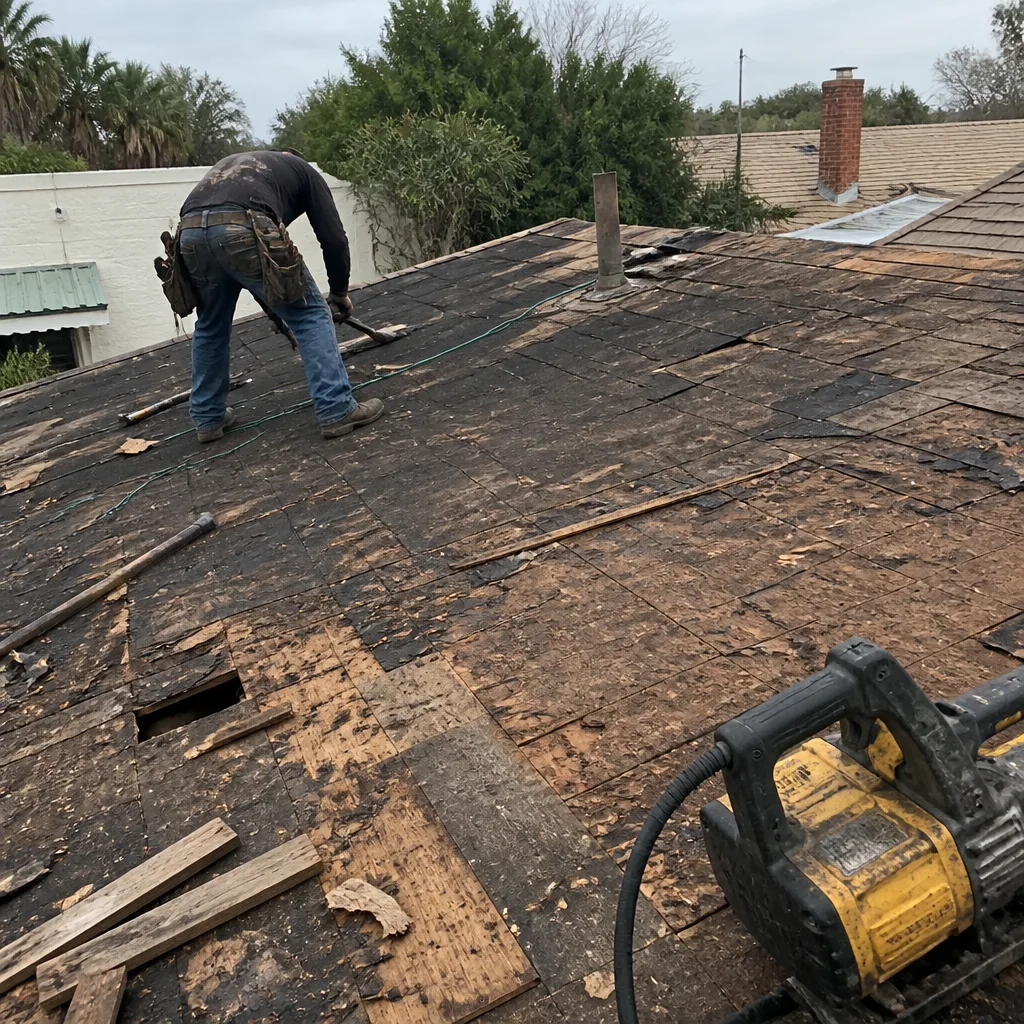
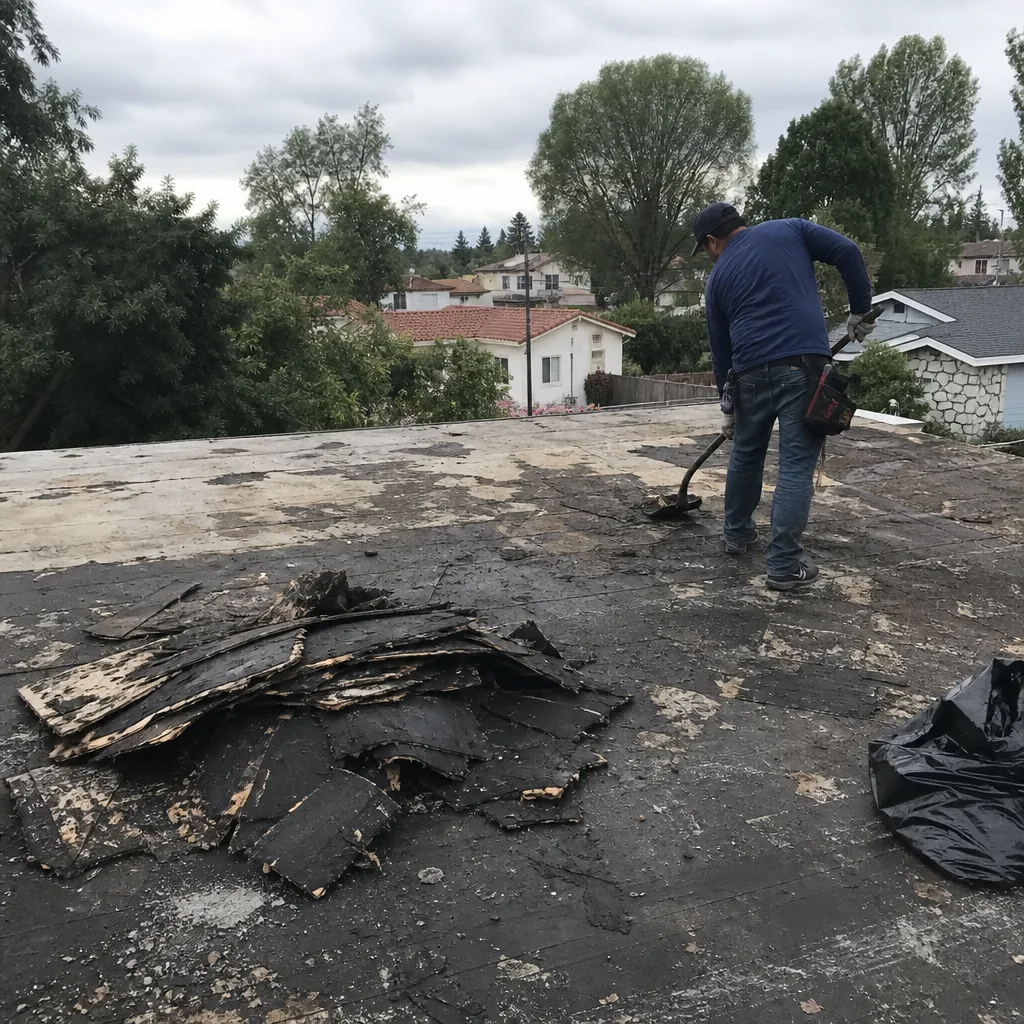
- Debris disposal. A full tear-off of a 1,500-square-foot roof produces three to five tons of material. Dumpster rental in Los Angeles runs $400 to $600 for a 20-yard bin, plus disposal fees that can push the total to $800 or more. You cannot put roofing debris in your regular trash.
- Material minimums and waste. Roofing materials sell in bundles and squares. If your roof needs 1,600 square feet of shingle coverage, you’ll buy 1,700 plus a waste allowance; if you buy short and have to order a second delivery, you pay another delivery fee. First-time DIYers consistently overbuy underlayment and underbuy ridge cap.
- The rework risk. If an LADBS inspector fails your underlayment installation, you pull it up and redo it. If you mis-flash a dormer, you’ll be back on the roof in a year patching a leak, or worse, paying a professional to tear open your fresh work to fix the underlying mistake.
Net those costs against the savings, and the real DIY margin on a full Hollywood roof replacement is typically $4,000 to $8,000 on a job that will take a first-timer two full weekends, carries genuine injury risk, and exposes you to insurance denial on future claims. For some homeowners, that’s still worth it. But it should be an informed calculation, not a back-of-the-envelope guess.
What’s Genuinely DIY-Appropriate
None of this means a Hollywood homeowner should never touch their own roof. There are real tasks where DIY is the right call, and doing them yourself can extend your roof’s life and delay a full replacement by years. Our Roof Repair Maintenance Checklist for Hollywood Homeowners covers the full routine, but here’s the honest shortlist.
- Roof surface documentation. After heavy rain or wind, photograph your roof from a ladder or from an upstairs window. Document missing granules, lifted shingle edges, and any debris accumulation. This isn’t glamorous, but it gives you a baseline to track changes and gives a roofing professional useful information when you eventually call for an inspection.
- Flashing sealant touch-ups. Roof flashing, the metal stripping that seals joints around chimneys, vents, and skylights, can develop small gaps as caulk dries and cracks. On a low-slope roof you can safely reach, clean the area, apply a high-quality roofing sealant, and extend the life of the flashing by several years. The key is surface preparation: old caulk must be removed, the metal must be clean and dry, and the sealant must be rated for roofing, not general-purpose caulk from the hardware store.
- Gutter and scupper clearing. Hollywood’s winter rains arrive in concentrated bursts, and clogged gutters on a low-slope flat roof can cause ponding water that deteriorates the roofing membrane. Clearing gutters, downspouts, and roof scuppers after leaf-fall and before the rainy season is a task any able-bodied homeowner can handle with ladder safety awareness.
- Single shingle replacement on a composition roof. If one shingle has blown off and the surrounding field is in decent shape, a patient homeowner can replace it. You need a flat bar, roofing nails, and careful technique to avoid damaging the shingles above. Watch for the critical mistake: never nail through the exposed bottom edge of the shingle you’re installing; the nail must land in the nail line, where it will be covered by the overlapping shingle above.
One caution on every item on this list: these tasks are appropriate on low-slope roofs you can safely stand on. If any of this work requires a harness, a steep-pitch ladder setup, or walking on tile, it stops being DIY-appropriate and becomes a professional call. The line is not about skill. It’s about the literal ground beneath your feet.
Using an Inspection to Make the Call
The smartest thing a Hollywood homeowner can do before deciding between DIY and professional work is to get a real roof inspection, as outlined in our How to Hire a Roofing Contractor in Hollywood: A Step-by-Step Guide. Not a “free estimate” from a company that’s actually just pricing a replacement, but a genuine condition assessment that tells you what your roof actually needs right now.
Here’s how this reframes the decision. A Hollywood homeowner who’s wondering whether to tackle a repair themselves is often working from a visual guess: there’s a stain on the ceiling, or some shingles look worn, or the roof is “getting old.” A professional inspection maps the actual condition, identifies the specific failure points, and separates what’s urgent from what can wait. That converts a vague DIY-versus-pro decision into a specific set of tasks, some of which may be genuinely DIY-appropriate and some of which clearly are not.
Roof Inspection in Hollywood is, in our view, the single most underused service in the city. We do standalone inspections, with a written condition report, no obligation to buy anything from us. If that report tells you your roof needs two shingles replaced and three flashing points sealed, you can do that yourself with confidence. If it tells you your underlayment is failing over the entire eastern slope and the decking is soft in three places, the DIY conversation is over, and you’ve just saved yourself the expensive mistake of discovering that after you tore off half your roof.
The inspection also gives you something else: a documented baseline. Insurance claims, home sales disclosures, and future repair decisions all get easier when you have a professional record of your roof’s condition from a specific date. If you do minor DIY work after the inspection and something else fails later, you’ll know the failure wasn’t caused by your work, and you’ll have the professional documentation to prove it.
Material Selection: Why It Changes Everything
The DIY-versus-professional question is often discussed as if roofing materials were interchangeable commodities, but in Hollywood, material choice drives the entire difficulty curve, and it also drives the cost conversation when you do hire a professional.
Composition asphalt shingles are the most DIY-accessible material: they’re light, they cut cleanly with a utility knife, and the installation principles are well-documented. CertainTeed’s Landmark line and Owens Corning’s Duration series are both common in Hollywood and both go down with standard nailing patterns that a careful homeowner can learn.
Concrete and clay tile are the opposite end of the spectrum. Tile roofs weigh six to ten pounds per square foot, they require specific underlayment systems, and they’re unforgiving of installation errors. IKO’s tile underlayment products are excellent when paired with professional installation, but tile work is not the place to learn roofing.
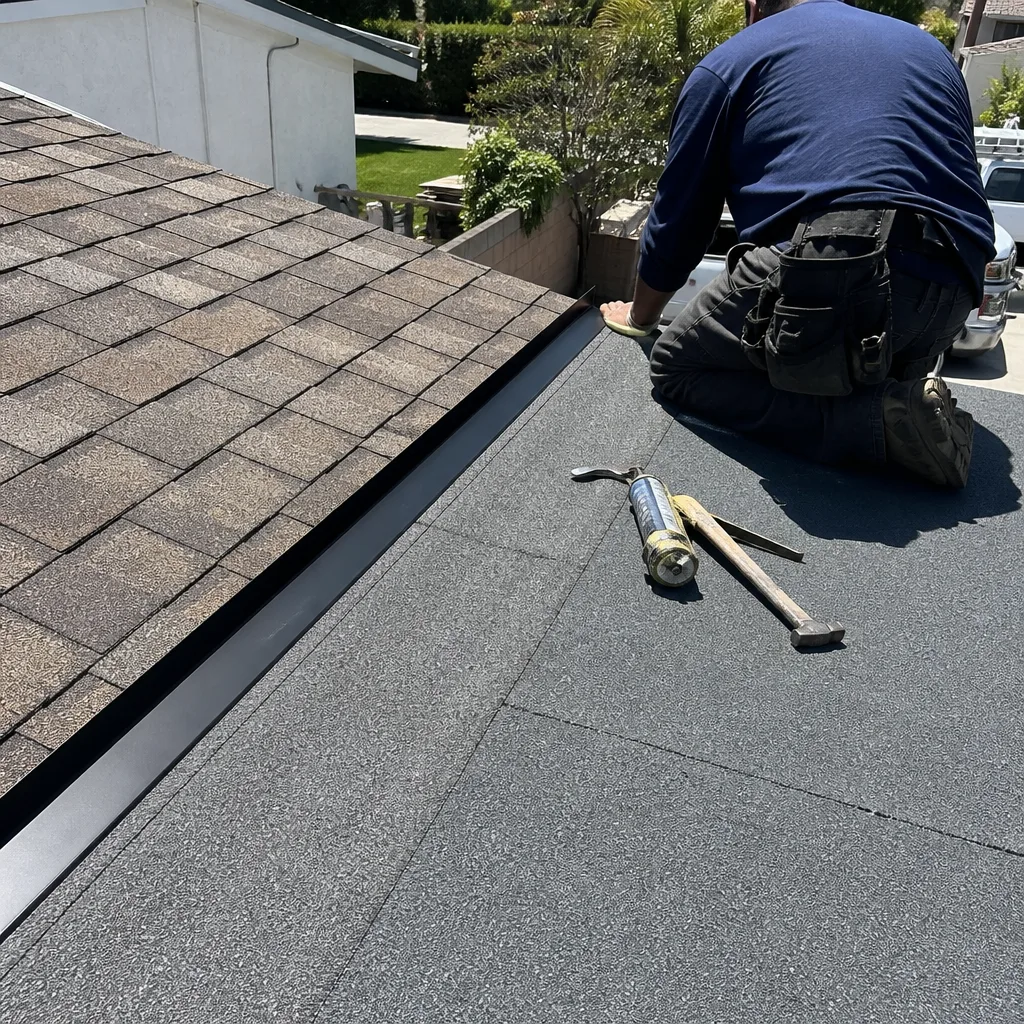
Flat and low-slope roofs, which cover many Hollywood apartment buildings and mid-century homes, use rolled or membrane systems that fall somewhere in between. A homeowner can handle small patching or sealing jobs on a flat roof if the surface is accessible and the damage is localized. A full flat-roof replacement involves torching, seaming, and detailing that absolutely requires professional experience.
One thing worth knowing: because Hollywood Roofing Co home installs across seven major material brands, including CertainTeed, Owens Corning, IKO, and Atlas, our material recommendations aren’t tied to a single manufacturer. That matters less for the DIY question and more for the professional quote you’ll eventually get, but it’s the reason we can tell you honestly when a specific material is a terrible fit for your roof. If you’re weighing a DIY repair on a roof that’s really beyond repair, the material conversation is part of what the Roof Replacement in Hollywood quote should clarify for you.
Common Mistakes to Avoid
- Treating the permit as optional. LADBS is not theoretical. Unpermitted roof work becomes a problem at resale, at inspection, and at claims time. If your project touches the decking at all, pull the permit. If you’re not sure whether it does, ask before you start.
- Underestimating steep-pitch safety. The most dangerous roof on a Hollywood home is one where the pitch is just steep enough to feel walkable but steep enough to slide. Anything above 6/12 requires fall protection. Full stop.
- Using the wrong sealant. Silicone caulk from the hardware store is not a roofing product. It degrades under UV exposure and loses adhesion on metal flashing within a season or two. Roofing sealants are formulated specifically for the thermal expansion and weather exposure a roof gets.
- Tearing off more than you can recover in a weekend. If you tear off 800 square feet of old roof and rain arrives before you’ve installed the new underlayment, you have an emergency, not a project. Hollywood’s rain comes in winter, and November through March is not the season to have an open roof deck for multiple weekends.
- Ignoring the cool-roof requirement. California’s Title 24 energy code applies to residential reroofing. Installing a non-compliant shingle on a steep-slope roof in Hollywood can fail inspection. This is a code detail most first-timers don’t know exists until the inspector mentions it.
- Assuming your insurance will cover DIY mistakes. It won’t. Workmanship defects from your own hand are excluded by standard homeowner’s policies. The only recovery is paying someone to fix it out of pocket.
- Confusing “simple” with “safe.” A flat roof in East Hollywood may look like the simplest possible surface, but flat roofs collect water, and water finds every seam. The detailing that keeps a flat roof watertight is not visible from the surface, which is why flat-roof leaks so often require a professional to diagnose.
When to Call a Professional
Call a professional when the roof is steep enough to need fall protection, when the material is tile, when the decking is exposed or damaged, when a permit is required and you don’t want to be the contractor of record, or when the job touches more than one roof surface. Also call when you’re not sure: that’s what an inspection is for.
For Roof Repair in Hollywood, the professional threshold is lower than for full replacement. A leak that’s been active through multiple rain events usually means water has gotten into places that won’t be visible until someone who knows what to look for investigates it properly. The repair cost on a small, early problem is almost always less than the repair cost on an ignored one that spent a season or two soaking into the decking. Hollywood Roofing Co offers free estimates in Hollywood, call (833) 589-7971 to schedule one.
Frequently Asked Questions
Yes, California Business and Professions Code Section 7048 permits a homeowner to roof their own primary residence without a contractor’s license, as long as the property isn’t being sold within a year of the work. The permit requirement from LADBS still applies to any work that exposes or replaces the roof decking. Call (833) 589-7971 if you want help determining whether your project triggers the permit threshold.
A mid-range composition shingle replacement on an average Hollywood home typically runs $12,000 to $20,000, while premium materials like CertainTeed or Owens Corning architectural shingles, or tile, push toward $20,000 to $35,000 or more. The actual number depends on roof size, pitch, decking condition, and material selection. Call (833) 589-7971 for a line-item quote based on your actual roof.
Safe DIY work includes clearing gutters and scuppers, documenting roof condition with photos, applying roofing-rated sealant to small flashing gaps, and replacing single composition shingles on low-slope roofs you can stand on without a harness. Anything steep, tile-covered, or structural is not DIY-appropriate, regardless of skill level. When in doubt, get an inspection before you get on the roof.
Insurance covers sudden, accidental damage like a tree falling on your roof. It does not cover damage caused by faulty workmanship, including your own DIY work. If your DIY sealant job fails and water damages the ceiling, the claim can be denied because the damage resulted from a workmanship defect. Licensed contractors carry liability insurance specifically because this exclusion is standard in California policies. Call (833) 589-7971 to talk through the insurance implications of your project.
Small repairs that don’t expose the decking, like replacing a few shingles or resealing flashing, generally don’t require a permit in Los Angeles. Any repair that involves removing and replacing underlayment, replacing decking, or altering the roof structure does. If you’re uncertain, LADBS can answer the question directly, or a roofing professional can tell you during an initial assessment. Call (833) 589-7971 to discuss your specific repair.
Yes, significantly. Tile is fragile underfoot, the interlocking pattern requires specific resetting techniques, and the underlayment system underneath the tile is more complex than the felt-and-shingle assembly on a composition roof. Replacing a single cracked tile with coaching is feasible for a careful homeowner, but any tile repair beyond that is professional territory. Hollywood’s Mediterranean Revival housing stock makes this a common question, and the honest answer is that tile work is not a learning surface.
The Bottom Line
The DIY-versus-professional decision for a Hollywood roof comes down to three questions. Is the work physically safe for you to perform? Is the scope small enough that a mistake won’t compromise the entire roof assembly? And are you prepared to absorb the permit, insurance, and rework consequences if it goes wrong? For small flashing and surface work on low-slope composition roofs, DIY is a legitimate choice. For full replacements, steep-pitch work, tile, and anything structural, hire a licensed professional. The inspection-first approach gives you the facts to make that call without guessing, and that’s the difference between saving money and creating a much more expensive problem. For ongoing care, see our more guides & resources.
Written by the team at Hollywood Roofing Co, serving Hollywood since 2016.
Ready to get an honest assessment of your roof? Call Hollywood Roofing Co at (833) 589-7971, or schedule a Roof Inspection in Hollywood to get a written condition report and a clear recommendation before you make the DIY-or-professional call.
See the difference
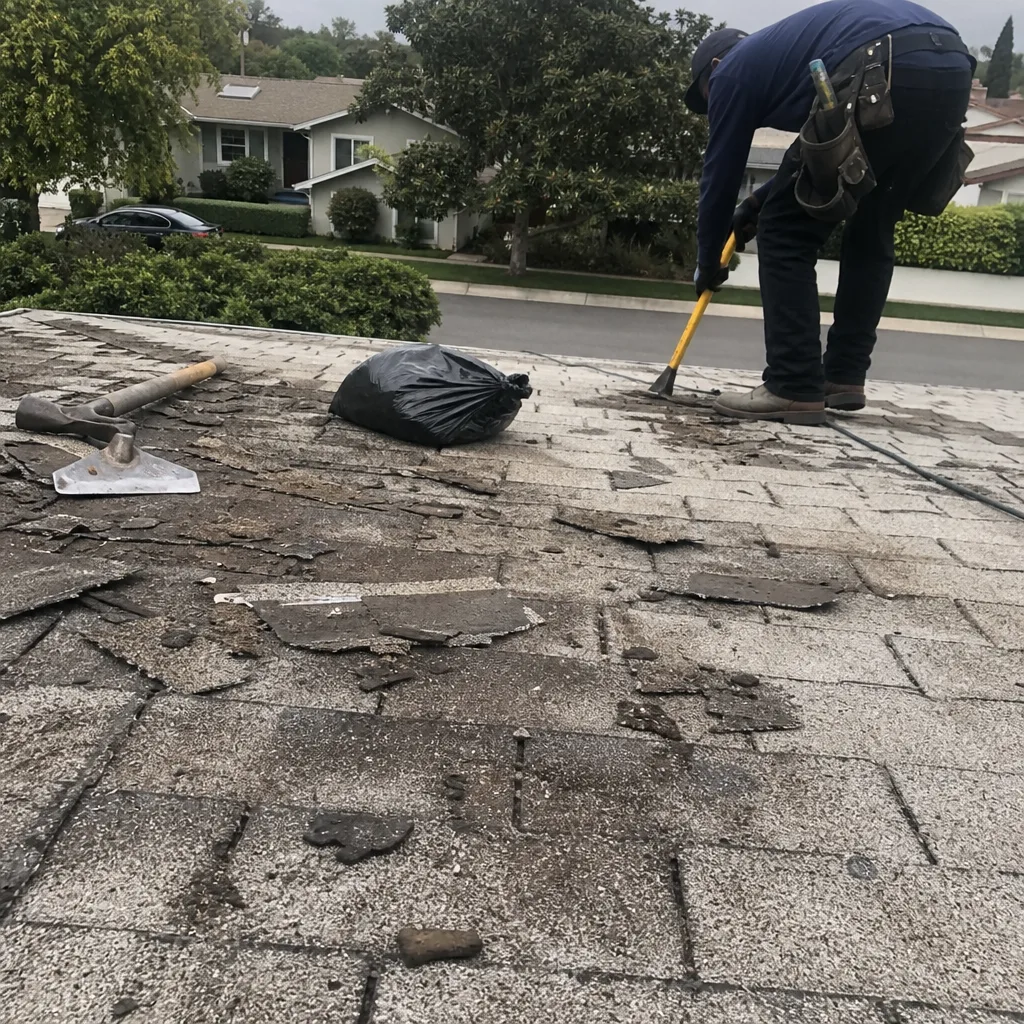 Before
 After
 Before
 After
 Before
 After