Last updated October 31, 2026
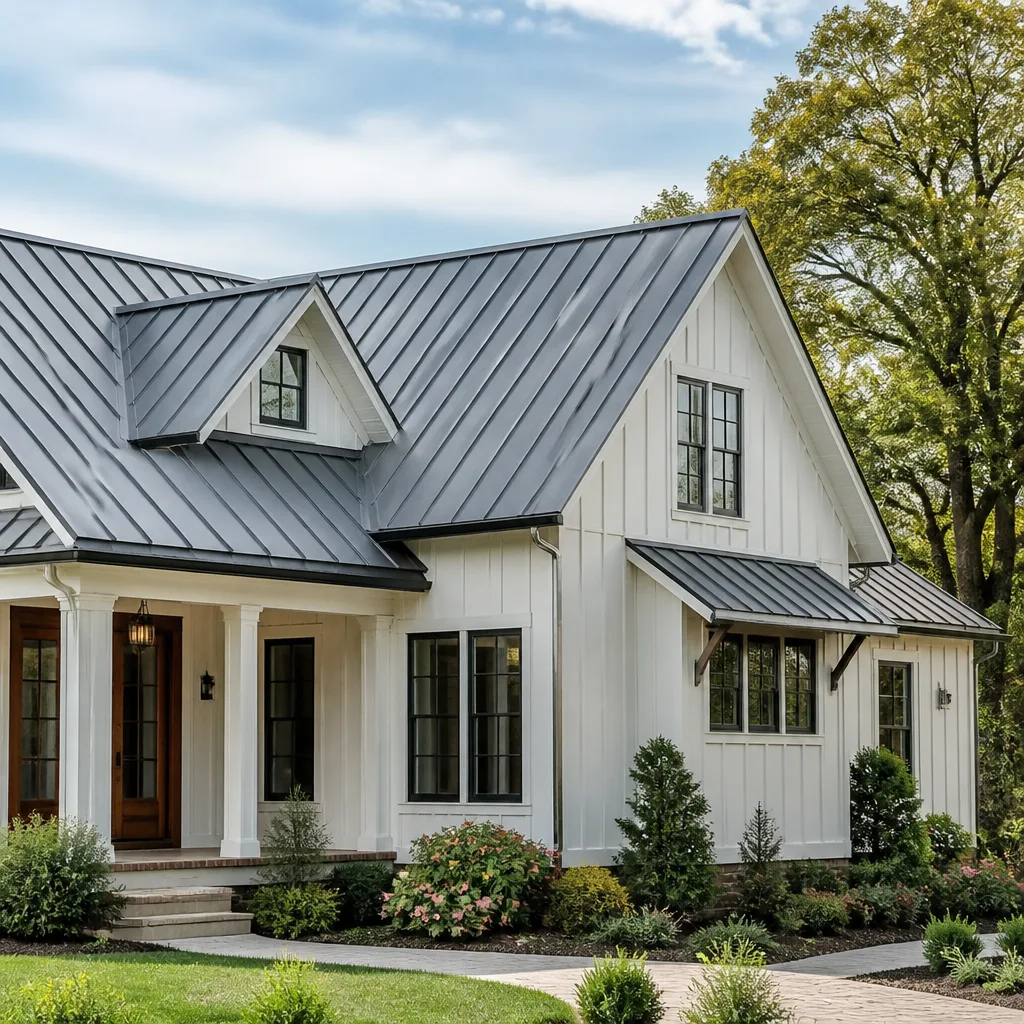 Metal roofing
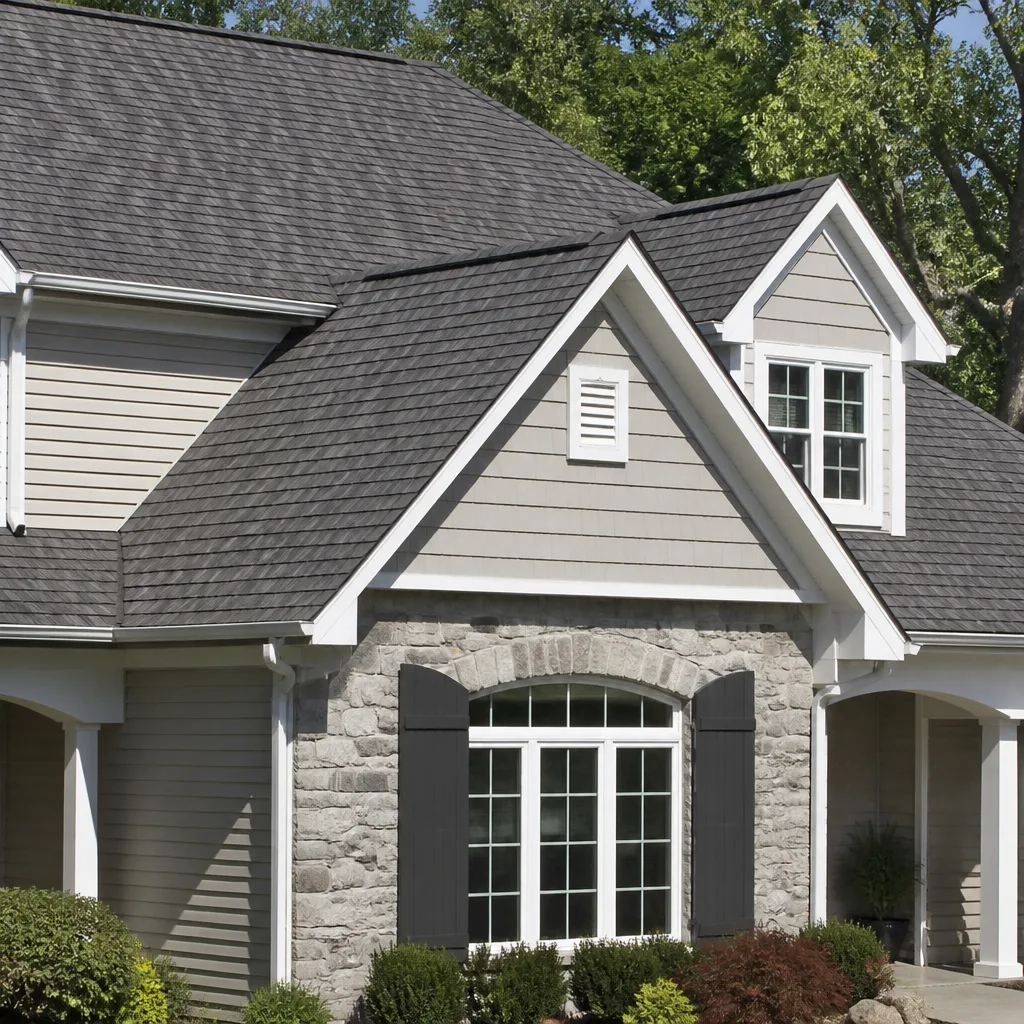 Architectural shingles
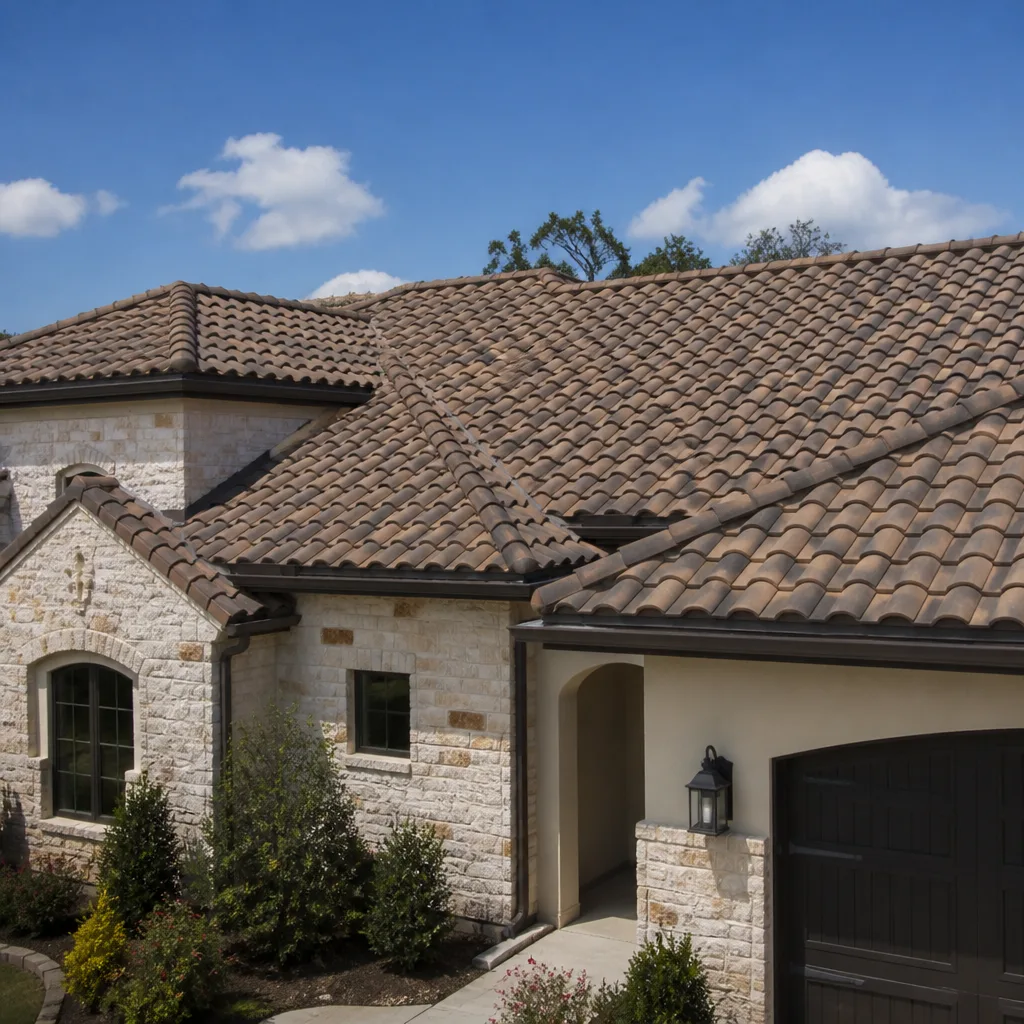 Tile roofing
 GAF
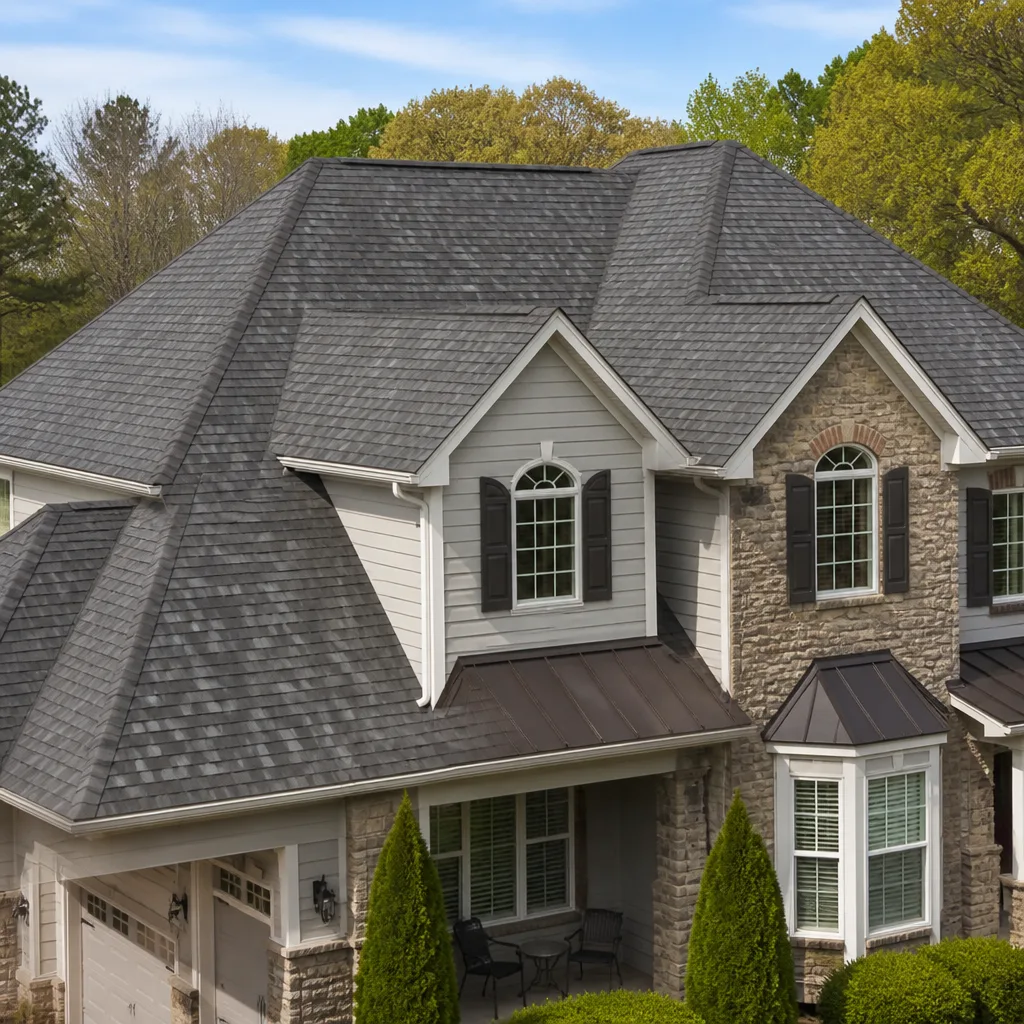 Owens Corning
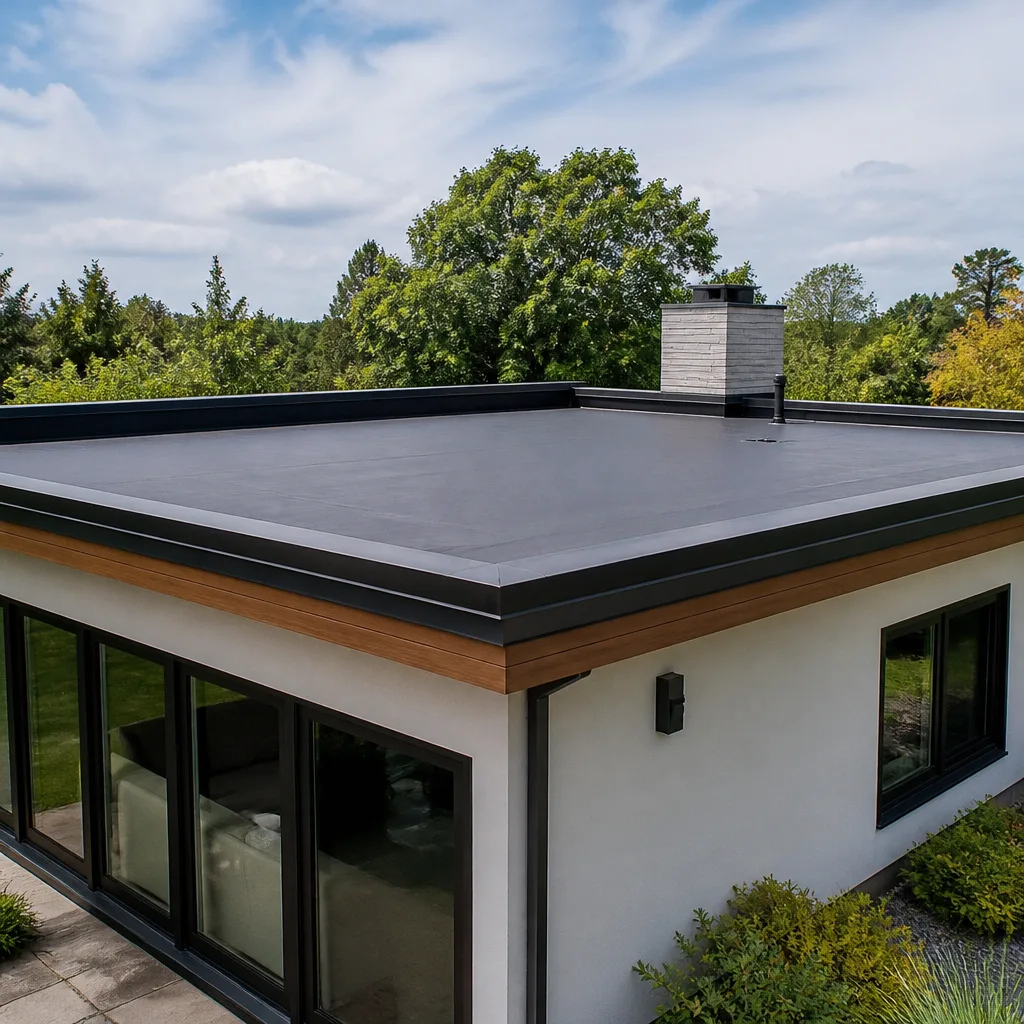 Flat & low-slope
Free roof inspection with deck photos before we talk money - GAF and Owens Corning certified installation
How to Hire a Roofing Contractor in Hollywood: A Step-by-Step Guide
After any major Santa Ana wind event, the number of roofing contractors operating in the 90028 zip code triples within 72 hours. Most of them are not local, and most of them won’t be reachable when something leaks in 18 months. This guide exists to give Hollywood homeowners a straightforward filter: a repeatable vetting process that separates craft and accountability from marketing and momentum. You’ll learn how to verify a license in under three minutes, read a contract like someone who intends to enforce it, compare quotes without getting lost in material jargon, and ask the questions that make a contractor’s office go quiet if they’re not legitimate. And because roof decisions in Hollywood carry real financial weight, our Roofing Cost Breakdown: The Hollywood Homeowner’s Reference for 2026 can help you budget accurately, and we’ll also cover how to spot the five contract clauses that storm-chasers hope you never read.
Styles & brands we work with
Quick Answer
Hiring a roofing contractor in Hollywood starts with verifying the company’s California State License Board (CSLB) status, then confirming they carry workers’ compensation and general liability insurance in their own name. From there, request itemized quotes from at least three contractors using identical material specifications, read the contract clauses on permits, disposal, and warranty before signing anything, and ask who specifically will be on your roof doing the work. A legitimate Hollywood roofing contractor will answer every one of these questions in writing without hesitation. The process takes a week of due diligence and protects you for the life of the roof.
Table of Contents
- Step 1: Verify the CSLB License Before You Even Pick Up the Phone
- Step 2: Confirm Insurance in the Contractor’s Own Name
- Step 3: Read the Five Contract Clauses That Expose a Storm-Chaser
- Step 4: Ask Who Actually Does the Work (And Why Subcontractor Disclosure Matters)
- Step 5: Compare Quotes on Scope, Not Price
- Step 6: Understand the Multi-Brand Advantage in Material Recommendations
- Step 7: Book the Inspection Before the Estimate
- Common Mistakes to Avoid
- When to Call a Professional
- Frequently Asked Questions
- The Bottom Line
Step 1: Verify the CSLB License Before You Even Pick Up the Phone
California requires every roofing contractor to hold an active license issued by the Contractors State License Board. This is not a formality. In Hollywood, where homes range from 1920s Spanish Revival bungalows to mid-century hillside builds, the roof systems are varied enough that unlicensed work tends to surface as leaks, voided insurance claims, and refusal letters from home warranty companies. The license check takes under three minutes and should happen before you let anyone onto your property.
Here’s the exact process:
- Go to CSLB’s website (search “CSLB license check”) and enter the contractor’s name or license number.
- Confirm the license classification. Roofing contractors in California must hold a C-39 Roofing Contractor classification, or a B General Building Contractor classification that specifically lists roofing in their scope. A C-39 means the contractor tested specifically on roofing systems. A B without roofing experience listed is a yellow flag.
- Check the status. It must say “Active” and show no suspensions, revocations, or pending disciplinary actions.
- Match the name. The name on the license must match the name on the contract you’ll eventually sign. If a salesperson gives you a business card with a different company name than the one on the license, ask why.
- Look at the bond and workers’ comp fields. Both should show as active. A contractor without a current workers’ comp policy is operating illegally if they have any employees, and you’re the one who ends up liable if someone gets hurt on your roof in Hollywood.
A CSLB license means the contractor passed testing, posted a bond, and maintains ongoing compliance. It does not guarantee craft, which is why the next steps matter. But it eliminates the bottom tier immediately, and in a market like Hollywood where out-of-state storm-chasers arrive after wind season, that filter alone removes a significant portion of the risk.
Step 2: Confirm Insurance in the Contractor’s Own Name
A CSLB license is the floor. Insurance is the wall. Any contractor working on a Hollywood roof needs two policies, both issued in the company’s legal name, not the owner’s personal name, and not a subcontractor’s policy. The first is general liability, which covers damage to your property if the crew drops a bundle of shingles through a skylight or a ladder goes through a window. The second is workers’ compensation, which covers injuries to the crew. If the contractor tells you they’re “insured,” ask for the certificate of insurance directly from the carrier and call the carrier to verify it’s still active. Policies get cancelled. Companies lapse.
In our experience, the contractors who hesitate to provide a certificate of insurance are usually the same ones who quote suspiciously low prices. The math doesn’t work any other way. Insurance is a fixed cost of doing legitimate roofing work in California. A contractor who isn’t paying it can undercut everyone else, and when something goes wrong, that savings becomes your liability. Hollywood homeowners with hillside properties on narrow lots should pay particular attention here: property damage claims on tight access jobs are not hypothetical. A dropped tool on a steep Hollywood Hills roof becomes someone else’s broken window very quickly.
Step 3: Read the Five Contract Clauses That Expose a Storm-Chaser
The contract is where legitimate Hollywood roofing contractors separate themselves from the operations that blow through after a wind event. You don’t need to be a lawyer to spot the difference. You need to know which clauses matter and what professional language looks like. Our Roof Repair Maintenance Checklist for Hollywood Homeowners covers routine care, and here are the five contract clauses to read word for word before you sign anything:
- Permit responsibility. The contract must state that the contractor pulls all required permits in their own name. In Hollywood, roofing permits go through the Los Angeles Department of Building and Safety. A contractor who asks you to pull the permit is asking you to accept liability for the work. A contractor who says permits aren’t needed for a full roof replacement is lying or doesn’t know better, and either way you don’t want them on your roof.
- Disposal and cleanup. The contract should specify exactly how tear-off debris will be removed: dumpster rental, haul-away schedule, and final cleanup. A vague line like “jobsite will be cleaned” is not enforceable. A professional line itemizes the dumpster, the haul-away, and a final magnetic sweep for nails. When we inspect Hollywood roofs after some contractors finish, the telltale sign of a rushed job is nails in the garden beds and shingle scraps in the neighbors’ yards.
- Change order protocol. The contract must describe how unexpected conditions will be handled. Old Hollywood homes frequently have decking rot that only becomes visible after the shingles come off. A professional contract states that any additional work requires a written change order signed by the homeowner before work proceeds. A storm-chaser contract often omits this entirely, which means surprises get billed at whatever rate the contractor decides.
- Warranty terms in writing. The contract should specify both the manufacturer’s warranty and the contractor’s workmanship warranty, with durations for each. Make sure the contractor’s workmanship warranty is in the contract itself, not promised verbally. A verbal warranty is worth exactly nothing in California.
- Payment schedule. A professional payment schedule in Hollywood is typically a deposit of 10-20% or $1,000 (whichever is less) per California law, with progress payments tied to completed milestones and a final payment held until inspection passes. Any contractor asking for more than 10% upfront or demanding full payment before the permit is signed off should be removed from consideration immediately.
Step 4: Ask Who Actually Does the Work (And Why Subcontractor Disclosure Matters)
The salesperson who presents well in your Hollywood living room is rarely the person on the roof with a nail gun. This matters more than most homeowners realize, because the crew’s workmanship is what determines whether the roof leaks in five years, and the crew’s employment status determines whether the warranty is enforceable. A contractor who sells a 25-year workmanship warranty but subs the labor out to a third party can quietly fold while the subcontractor, who never signed anything with you, walks away. Then you learn the hard way that the warranty was only as good as the relationship you never had with the people who actually did the work.
Ask these questions directly, and get the answers in writing:
- Who is the foreman on my project, and how long have they worked with your company?
- Does your company use employees or subcontractors for tear-off and installation?
- If subcontractors are used, who is responsible for their workmanship, and is that responsibility in the contract?
- What training or manufacturer certifications does the actual installation crew hold?
A contractor who runs their own crews has a direct line from your contract to the hands doing the work. That’s meaningful. It means the company’s reputation rests on its own people. When we built Hollywood Roofing Co home as a full-lifecycle roofing company, the point was straightforward: the same team that inspects a roof can repair it or replace it, with no handoff gaps and no finger-pointing between contractors. That continuity is exactly what you should be looking for when you ask who’s doing the work.
Step 5: Compare Quotes on Scope, Not Price
The most common mistake we see Hollywood homeowners make is comparing three quotes by looking at the bottom line and nothing else. That’s how a $14,000 quote for an inadequate scope beats a $17,000 quote for a correct one. To compare quotes properly, you have to read them like a build sheet, not a price tag. The material specification, the underlayment, the ventilation approach, the flashings, and the scope of decking replacement all have to match before the prices are even comparable.
Here’s the smart process:
- Standardize the shingle. Decide on a specific shingle line before you get quotes, or ask each contractor to quote the same line. For example, request a quote for GAF Timberline HDZ in a specific color. If one contractor quotes a lesser shingle, that’s not a cheaper roof, it’s a different roof.
- Standardize the underlayment. Ask for the same underlayment type across all quotes. A synthetic underlayment performs differently than a felt one, and the price difference is real. If you’re on a Hollywood hillside with two stories of roof, underlayment quality matters substantially.
- Standardize the decking assumption. Ask each contractor to quote based on the assumption that zero decking needs replacement, and to include a per-sheet price for any decking that does need replacement after tear-off. That way the base quotes are comparable, and the change order rate is fixed in writing.
- Standardize the flashings. Ask each contractor whether they’ll replace all pipe collars, step flashing, and valley flashing, or only some of it. This is where cheap quotes hide their savings.
When the scopes match, the price differences come down to overhead, labor quality, and profit margin. And those are legitimate variables. A contractor with their own trained crew, active insurance, and a local Hollywood address is going to cost more than an operation running day laborers out of a rented truck. That difference is real, and it’s exactly what you’re paying for when you choose accountability.
Step 6: Understand the Multi-Brand Advantage in Material Recommendations
Walk into a contractor’s office that is locked into a single manufacturer’s program, and you’ll get one answer to every material question: whatever they sell. That’s not necessarily a bad roof, but it’s a constrained conversation, and the constraint is built around the contractor’s supplier incentives, not your home’s needs. Hollywood roofs are not uniform. A 1920s Spanish Revival in Beachwood Canyon has different exposure, slope, and aesthetic considerations than a 1960s ranch in the flats off Melrose. The right material for one is not automatically the right material for the other.
A contractor authorized to install across multiple major brands, including GAF, CertainTeed, Owens Corning, and IKO, can give you a recommendation that’s actually a recommendation. The conversation changes from “this is what we sell” to “this is what we’d put on your home given the slope, the sun exposure, and your budget, and here’s why.” That’s the difference between a vendor and an advisor. Seven leading brands, one honest recommendation, as we like to say. When you hear a contractor criticize a major brand they don’t install, remember that they may be criticizing the brand because they can’t sell it, not because it’s a bad product.
In practice, this means you should ask every contractor you’re vetting this question: “Which shingle brands do you install, and which one do you recommend for my specific roof, and why?” If they install one brand, they’ll recommend one brand. If they install seven, including premium lines from GAF and CertainTeed and value lines from IKO, you’ll get an answer that respects the fact that your roof is a specific structure, not a generic one.
Step 7: Book the Inspection Before the Estimate
An estimate from a contractor who hasn’t walked your roof is a guess wearing a suit. In Hollywood, where roof conditions vary widely by age, material, and maintenance history, a legitimate contractor will insist on inspecting before quoting. We offer Roof Inspection in Hollywood as a dedicated, standalone service because a roof’s condition should be documented before anyone talks about replacement or repair. A proper inspection tells you what you actually have: remaining life in the shingles, underlayment condition, flashing vulnerabilities, ventilation problems, and any storm damage. From there, you can make an informed decision about whether you need a Roof Repair in Hollywood or a full Roof Replacement in Hollywood.
A contractor who quotes a full replacement over the phone without ever getting on a ladder is selling you something. A contractor who says an inspection is necessary, then documents the condition and tells you the roof has five years left and doesn’t need replacing yet, has earned your trust with honesty. Know exactly what your roof needs, nothing more. That’s the principle that should govern the entire hiring process.
Common Mistakes to Avoid
- Hiring the first contractor who knocks on your door after a windstorm. Storm-chasers in Hollywood operate on momentum and urgency. A legitimate local contractor doesn’t need door-knocking to fill a schedule. If someone shows up unsolicited saying they noticed roof damage from the street, thank them and do your own vetting.
- Accepting a quote without a written scope of work. A price with no scope is not a quote, it’s a starting point for a negotiation you’ll lose later. Insist on itemized scope: materials, underlayment, flashings, decking assumptions, disposal, and permits.
- Signing a contract that doesn’t name the contractor’s license number on the document itself. In California, the contractor’s license number must appear on all contracts. If it’s missing, the contract may be unenforceable, and the contractor may be in violation of CSLB rules.
- Using the lowest bid as a tiebreaker. In a Hollywood market with legitimate cost differences between licensed, insured, crew-owning contractors and lean operations, the lowest bid is often the most expensive roof you’ll ever buy.
- Skipping the permit to save money. Unpermitted roof work in Hollywood can complicate future home sales, trigger insurance claim denials, and fail inspection if you ever do pull permits for other work. The permit is not a bureaucratic nuisance. It’s the only independent verification that the work met code.
- Ignoring the warranty paperwork until after the job is done. Manufacturer warranties often require registration within a specific window after installation. If your contractor doesn’t handle this and doesn’t tell you to, you can end up with a roof that has no enforceable manufacturer warranty. Confirm the registration process in writing before work starts.
When to Call a Professional
Roof work is not a DIY category for anyone who values their safety, their home’s structural integrity, or their insurance coverage. Call a professional when you see water stains on interior ceilings, when shingles are missing after a Santa Ana event, when you notice granules accumulating in gutters, when you’re preparing to sell a Hollywood home and need a documented roof condition report, or when you simply haven’t had the roof inspected in more than five years. Even a visual inspection from the ground misses what a trained eye finds in the flashings, the underlayment, and the decking. Hollywood Roofing Co offers free estimates in Hollywood. Call (833) 589-7971 and we’ll walk the roof, document what we find, and give you an honest condition report you can act on at your own pace.
Frequently Asked Questions
A roof replacement in Hollywood typically ranges from $12,000 to $35,000 depending on roof size, material choice, slope, and the amount of decking replacement required. A mid-range architectural shingle on a standard 1,500 square foot Hollywood home generally lands between $14,000 and $20,000. The best way to get an accurate number is to book an inspection first, then get quotes from at least three licensed contractors using identical material specifications. Call (833) 589-7971 to schedule a free estimate with Hollywood Roofing Co.
Yes, roof replacements in Hollywood require a building permit through the Los Angeles Department of Building and Safety, and your contractor must pull the permit in their own name. If a contractor tells you a permit isn’t necessary for a full replacement, that’s a serious red flag. Unpermitted roof work can complicate home sales and insurance claims down the road.
You can verify any contractor’s CSLB license status in under three minutes on the Contractors State License Board website. Look for the C-39 Roofing Contractor classification, an active status with no disciplinary actions, an active bond, and active workers’ compensation insurance. The license number must appear on all contracts and must match the company name on the paperwork. Call (833) 589-7971 for a free estimate from a licensed Hollywood contractor.
It shouldn’t, unless the contract specifies legitimate change order provisions. A professional contractor will quote based on the assumption of no hidden decking damage, then include a written per-sheet price for any decking that does need replacement after tear-off. Any additional work should require a written change order signed by you before it proceeds. If the contract has no change order protocol, that’s a warning sign. Hollywood Roofing Co provides written line-item quotes with fixed pricing and no surprise change orders.
A typical single-family roof replacement in Hollywood takes 3 to 7 days depending on roof size, complexity, slope, and weather. A simple tear-off and re-roof on a one-story home may be done in 2 to 3 days, while a steep hillside roof with complex flashing and multiple levels can take a week or more. Your contractor should give you a written timeline before work starts and update you if that timeline changes. Call (833) 589-7971 for a project timeline specific to your home.
Yes, a multi-brand contractor gives you a more honest recommendation because they’re not locked into one manufacturer’s program and supplier incentives. A contractor authorized to install several major brands, including GAF, CertainTeed, Owens Corning, and IKO, can match the shingle to your Hollywood home’s specific needs: slope, sun exposure, architectural style, and budget. That’s the difference between buying what someone sells and getting what your roof actually needs.
The Bottom Line
Hiring a roofing contractor in Hollywood comes down to verification, documentation, and specificity. Verify the CSLB license and insurance before you let anyone on your property. Read the contract clauses on permits, disposal, and warranty like they matter, because they’re the only enforceable promises you’ll have once the work is done. Ask who’s actually doing the installation and whether the warranty follows the work. Compare quotes on identical scope, not bottom-line price. And choose a contractor whose material recommendations are driven by your home’s actual needs, not a single-brand sales program. Get the license number in writing, get the warranty in writing, and get everything documented before the first nail goes in. When you’re ready to move forward, call Hollywood Roofing Co at (833) 589-7971 for a free estimate, or start with a standalone roof inspection that tells you exactly where you stand.
Written by the team at Hollywood Roofing Co, serving Hollywood since 2016. For more guides & resources, visit our blog.
See the difference
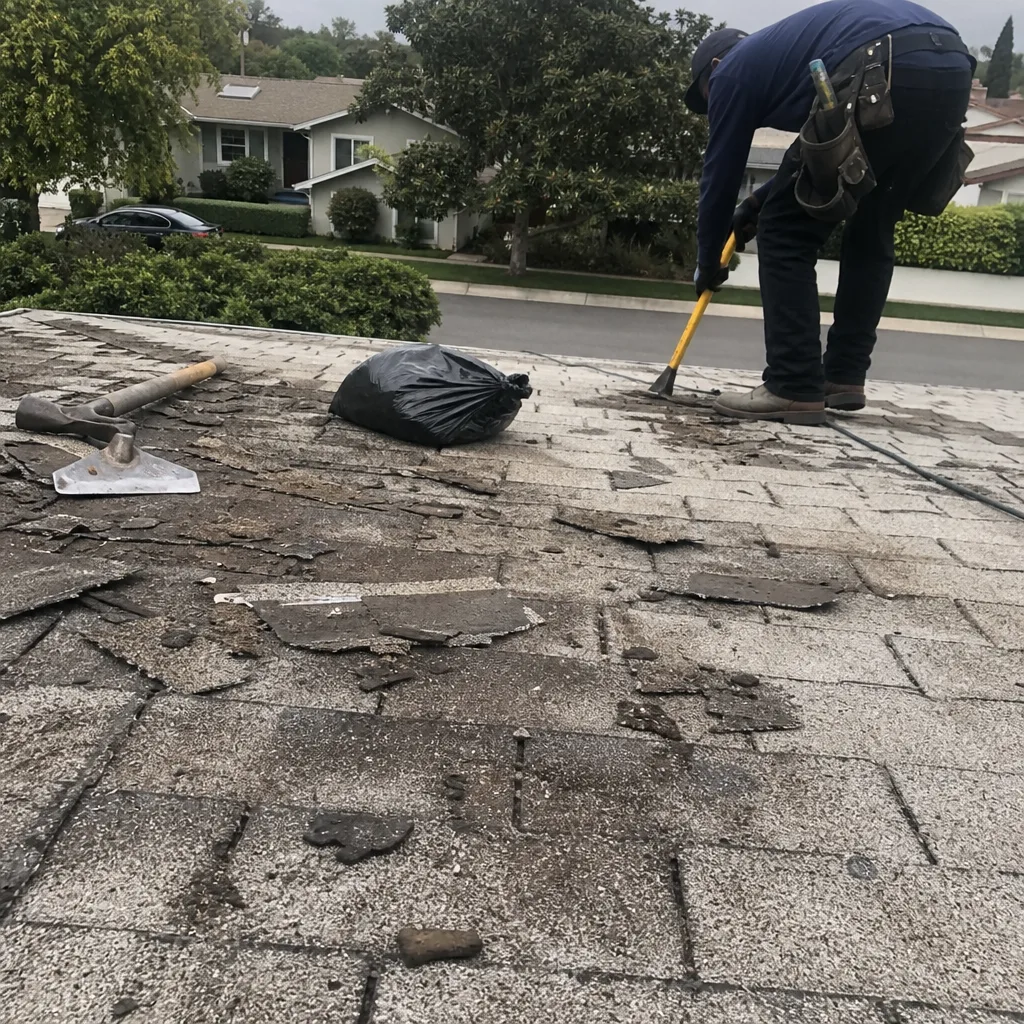 Before
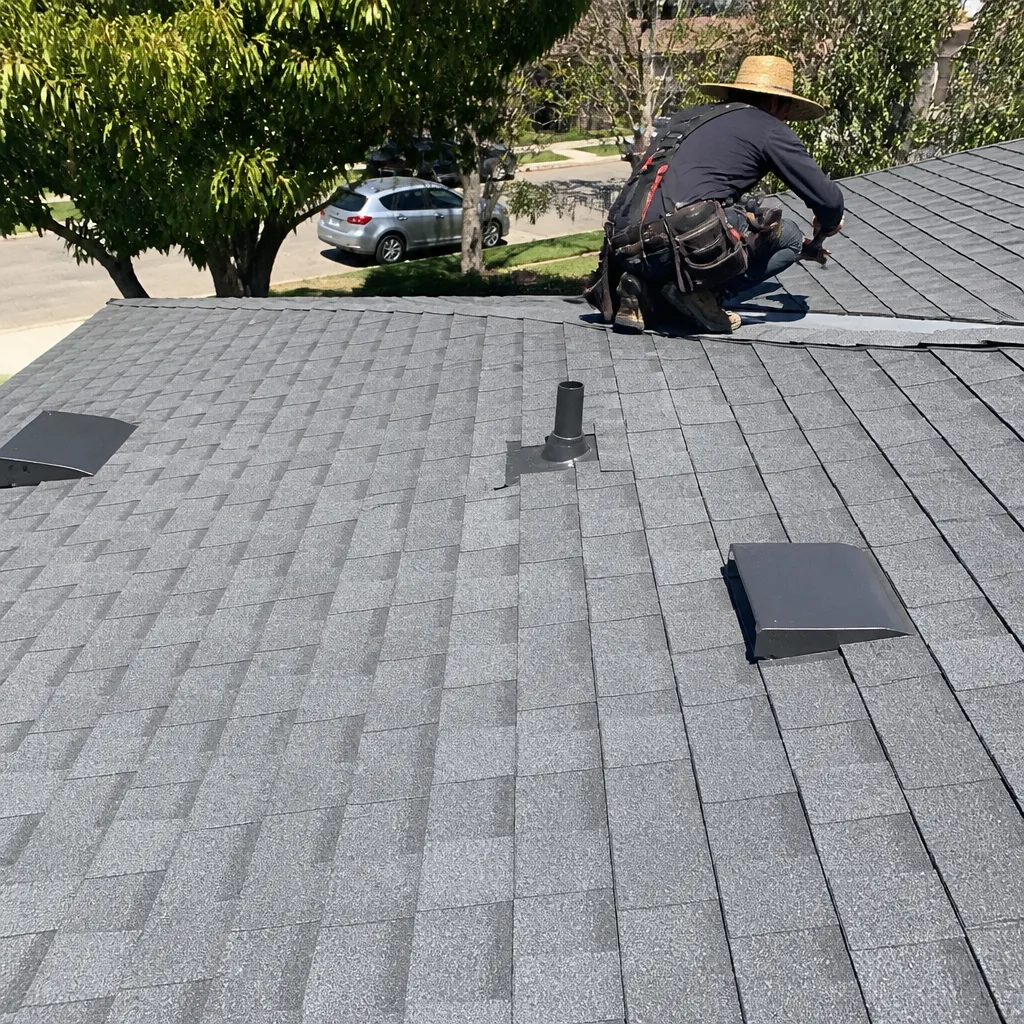 After
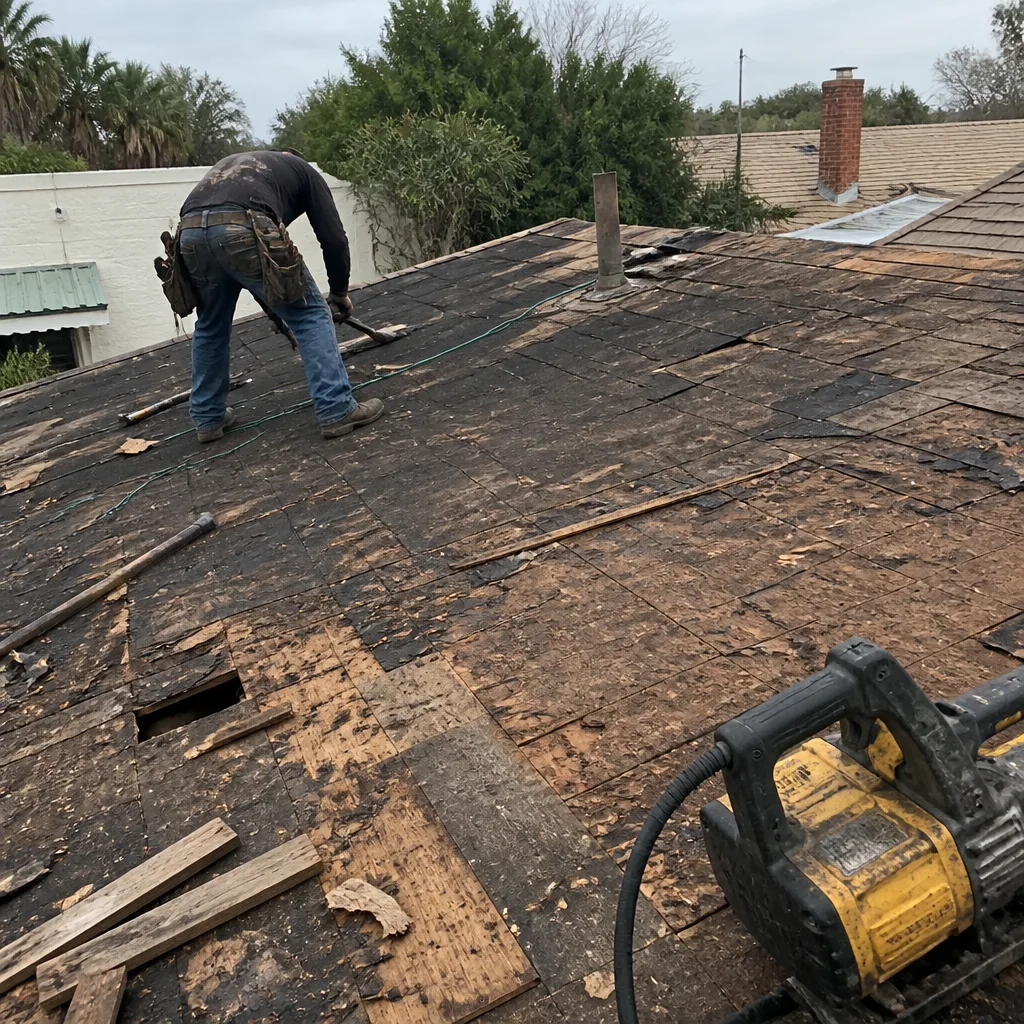 Before
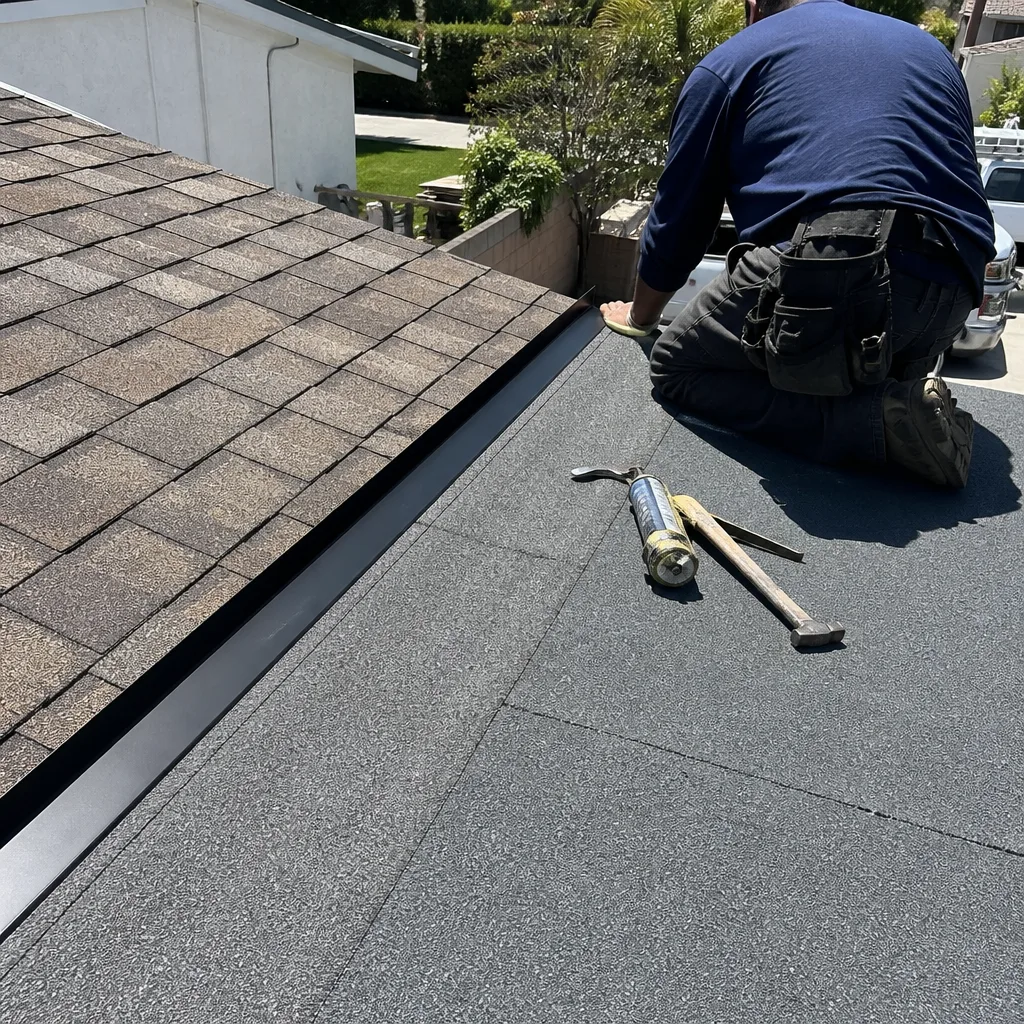 After
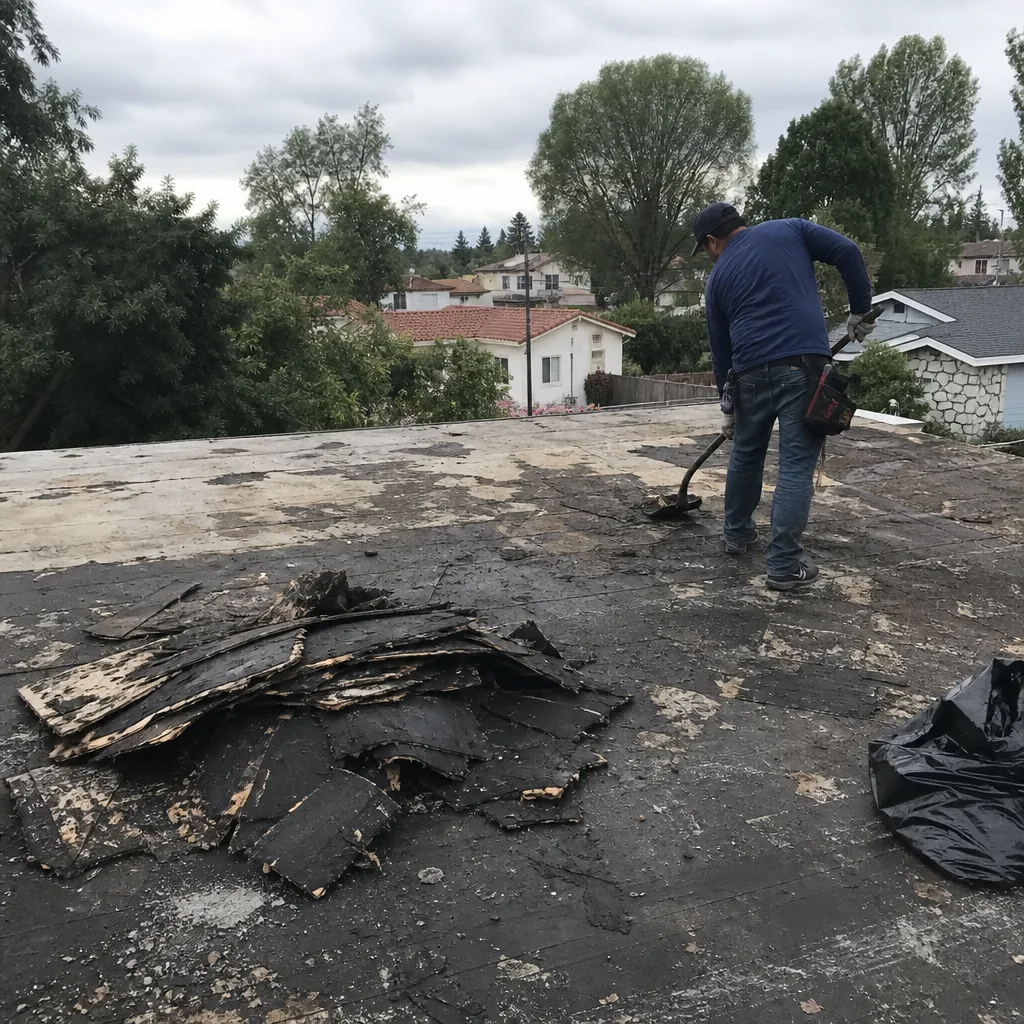 Before
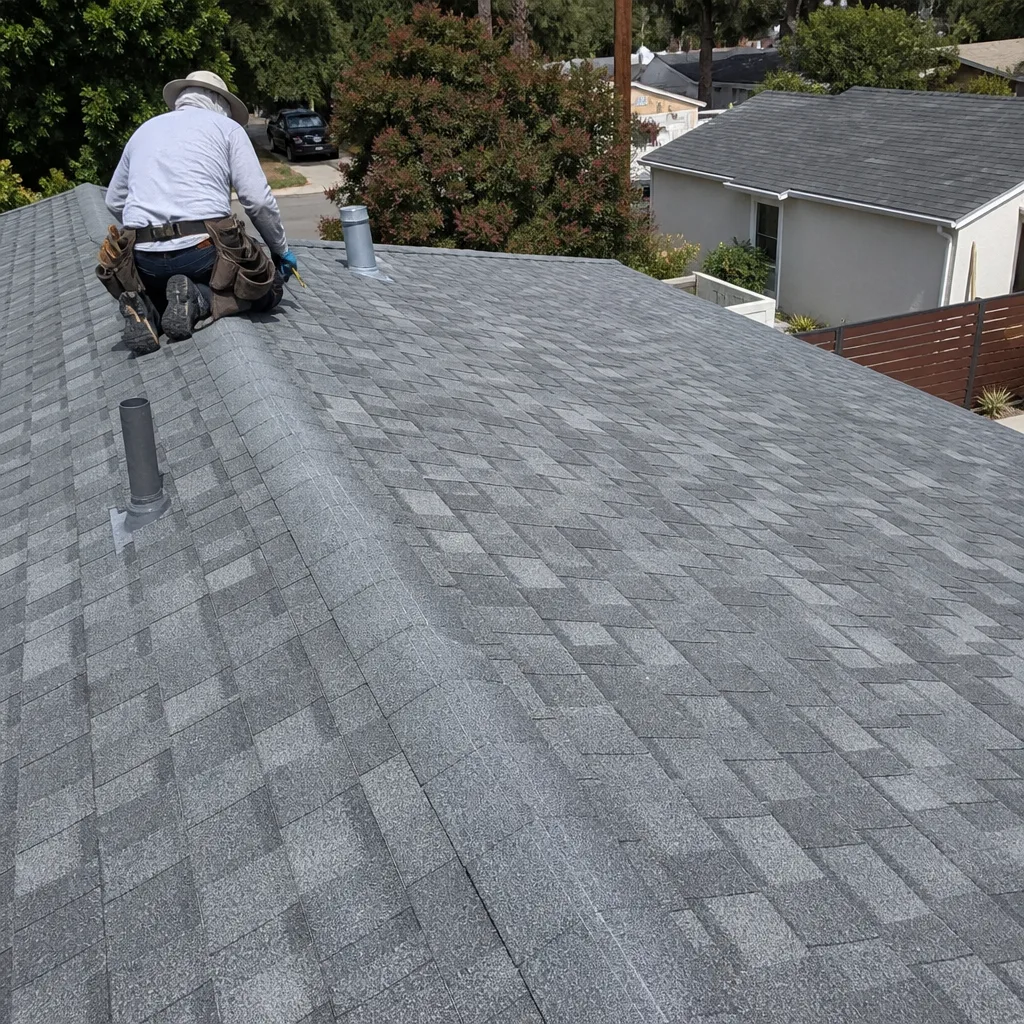 After