Last updated October 31, 2026
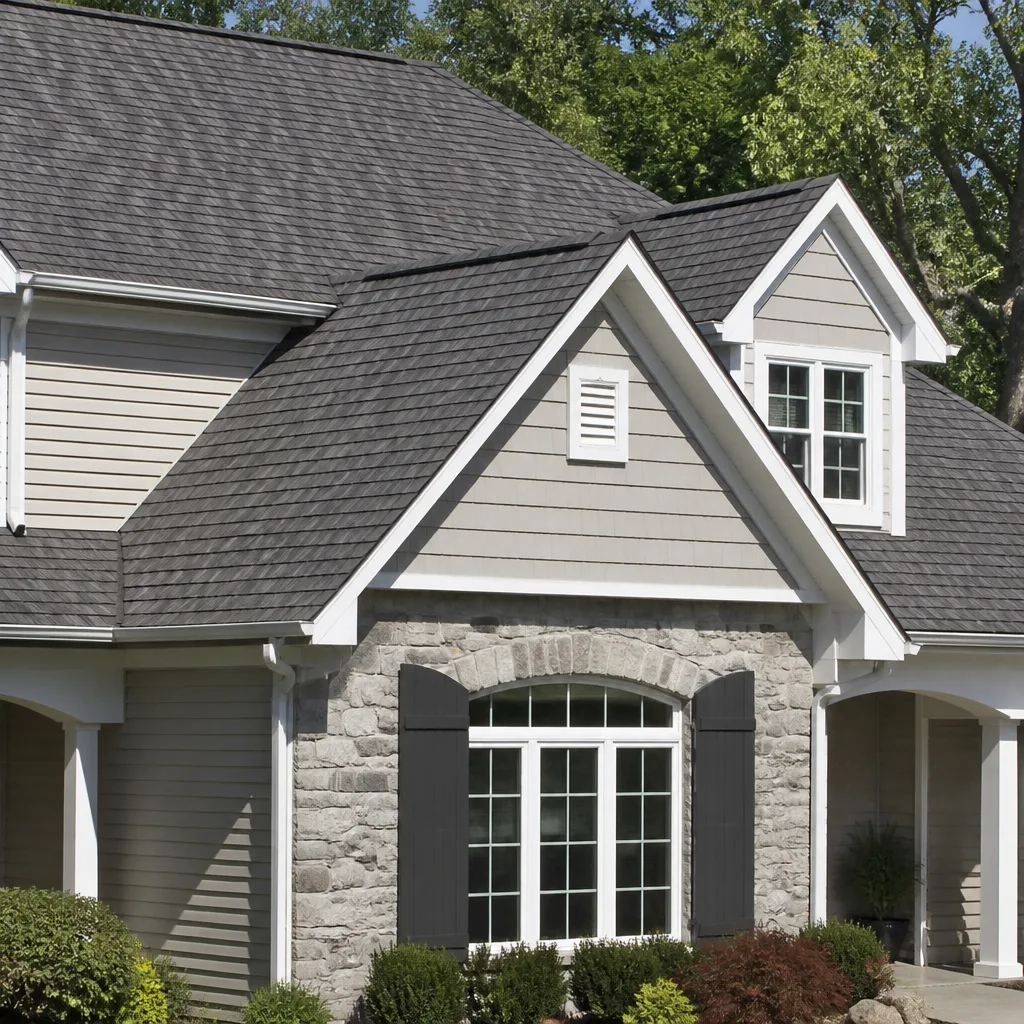 Architectural shingles
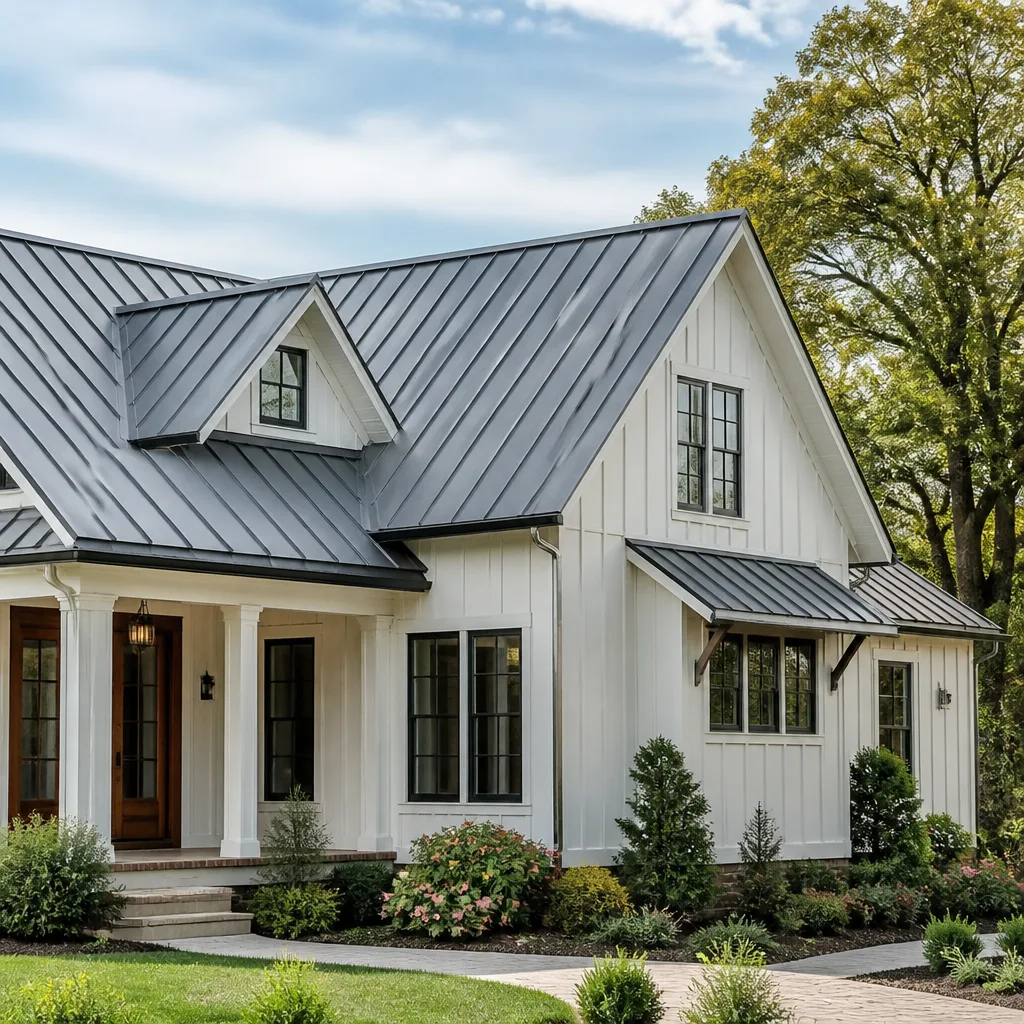 Metal roofing
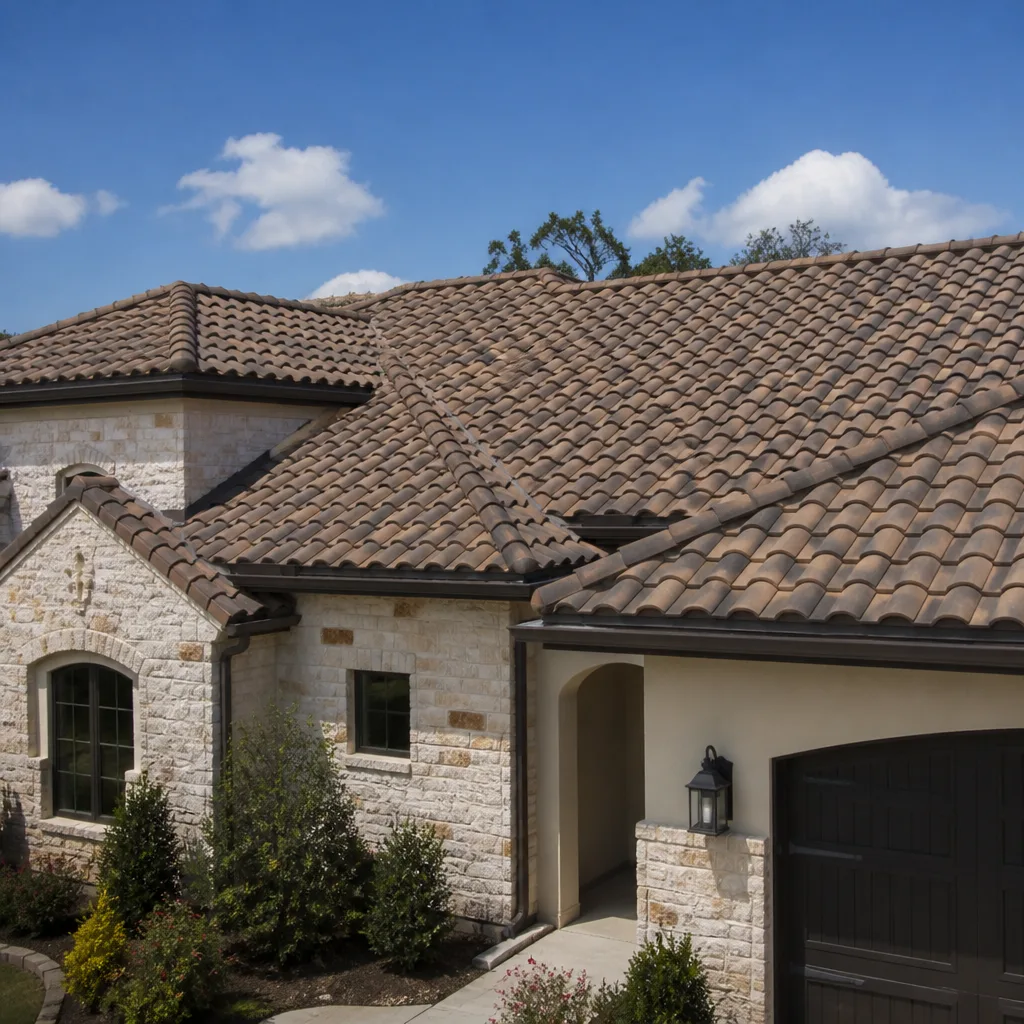 Tile roofing
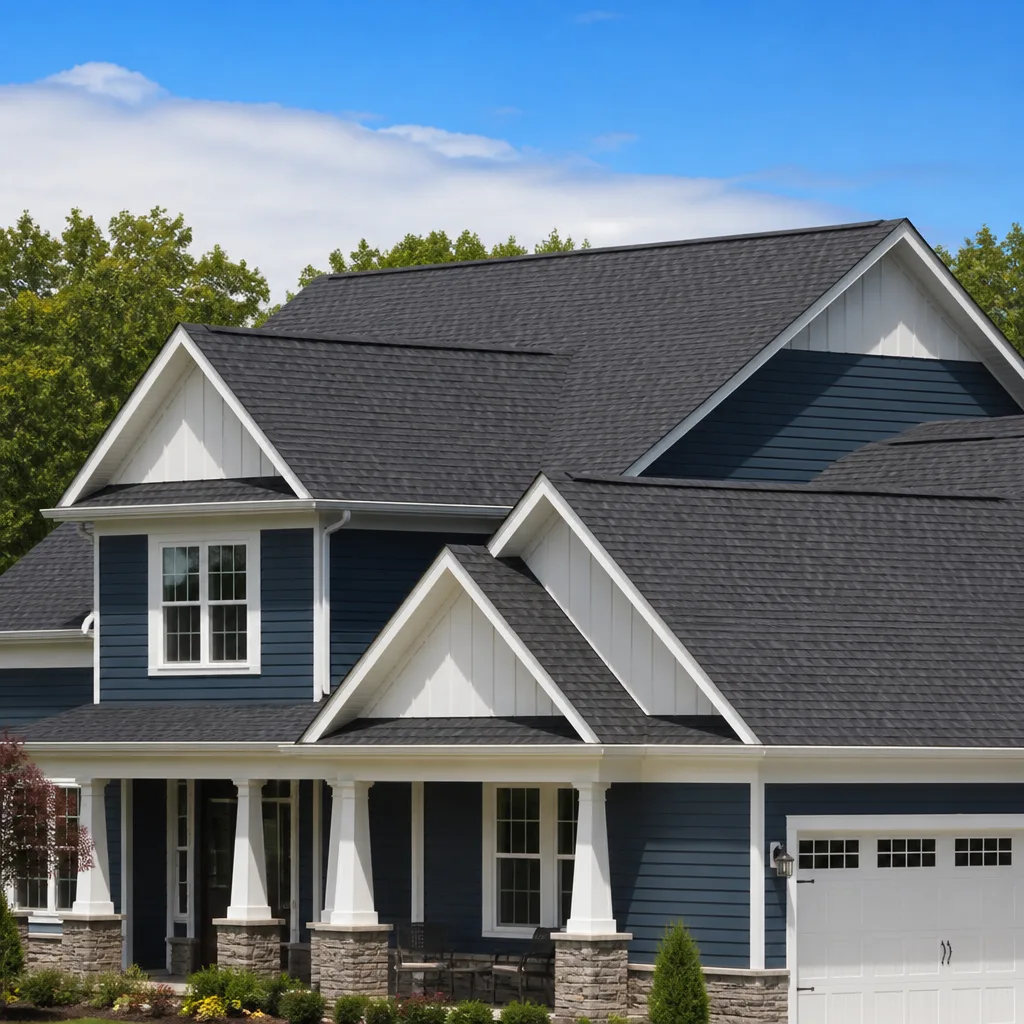 GAF
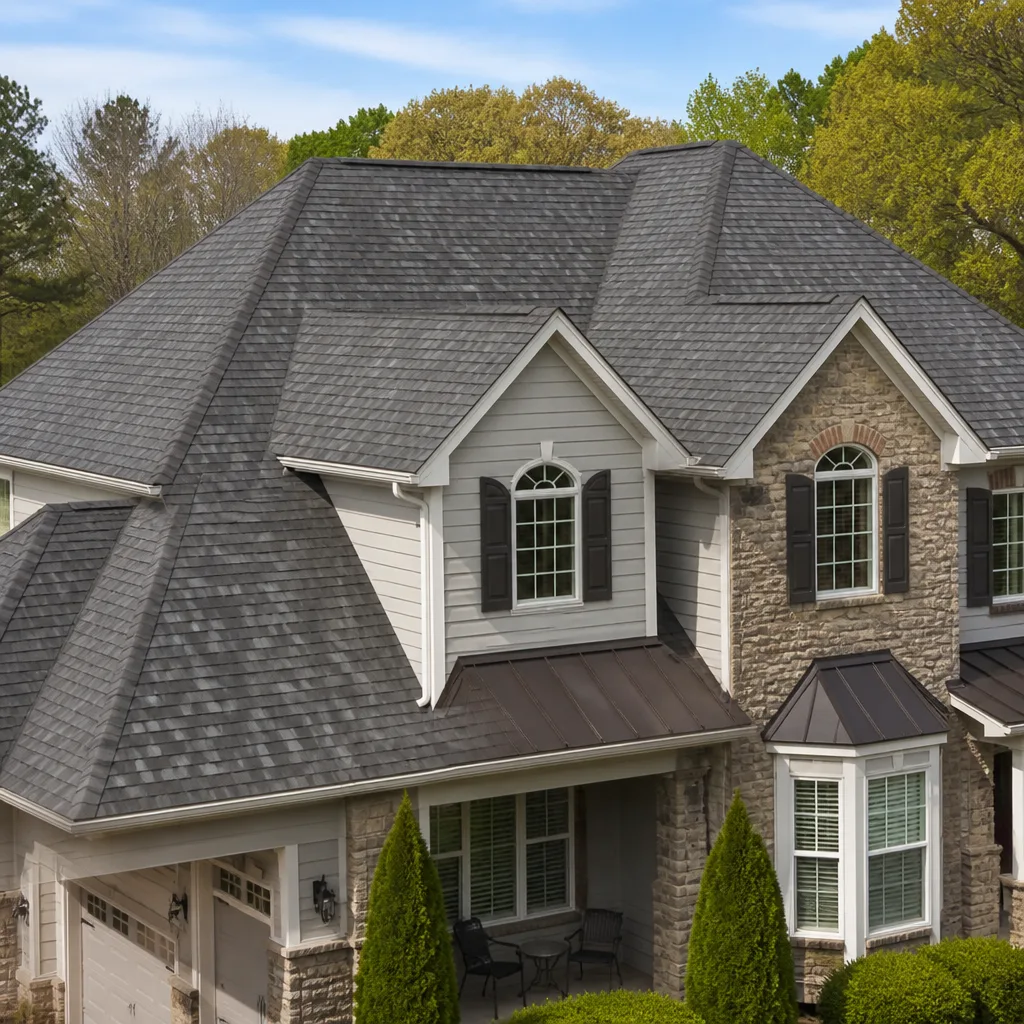 Owens Corning
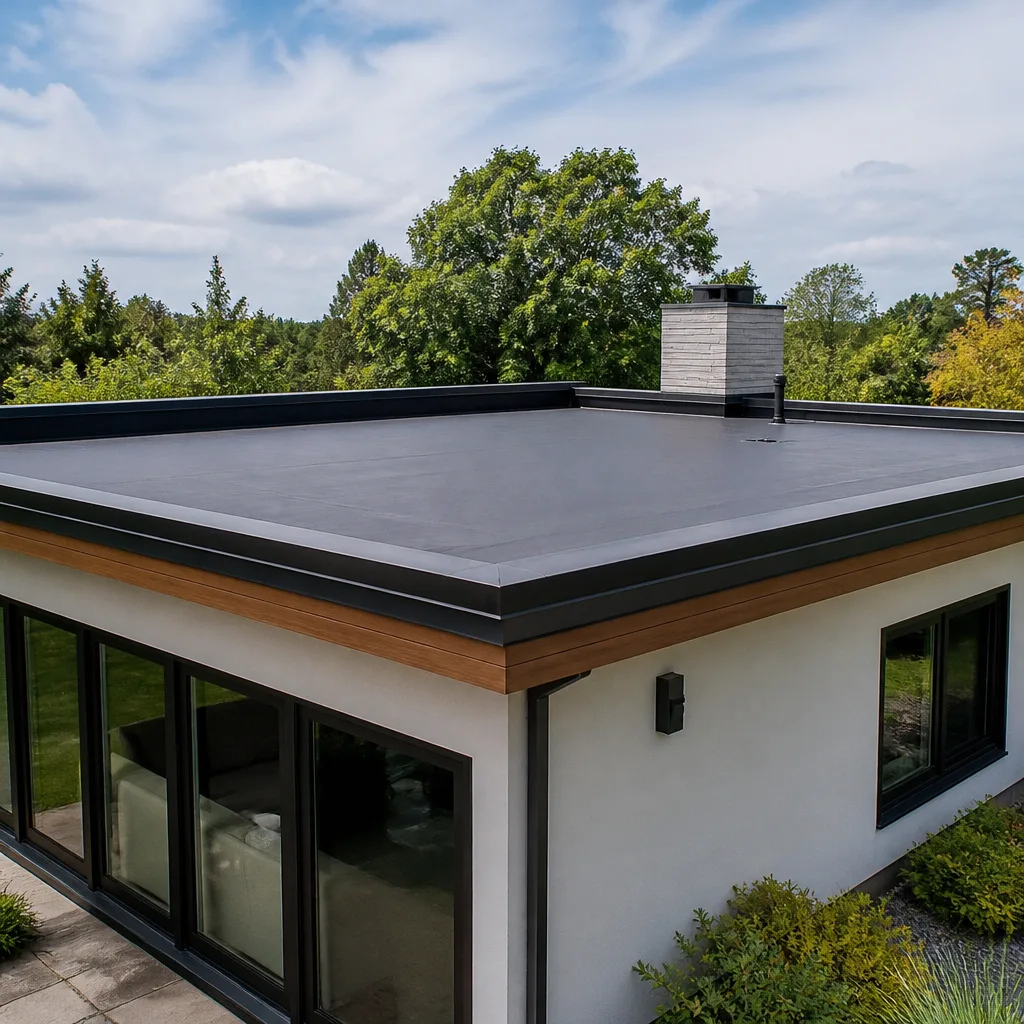 Flat & low-slope
Free roof inspection with deck photos before we talk money - GAF and Owens Corning certified installation
The Complete Roof Repair Guide for Hollywood Homeowners
Most roof repair guides are written for the Midwest. They talk about ice dams, freeze-thaw cycles, and snow load. Hollywood homeowners reading those guides are making decisions based on the wrong weather entirely. In Hollywood, a roof fails differently. It fails from marine layer moisture that never quite dries, from Santa Ana winds that rip at flashing and lift shingles, and from UV exposure that breaks down materials at a rate most national guides never mention. This guide covers what actually goes wrong on Hollywood roofs, what repairs cost, what the City of Hollywood requires, and how to know when a repair is enough versus when replacement makes more sense.
Quick Answer
Roof repair in Hollywood, CA typically costs between $350 and $1,800 for most targeted fixes, with minor shingle or flashing repairs at the lower end and structural or underlayment work at the higher end. The most common Hollywood-specific failure modes are moisture damage from marine layer condensation, wind-lifted materials from Santa Ana events, and accelerated sealant and membrane breakdown from UV intensity. Hollywood Roofing Co offers standalone roof inspections and targeted repairs across Hollywood – call (833) 589-7971 for a free estimate.
Styles & brands we work with
Table of Contents
- What Makes a Hollywood Roof Different
- The 5 Most Common Hollywood Roof Failures
- What Roof Repairs Cost in Hollywood
- Santa Ana Wind Season: Your Repair Checklist
- The Marine Layer Problem Most Guides Miss
- Hollywood Roof Repair Permits: What the City Requires
- Repair or Replace: How the Math Works in California
- Material Matters: Why Your Roofing Brand Affects Repair Strategy
What Makes a Hollywood Roof Different
Hollywood sits in a climate that punishes roofing materials in three distinct ways, and most national guides address none of them. First, the marine layer rolls in most nights from late spring through early fall, blanketing roofs with moisture that settles into seams, under flashing, and beneath tiles. This moisture doesn’t drain away like rain. It lingers. It condenses. And over years, it creates rot and corrosion in places homeowners never see.
Second, Hollywood gets intense UV exposure. We’re at 34 degrees north latitude, which means the sun hits roofing surfaces at a steeper angle than in northern states. Sealants, pipe boots, and membrane coatings that might last 15 years in Oregon routinely fail in 6 to 8 years here. The degradation is measurable – granule loss on asphalt shingles accelerates, and exposed caulking around vents and chimneys turns brittle and cracks well before its rated lifespan.
Third, Santa Ana winds create sudden, violent stress events. Wind gusts in the Hollywood Hills during Santa Ana season can exceed 60 mph, and they hit from the northeast – a direction most roofs aren’t designed to withstand. Flashing gets peeled back, ridge caps get lifted, and loose tiles become projectiles. A roof that handles normal weather without issue can sustain real damage in a single windy night.
This combination – persistent moisture, aggressive UV, and periodic wind violence – means Hollywood roofs need a different inspection rhythm and a different repair strategy than roofs in most of the country. It’s also why Roof Inspection in Hollywood should happen more than once every few years. We recommend checking for damage after every significant Santa Ana event, not just once a year.
The 5 Most Common Hollywood Roof Failures
Based on what we see across Hollywood – from the flatlands south of Melrose to the hills above the Bowl – these are the five failure modes that drive most repair calls. They map directly to the climate factors above.
1. Flashing Separation Around Chimneys and Vents
Metal flashing expands and contracts with temperature swings. Hollywood’s warm days and cooler nights create constant micro-movement, and after a few Santa Ana seasons, the sealant bond between flashing and the roof surface fails. Water finds the gap. In the Hollywood Hills, where homes sit at angles that direct runoff toward chimney bases, this is the single most common leak source we repair.
2. Dry Rot in Eaves and Fascia Boards
Marine layer moisture settles on eaves first – they’re the lowest point of the roofline and the last place to dry in the morning. Over time, that moisture wicks into fascia boards and rafter tails. By the time a homeowner notices the paint bubbling or wood softening, the rot has usually spread further than the visible damage suggests. This repair often requires cutting back further than expected.
3. Tile Slippage on Hillside Homes
Concrete and clay tile roofs are common in the Hollywood Hills, and the tiles themselves hold up well to UV. What fails is the fastening system. High winds work tiles loose over time, and once one shifts, water gets under the tile field and sits against the underlayment. We regularly find slipped tiles on the northeast-facing slopes of canyon homes – the same side that takes the brunt of Santa Ana gusts.
4. Flat Roof Membrane Cracking at Parapet Walls
Spanish-style and mid-century Hollywood homes often have flat or low-slope sections. These roofs are typically covered with a membrane system, and where the membrane runs up a parapet wall, UV and thermal stress concentrate. Cracks form at the transition, water pools at the base, and leaks appear on interior ceilings far from the actual breach. This is a classic Hollywood repair – the leak you see is rarely where the water is getting in.
5. Granule Loss on Asphalt Shingles
If your Hollywood home has an asphalt shingle roof from a brand like GAF or CertainTeed, you’re protected – but only if the shingles are still holding their granules. Granules reflect UV and protect the asphalt below. Once they wear off, the shingles age rapidly. In Hollywood’s sun, a 30-year shingle roof often shows significant granule loss by year 18 to 22. Spot replacement is possible early; full replacement becomes the realistic option later.
What Roof Repairs Cost in Hollywood
Repair pricing in Hollywood varies by the type of repair, the material involved, and the home’s location. Hillside homes with steep pitches and limited access cost more to service than flatland homes with walkable roofs. Here’s what homeowners should expect for common repairs in the Hollywood market.
| Repair Type | Typical Range (Hollywood, CA) | Notes |
|---|---|---|
| Shingle replacement (3-5 shingles) | $250 – $500 | Includes sealing and color matching where possible |
| Flashing repair (one penetration) | $350 – $700 | Chimney flashing runs higher due to complexity |
| Tile reset or replacement (small section) | $400 – $900 | Hillside access adds labor cost |
| Flat roof patch (membrane) | $500 – $1,200 | Size and membrane type affect price |
| Eave/fascia dry rot repair | $600 – $1,800 | Depends on how far rot has spread |
| Underlayment spot repair | $800 – $2,000 | Usually requires lifting tiles or shingles |
| Full leak investigation + repair | $400 – $1,500 | Investigation cost folds into repair if we find and fix the source |
These are honest ranges for the Hollywood market. A roof that needs multiple repairs across different areas will land higher. That’s one reason we recommend a Roof Inspection in Hollywood before committing to piecemeal fixes – sometimes the roof is telling you it’s near the end of its life, and five small repairs add up to more than a replacement’s first five years of cost.
Santa Ana Wind Season: Your Repair Checklist
Santa Ana winds are a fact of life in Hollywood. They typically peak between September and November, but they can hit from late August through February. After any sustained wind event above 40 mph, walk your property and look for these specific signs. You don’t need to get on the roof – most damage is visible from the ground.
- Look at the ground for roofing material. Walk the perimeter of your home. Shingles, tiles, or pieces of membrane on the ground mean something lifted and landed. Find where it came from. Left unaddressed, that gap is now an open water path.
- Check the ridge line. Stand across the street and look at the top edge of your roof. Ridge cap tiles or shingles should be straight and seated. If anything looks shifted, twisted, or raised, wind got under it.
- Inspect flashing around anything that penetrates the roof. Chimneys, vent pipes, skylights, and antenna mounts. Look for metal that’s pulled away from the surface or sealant that’s cracked. This is where Santa Ana wind damage concentrates.
- Examine tile roofs for visible gaps. On a tile roof, look for tiles that have slid down-slope or rotated. Even a single displaced tile exposes the underlayment to UV and water.
- Check interior ceilings for new stains. Santa Ana wind can lift materials and let moisture in even when it isn’t raining. Marine layer fog driven into an open seam can leave a light stain on ceilings or walls.
- Document everything with photos. If you file an insurance claim, date-stamped photos from immediately after the wind event make the claim stronger.
If the checklist turns up anything concerning, call (833) 589-7971. We’ll do a Roof Repair in Hollywood assessment and tell you honestly whether it’s an urgent fix or something that can wait. Hollywood Roofing Co doesn’t push repairs that aren’t needed – that’s the entire point of our standalone inspection service.
The Marine Layer Problem Most Guides Miss
Here’s the failure mode that almost no generic roofing guide mentions, and it causes more Hollywood roof damage than most homeowners realize. The marine layer is a fog bank that rolls in from the Pacific on most summer nights. It sits over Hollywood until mid-morning. During those hours, every roof surface is damp. Not soaked – damp. That dampness settles into any gap, crack, or seam it can find.
Over time, this persistent moisture does two things. First, it accelerates rust on metal flashing, fasteners, and gutter hardware. Second, it feeds fungal growth on any organic material it reaches – the wood in your eaves, the paper backing on older underlayment, even the underside of certain roof decking materials. The damage is slow and invisible, because the water never pools. It just sits as condensation.
What makes this particularly dangerous is that homeowners don’t associate fog with roof damage. After a rainstorm, people check for leaks. After a foggy month, nobody thinks twice. But that fog has been working on exposed materials every single night. Under tiles and around unsealed penetrations, the moisture finds its way in, and because it rarely creates a dramatic leak, the rot can progress for years without detection.
The practical takeaway: if your Hollywood home has any exposed wood at the roofline, any cracked sealant around vents or skylights, or any gap in flashing, the marine layer is using those openings right now. A Roof Inspection in Hollywood catches this kind of damage before it becomes structural. We inspect for marine-layer damage specifically – it’s part of knowing this climate.
Hollywood Roof Repair Permits: What the City Requires
Roof work in Hollywood falls under the City of Los Angeles Department of Building and Safety (LADBS), which serves the Hollywood community. The permitting threshold matters, because it determines whether your repair is a simple service call or a permitted construction project.
For most repairs – replacing a few shingles, resetting tiles, patching membrane, fixing flashing – no permit is required. The LADBS treats these as minor maintenance. A repair covering less than 10% of the roof surface generally doesn’t trigger the permit process.
However, once the repair scope crosses into what the city defines as re-roofing – typically more than 10% of the total roof area, or work that involves replacing the underlayment across a large section – a permit is required. Re-roofing permits in Los Angeles require the roofing contractor to meet current building codes, including any applicable cool roof requirements and fire-resistant material standards.
There’s a nuance worth knowing for Hollywood Hills homeowners. Properties in the Very High Fire Hazard Severity Zone (VHFHSZ) – which covers significant portions of the hills – face stricter material requirements. If your repair or partial replacement touches underlayment or sheathing in these zones, the replacement material must meet Class A fire ratings. This is one reason the cost difference between a simple repair and a permitted partial re-roof can be substantial.
Any legitimate Roof Repair in Hollywood contractor knows these lines. We’ll tell you before work starts whether your job needs a permit, and we pull it if it does. No surprises, no work done out of compliance.
Repair or Replace: How the Math Works in California
The classic roof decision – patch what’s failing or replace the whole thing – plays out differently in Hollywood than it does in most of the country. The reason is insurance. California’s insurance market has tightened significantly, particularly in fire-risk ZIP codes, and insurers are scrutinizing roof condition more aggressively than ever.
Here’s what that means practically. An older roof with multiple repaired areas may trigger a non-renewal notice from your insurer, even if the roof still keeps water out. Insurers in the Hollywood market are looking at remaining roof lifespan – often requiring 10 or more years of expected service – not just current watertight performance. You might spend $2,500 on repairs this year, only to find your insurer won’t renew next year because the roof is still 22 years old.
Conversely, if your roof is 15 years old with a single localized failure, repair is almost certainly the right call. A well-executed repair extends the roof’s life by several years, and the insurance math still works in your favor. The decision gets harder in the 18-to-25-year range, where repair costs climb and the insurance risk rises.
There’s also the repair-cost accumulation problem. A roof that needs $1,500 in repairs this year, $2,000 next year, and $2,500 the year after has cost you $6,000 over three years – with no improvement in insurability and still an aging roof underneath. At some point, the honest recommendation is replacement. That’s where a Roof Replacement in Hollywood conversation starts, and we’ll have it with you directly – not as a sales pitch, but as the math on the table.
If you’re unsure where your roof sits on that spectrum, get an inspection. Hollywood Roofing Co offers Roof Inspection in Hollywood as a standalone service precisely because this decision matters, and you deserve an honest condition report before anyone starts talking about a five-figure replacement.
Material Matters: Why Your Roofing Brand Affects Repair Strategy
Not all roofs repair the same way. The material on your Hollywood home – and the brand it came from – determines what’s fixable, what’s not, and what a repair should cost. Because Hollywood Roofing Co installs and services materials from seven leading brands, including GAF, CertainTeed, Owens Corning, and IKO, we’re able to match repairs to the existing roof rather than telling you to replace everything because we don’t work with your material.
Here’s how brand and material choice shapes the repair conversation.
GAF and CertainTeed roofs – typically premium asphalt shingle systems with strong warranty programs – are designed for component compatibility. A repair on a GAF roof, for example, uses GAF-specified underlayment, flashing components, and shingles. Mixing materials from other manufacturers can void the system warranty. We match repairs to the original spec.
Owens Corning roofs are also widely installed in Hollywood and have their own compatibility standards. Their shingles have distinctive granule formulations, and matching them years after installation requires access to the right product lines. That’s the advantage of working with a company that installs the brand – we can source matching materials for a repair.
IKO roofs are common on mid-range Hollywood homes and rental properties, where budget-conscious installations are typical. IKO materials repair well, and because they’re more affordable at the outset, repairs on IKO roofs are often among the most cost-effective in the market.
Then there’s the tile question. Many Hollywood Hills homes have concrete or clay tile roofs from brands like Boral. Tile roofs don’t fail the way shingle roofs do – the tiles last decades – but the underlayment beneath them has a finite life. Repairing a tile roof usually means lifting tiles, replacing a section of underlayment, and resetting the original tiles. It’s a different skill set and a different cost structure than shingle repair.
The practical takeaway is this: when you need a repair, the contractor should know your material before they quote. A roofer who only installs one brand will be tempted to tell you the repair isn’t worth doing and the whole roof needs replacing. Hollywood Roofing Co works across seven major brands – GAF, CertainTeed, Owens Corning, IKO, and more – so the recommendation is matched to your home, not to our inventory.
Seven leading brands. One honest recommendation. That’s the entire approach. Whether your roof needs a Roof Repair in Hollywood or a Roof Replacement in Hollywood, we’ll tell you what’s actually wrong, what it costs to fix, and whether fixing even makes sense. From the first inspection to the final nail, the same team handles it start to finish.
Common Mistakes to Avoid
- Waiting for a visible leak before addressing damage. In Hollywood, the marine layer creates damage that never shows up as a dramatic leak. By the time water stains appear on a ceiling, the rot has often been progressing for years. Check after wind events and fog-heavy seasons, not just after rain.
- Hiring a contractor who doesn’t know your material. Repairing a Boral tile roof with shingle-roof techniques causes more damage than it fixes. Ask the contractor which brands they install. If your material isn’t on their list, keep looking.
- Ignoring permit thresholds in the hills. Hollywood Hills homeowners in fire hazard zones face stricter material requirements than flatland homes. A repair that skips the required fire-rated underlayment may eventually flag during a sale or insurance review.
- Fixing the same spot repeatedly without asking why. If flashing keeps separating in the same location, or the same shingles keep lifting, the repair isn’t addressing the root cause. Repeating the same patch over and over costs more than one proper fix.
- Putting off inspection because the roof ‘looks fine from the ground.’ Most Hollywood roof failures start in places you can’t see from the street – under tiles, inside flashing seams, at parapet transitions. Ground-level visibility is not the same as a roof inspection.
- Choosing the cheapest quote without comparing scope. Roof repair pricing in Hollywood varies by what’s actually included. One quote might patch a leak; another might replace the failing component. Cheaper isn’t better if it fails again in six months.
- Assuming insurance will cover deferred maintenance. California insurers are less inclined to cover roof damage that results from long-term wear. Marine layer rot, UV-aged sealant failure, and granule loss from normal exposure are typically considered maintenance issues, not sudden events.
See the difference
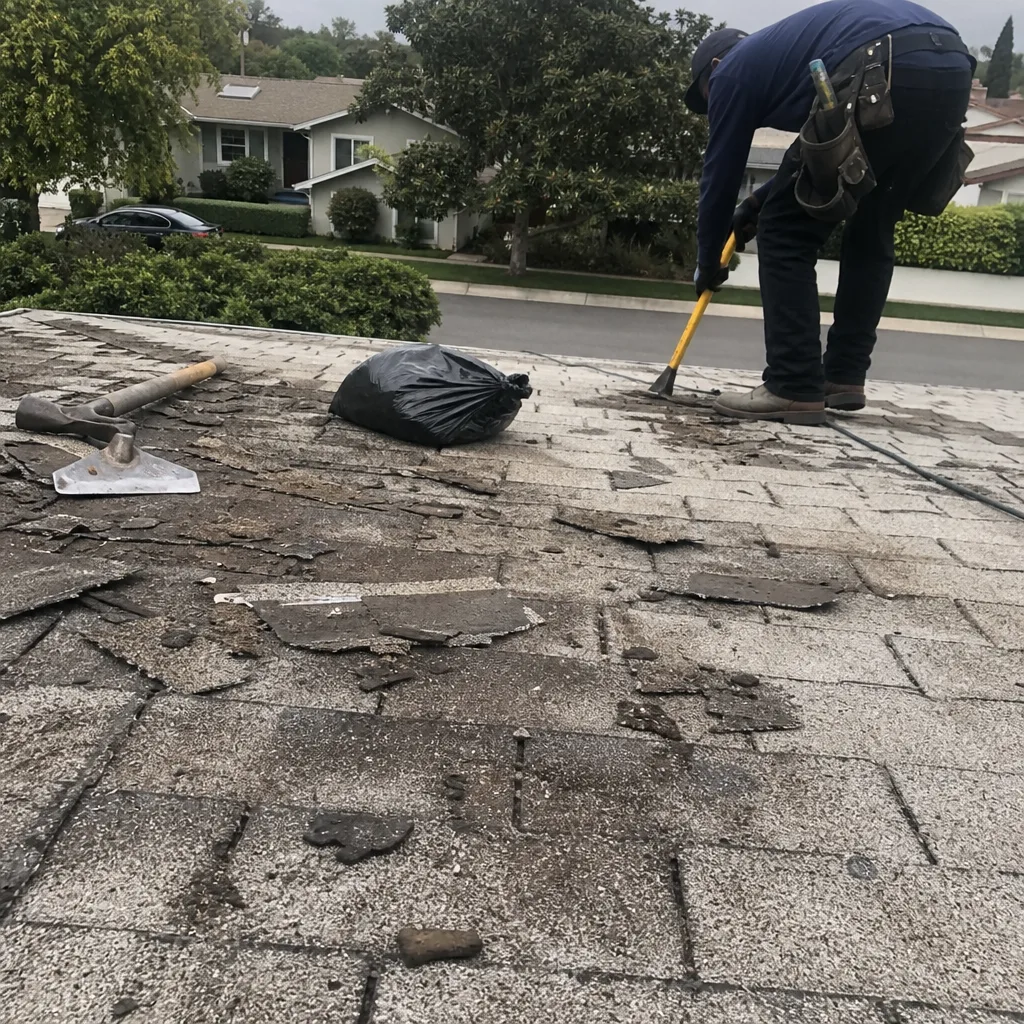 Before
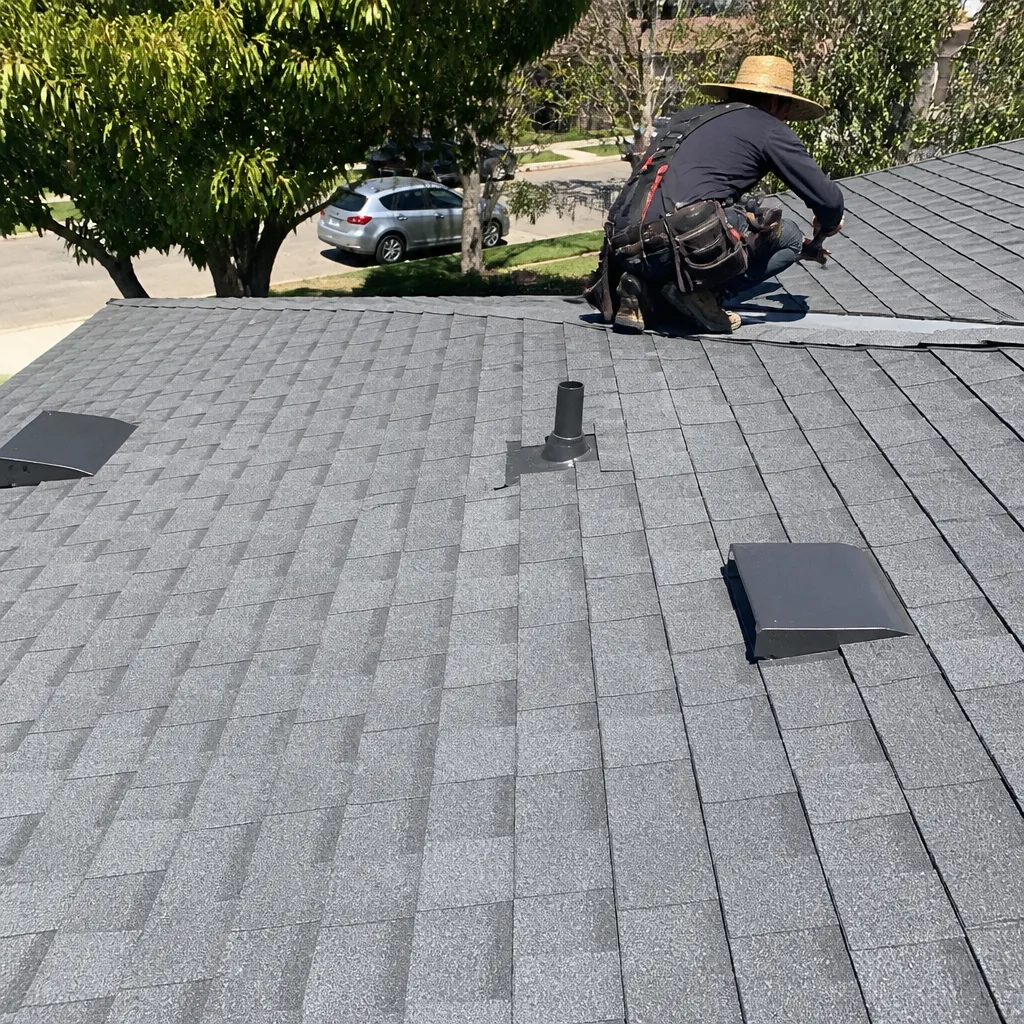 After
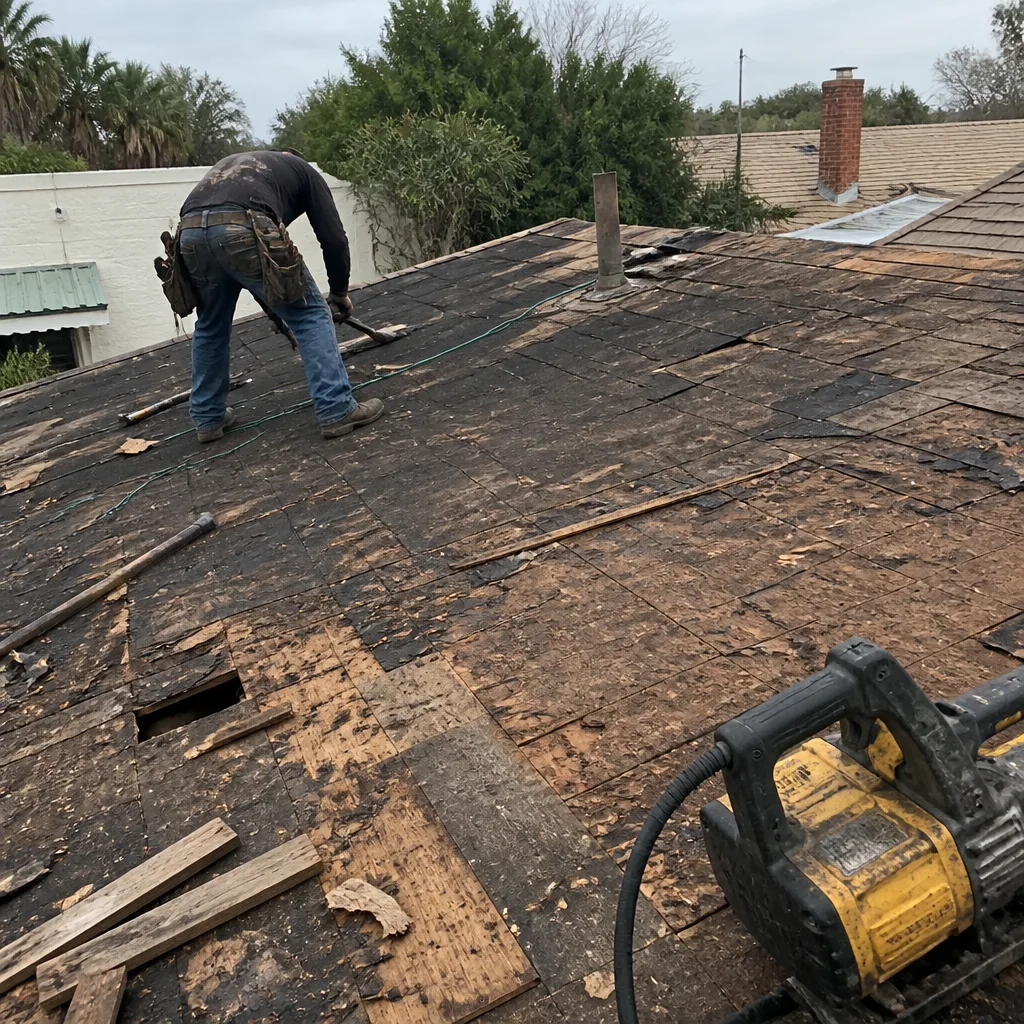 Before
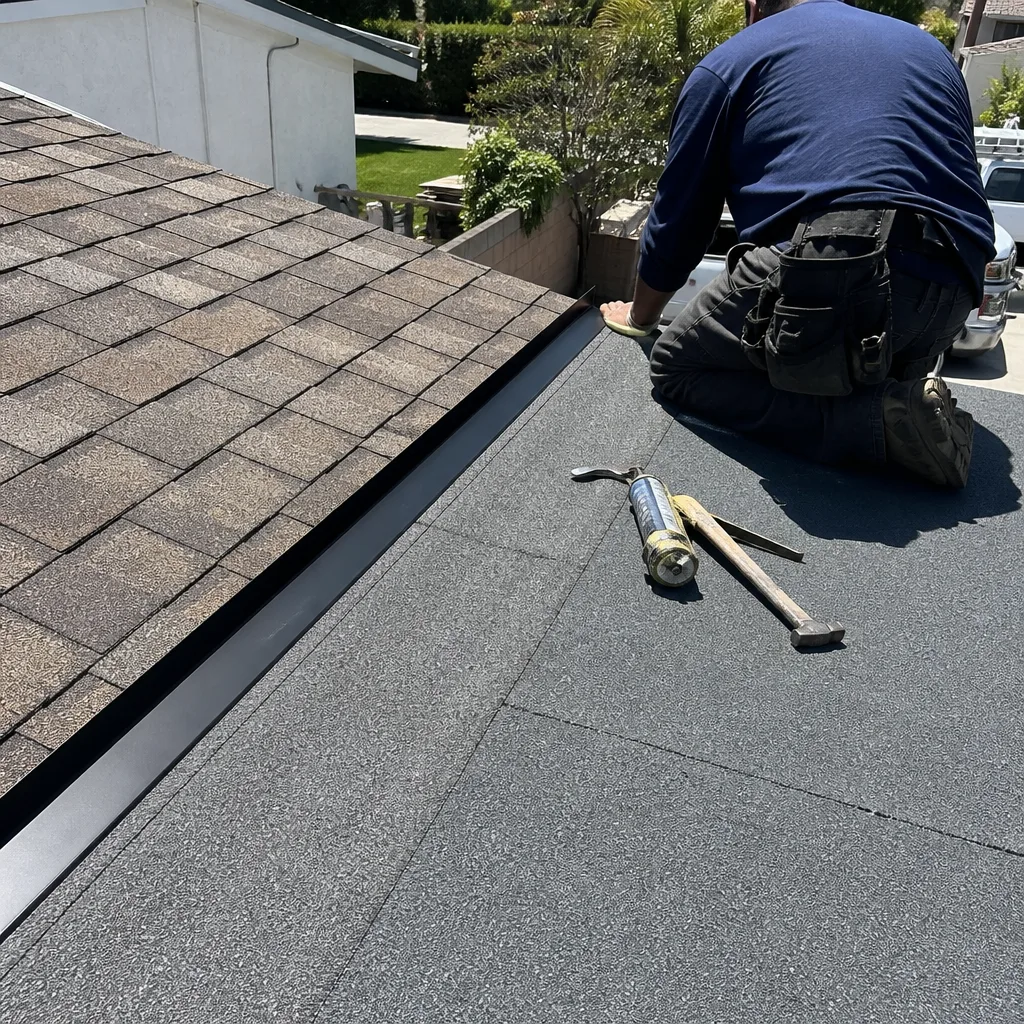 After
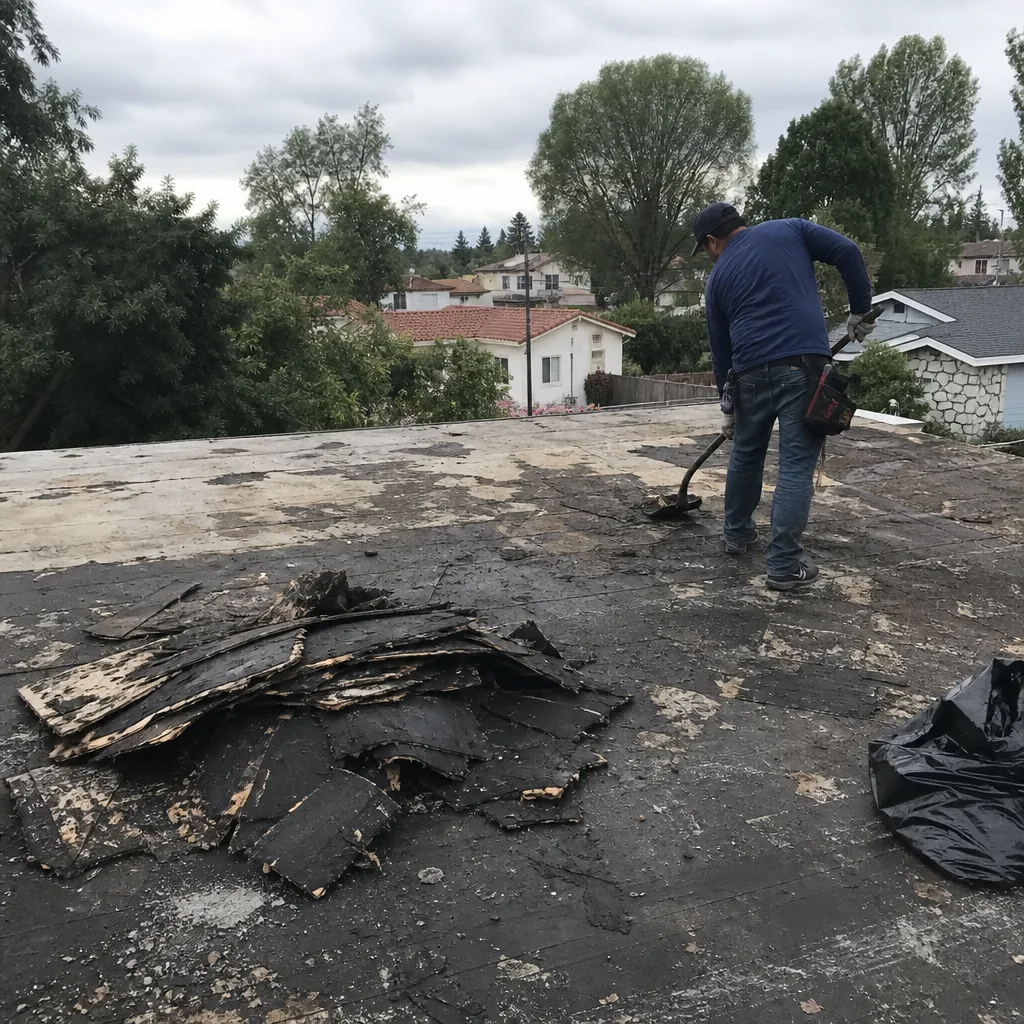 Before
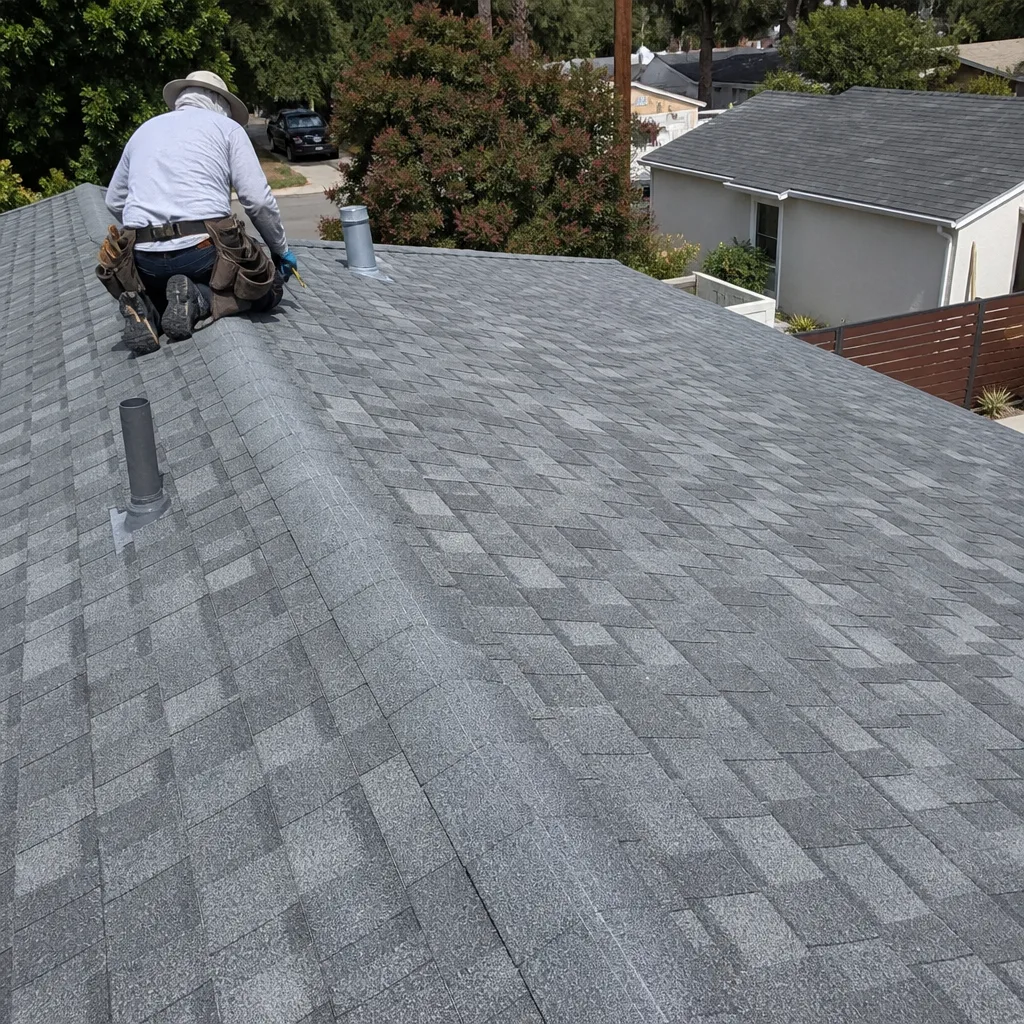 After
When to Call a Professional
Some roof work is safe to assess on your own – looking at the ground for fallen material, checking for visible damage from the street, noting new interior stains. But actual repairs belong with a professional. If you have a tile roof that’s slipped, flashing that’s separated, a flat roof membrane that’s cracked at the parapet, or rot that’s spread into the eave structure, the repair involves materials, heights, and failure modes that are genuinely risky to DIY. Water damage compounds quickly, and a botched fix can turn a $500 repair into a $5,000 problem.
If anything in this guide matches what you’re seeing on your Hollywood roof, call us. Hollywood Roofing Co offers free estimates in Hollywood – call (833) 589-7971. We’ll tell you what’s wrong, what it costs, and whether a repair is the right call. No pressure, no push. Just an honest answer from a company that knows this climate and this city.
Frequently Asked Questions
Most targeted roof repairs in Hollywood cost between $350 and $1,800, depending on the repair type, the roofing material, and the home’s location. Shingle replacement and minor flashing work sit at the low end; structural repairs like eave rot remediation or underlayment replacement sit at the high end. Call (833) 589-7971 for an exact quote – estimates are free.
Most repairs covering less than 10% of the roof surface don’t require a permit in Hollywood. Larger repairs, underlayment replacement, or work in Very High Fire Hazard Severity Zones typically do. Hollywood Roofing Co determines permit requirements before work starts and pulls permits when needed.
In Hollywood’s climate, we recommend a professional roof inspection at least once every two years, plus a ground-level check after every significant Santa Ana wind event. The marine layer causes hidden damage that annual inspections catch early, before it becomes structural. Roof Inspection in Hollywood is available as a standalone service.
Santa Ana winds in Hollywood typically cause lifted flashing, displaced tiles, separated ridge caps, and loosened shingles on northeast-facing roof slopes. After any sustained wind event above 40 mph, walk the property perimeter and check the roofline for visible shifts. Damage found early is usually a simple repair.
In Hollywood’s UV intensity, a 30-year asphalt shingle roof from a brand like GAF or CertainTeed typically shows significant wear by year 18 to 22. Granule loss accelerates faster here than in most of the country, which shortens the functional life of the roof. Regular inspection helps catch early wear before it becomes a leak.
In Hollywood, the repair-or-replace decision depends on roof age, repair history, and insurance risk. A roof under 15 years old with localized damage is usually repairable. A roof over 20 years old with multiple repaired areas may not be insurable much longer, making replacement the better financial decision. An honest inspection gives you the answer – Roof Repair in Hollywood pricing starts with a free estimate at (833) 589-7971.
Yes, and it’s one of the most underdiagnosed roof problems in Hollywood. The marine layer brings nightly moisture that settles into seams, flashing gaps, and exposed wood. That persistent dampness accelerates rust and rot even when it never rains. Hollywood homeowners should include fog-driven moisture in their roof maintenance thinking.
The Bottom Line
Hollywood roofs fail differently than roofs anywhere else in the country. The marine layer, the Santa Ana winds, and the relentless UV create a specific set of failure modes that generic guides miss entirely. Knowing what to look for – separated flashing, slipped tiles, membrane cracks at parapets, granule loss – is the difference between a $500 repair and a $15,000 replacement. The right material matters too, and working with a contractor who knows your brand – whether it’s GAF, CertainTeed, Owens Corning, IKO, or another major line – means repairs are done right the first time. From the first inspection to the final nail, Hollywood Roofing Co handles it start to finish. Call (833) 589-7971 for honest answers and a free estimate.
Written by the team at Hollywood Roofing Co, serving Hollywood since 2016.