Last updated October 31, 2026
 Metal roofing
 Architectural shingles
 Tile roofing
 GAF
 Owens Corning
 Flat & low-slope
Free roof inspection with deck photos before we talk money - GAF and Owens Corning certified installation
Roofing Warning Signs: A Hollywood Homeowner’s Reference Guide
A blistered shingle and a granule-filled gutter tell completely different stories about what’s happening to your roof – and in Hollywood’s climate, confusing one for the other is a $15,000 mistake. What looks like a minor cosmetic issue from the street can be early-stage structural failure, while some genuinely alarming sights are just surface wear that will hold for years. This guide teaches you to read the difference. You’ll learn which warning signs are Hollywood-specific, which ones you can safely monitor from the ground, and which ones mean you should pick up the phone this week, not next month. By the end, you’ll know exactly what your roof is trying to tell you – and what to do about it before a $600 repair becomes a $18,000 replacement.
Styles & brands we work with
Quick Answer
The earliest roofing warning signs in Hollywood are granule loss in gutters, shingle curling at roof edges, and dark streaks on interior ceilings near exterior walls – all of which indicate your roof is in the repair stage, not yet the replacement stage. Interior water stains that appear within 48 hours of rain, exposed nail heads on the roof surface, and flashing that has separated from chimneys or vents require professional evaluation within 30 days. Sagging roof decking, daylight visible through the attic, and active leaks during dry weather mean you should call a roofing contractor today.
Table of Contents
- Cosmetic vs. Structural Warning Signs: How to Tell From the Ground
- Hollywood-Specific Failure Signatures: Santa Anas, Monsoon Rain, and Thermal Cycling
- Interior Warning Signs Most Homeowners Blame on Plumbing or HVAC
- How to Photograph and Document Roof Damage for Insurance Claims
- Warning Signs That Mean “Schedule Within 30 Days” vs. “Call Today”
- Roof Age and Material-Specific Warning Signs
- Common Mistakes to Avoid
- When to Call a Professional
- Frequently Asked Questions
- The Bottom Line
Cosmetic vs. Structural Warning Signs: How to Tell From the Ground
Most Hollywood homeowners spot something on their roof and immediately wonder whether they’re looking at a five-figure problem or a non-issue. The honest answer is that many roof anomalies are cosmetic, and knowing the difference saves you from either panicking unnecessarily or ignoring a genuine threat. Here’s our framework for classifying what you see from the ground level, based on years of inspecting roofs across the Hollywood area.
Cosmetic warning signs typically affect the surface of the shingle only. These include light granule loss that doesn’t expose the asphalt mat beneath, minor color variation from patch repairs using a different shingle batch, and small amounts of moss or algae staining on shaded roof sections. None of these indicate imminent failure. A roof with cosmetic issues may look imperfect, but it continues to shed water and protect your home. You can monitor these signs annually and address them during your next scheduled Roof Inspection in Hollywood.
Structural warning signs involve the roof’s ability to perform its core job: keeping water out and staying attached to your home. These include shingles that have lifted enough to reveal the underlayment, flashing that has pulled away from vertical surfaces, decking that is soft or sagging, and any visible separation between roof sections. Structural issues rarely self-correct. They worsen with each weather event, and they follow a predictable arc from small leak to widespread decking replacement if left unaddressed.
Here is how you tell the difference from the ground:
- Check for exposed substrate. If you can see the black asphalt mat beneath missing granules, you are looking at a structural issue. Granule loss alone is cosmetic. Exposed mat means the shingle’s UV protection is gone and its waterproofing integrity is compromised.
- Look at the shape, not just the surface. Shingles that lie flat, even if worn, are doing their job. Shingles that are curling, cupping, or lifting at the edges are structural concerns because they create entry points for wind-driven rain.
- Examine flashing first. The most common structural failure in Hollywood roofs is not the shingles – it’s the flashing. Look at chimneys, vents, skylights, and any roof-to-wall intersections. If the metal flashing is pulling away or shows gaps in the sealant, you have a structural issue regardless of how good the shingles look.
- Check for fastener problems. Exposed nail heads on the roof surface are structural warnings. The nail is no longer sealed, and water will eventually follow it through the roof deck into the attic.
- Assess the roof line from the street. A slight wave or dip that catches the light differently from surrounding sections often signals decking problems beneath the shingles. This is a call-today structural issue, not a monitor-and-wait cosmetic one.
The Hollywood Roofing Co home team has found that homeowners who learn this cosmetic-versus-structural distinction early save themselves thousands. The rules are simple: flat and intact is good. Lifted, curled, exposed, or separated is bad. And when in doubt, a professional inspection costs far less than the repair you’re trying to avoid.
Hollywood-Specific Failure Signatures: Santa Anas, Monsoon Rain, and Thermal Cycling
Hollywood’s climate does not destroy roofs the way a hurricane or a hailstorm does. It does something subtler and, in the long run, just as expensive. The failure patterns we see on Hollywood roofs are distinctive enough that we can often identify the mechanism from the damage signature alone. Here are the three most common ones and how they present.
The Santa Ana Thermal Cycling Pattern
Santa Ana winds bring hot, dry air that can raise roof surface temperatures dramatically in a matter of hours. A dark asphalt shingle roof on a clear Santa Ana day can hit 160°F or higher, then cool rapidly when the winds shift and the marine layer returns. That cycle, repeated dozens of times each fall, causes thermal expansion and contraction that works on two specific weak points: flashing and adhesives.
What Santa Ana damage looks like: flashing at chimneys and vent pipes develops small cracks at bend points where the metal fatigues from repeated expansion cycles. The rubber boots around plumbing vents stiffen and split, which is something no homeowner checks but nearly every older Hollywood roof has. Shingle adhesive strips lose their bond progressively, starting at the edges most exposed to direct sun. The shingles themselves may still look fine. The problem is that they are no longer sealed to one another, and a strong wind event can peel them back in sheets.
Field observation: In the flats and hillside neighborhoods of Hollywood, we regularly see roofs that are ten years into a twenty-five-year shingle warranty failing at the flashing and vent boots, not the shingles. The shingles look adequate. The penetrations do not. That is a repair-stage issue if caught early and a replacement-stage issue if ignored for another five years.
The Monsoon-Pattern Rain Intrusion
Hollywood does not get monsoon rains the way Arizona does, but the pattern of what heavy rain we do get matters. Our significant rainfall tends to arrive in short, intense bursts after long dry periods. That means two things: the roof has had months to dry out and shrink, and the rain arrives with enough volume to exploit any gap that has opened.
What monsoon-pattern rain damage looks like: water stains on the underside of roof decking that appear in narrow, linear patterns following the seams between plywood sheets. The staining often originates near a penetration – a pipe, a vent, a skylight – but the water travels horizontally before it shows itself, so the visible interior stain may be six feet or more from the actual leak. This is why Hollywood homeowners so often misdiagnose the source of a ceiling stain.
UV Degradation From Extended Clear-Sky Exposure
Hollywood gets roughly 280 sunny days per year. That is not a brag – it is a weathering factor. Asphalt shingles are designed to shed granules gradually as the sun breaks down the asphalt binder, but the rate of granule loss is meaningfully higher on the south-facing and west-facing roof planes of homes in the Hollywood Hills and the flats alike. The north-facing planes, especially those shaded by mature trees or adjacent structures, lose granules much more slowly.
The practical result is that a Hollywood roof can look dramatically different on different exposures: one side nearly new, the other visibly aged. This uneven wear pattern is not a manufacturing defect. It is the local climate doing what it does, and it means that slope-specific replacement of the worst section is sometimes the smart financial move while the better-preserved sections continue to perform. A Roof Repair in Hollywood that addresses the failing slope can buy years before a full replacement makes sense.
Interior Warning Signs Most Homeowners Blame on Plumbing or HVAC
Before we ever look at the roof, we ask about the ceilings. What homeowners describe as a “plumbing problem” or “HVAC condensation” is very often a roof leak expressing itself far from the source. Hollywood’s houses, particularly those built before 1980, have shared wall and ceiling cavities that let water travel surprising distances before gravity pulls it through to the drywall or plaster. The result is an interior warning sign that reads as something else entirely.
Here are the interior signs that deserve roof-first investigation:
- Ceiling stains that appear more than once in the same spot. A one-time stain after a single heavy rain may be a fluke or an old leak that was addressed. A stain that darkens with each rainfall, even if it dries out in between, is an active roof leak. Plumbing leaks tend to be constant, not rain-cycle-dependent.
- Brown rings or stains near exterior walls rather than under bathrooms. If the stain is in a hallway ceiling, a bedroom corner, or along the top of a wall that meets the roofline, roof intrusion is the more likely culprit. Plumbing lines cluster in kitchen and bath areas; roof leaks respect no such boundaries.
- Paint bubbling or peeling on ceiling surfaces adjacent to chimneys or skylights. This is the classic slow-roof-leak signature. Water wicks along the drywall joints, and what shows is not a dark stain but a textural change: bubbles, small blisters, or a section of paint that has detached from the surface.
- Musty odor in a closet or upper corner of a room with no visible stain. Water in a wall cavity can evaporate before it reaches the visible surface, leaving behind a persistent smell that gains strength after rain. Call Roof Inspection in Hollywood before you replace the drywall.
- Unexplained rise in interior humidity in summer. If your air conditioning is working harder and the upstairs still feels humid, water may be entering the attic due to damaged roof decking or inadequate ventilation. The moisture migrates down through the ceiling plane.
- Light visible through attic boards in the daytime. Go into the attic on a sunny afternoon and look up without turning on a light. If you can see slivers of daylight where the roof deck meets the rafters, you have open gaps. The roof’s water-shedding surface has been compromised. This is a call-today structural warning sign.
A homeowner who sees any of these symbols and calls a plumber first will waste money on a diagnosis that misses the root cause. The roof is the largest surface area of your home, and it is the one most exposed to the weather. When water appears inside, it usually started up high, not in a pipe.
How to Photograph and Document Roof Damage for Insurance Claims
Documenting roof damage properly is a skill, and most of what we see in insurance files is done poorly. The photographs are taken from too far away, at the wrong angle, or without the reference details that make them useful to an adjuster or a contractor preparing an estimate. If you are going to the trouble of documenting a potential claim, do it in a way that supports your case rather than muddying it.
We know this from the adjuster’s side: the claim outcome is often decided not by what is wrong with the roof but by how clearly the evidence demonstrates the cause and extent of the damage. A well-documented roof file makes every downstream conversation faster, more accurate, and more favorable to the homeowner. Here is a sequence we recommend.
- Photograph the entire roof from the street, including the roofline against an unobstructed sky. This gives the adjuster context and scale. Use a high-resolution setting, and take the shot in morning light or after the roof shadow has passed.
- Move to each separate roof plane and photograph it straight-on, not at an oblique angle. Oblique angles distort shape and make curling or lifting shingles look flatter than they are. If you can’t access a straight-on vantage, note that in the file description.
- Photograph specific damage from two distances: a wide shot showing the damage in context, then a close-up filling the frame with the damaged area. The wide shot establishes location. The close-up establishes condition. Without both, the adjuster can’t place the damage, and the value of the photograph drops.
- Include a common object for scale in close-up shots. A coin next to a granule patch, a pencil held against a cracked flashing seam, or a hand (gloved) pointing at an exposed underlayment gives the viewer immediate physical reference. Without scale, a small crack looks like a seam, and a large separation looks like a shadow.
- Photograph the underside from the attic, not just the roof surface. The most persuasive evidence of roof damage is what you photograph inside the attic: water staining on decking, visible daylight, or displaced insulation. These interior views prove the damage is active and penetrating, not just cosmetic.
- Lock the date and time stamp into the file metadata. Do not rely on memory. Digital photographs embed date information automatically. Verify the device’s clock is correct before you start. For insurance purposes, timing relative to a specific weather event matters tremendously.
- Create a simple written log. For each photo series, one line: date, location on the roof, what you observed, and weather context. This turns a folder of images into an evidentiary package. Adjusters and contractors can work with it directly.
A final note from our file review experience: never attempt to access the roof surface by ladder unless you are trained, equipped, and comfortable doing so. The documentation we are describing is achievable from the ground, from upper-story windows, and from inside the attic.
Warning Signs That Mean “Schedule Within 30 Days” vs. “Call Today”
Not every roof problem is an emergency. Homeowners waste money when they overreact to a slow-developing condition, and they lose dramatically more money when they underreact to a fast-moving one. We classify every warning sign we encounter into two buckets: those that merit a professional inspection within 30 days, and those that warrant a call the same day. The distinction is based on one simple question: how quickly is this likely to worsen in Hollywood’s climate?
Schedule an Inspection Within 30 Days
These signs indicate a roof in early decline that is not yet actively failing. You have time, but you should not use all of it.
- Granule accumulation in the gutters. If your gutters have visible granule-heavy sediment, especially after a dry season, the shingles are aging. This is normal for a roof past the midpoint of its expected life, but you should have the roof evaluated before the next heavy rain cycle.
- Edge curling on the sun-exposed slopes only. Shingles that have curled slightly at the corners but remain sealed along their body are a warning sign, not a failure. A professional inspection can determine whether the sealant is still holding in the field of the roof.
- Flashing with visible sealant gaps but no sign of water intrusion yet. If the metal is intact and the gap is small, a targeted flashing repair can address this without requiring broader work. The key is to handle it before the next Santa Ana season widens the gap through thermal cycling.
- Minor interior staining that has not grown or darkened over the past year. Sometimes an old leak has been addressed and the stain is merely residual. If the stain has been stable, schedule an inspection to confirm the source is no longer active.
- Missing ridge caps or hip caps. Ridge caps take the most wind load on any roof. If one or two are gone, the roof can still shed water, but the exposed seam becomes a weak point. Repair within 30 days.
Call Today
These signs indicate active failure – water is entering the home, or the roof has lost its structural integrity. Delaying will multiply the cost.
- Active water intrusion during dry weather. If water is entering when it has not rained for weeks, you are likely dealing with a plumbing condensation issue rather than a roof leak. But if water enters during rain and continues dripping for hours after the rain stops, the roof is actively leaking. Call today.
- Sagging roof deck visible from the attic. A roof deck that has begun to sag has already suffered structural compromise from moisture. This is not a repair-stage issue. It is a safety and structural issue that can compound quickly if additional weight or water is added.
- Daylight visible through the attic boards in multiple locations. One tiny pinprick of light may be a minor gap. Multiple visible light points indicate broad decking failure. Water will enter through every one of those gaps during the next rain.
- Loose or missing shingles after a wind event. High winds remove the sealant bond from surrounding shingles even when only one or two are gone. The next wind event removes those. The exposure window is measured in days, not months.
- Interior ceiling stain that is growing, darkening, or actively dripping. A growing stain means active water movement behind the ceiling surface. Each day of delay allows more water to wick through insulation and into framing members, expanding the eventual repair scope significantly.
- Years 1 – 8: Expect few issues. Watch for installation problems: exposed fasteners, poorly sealed flashing, or shingle overhang that is excessive. These are workmanship issues, not aging issues.
- Years 8 – 15: Granule loss accelerates on sun-exposed slopes. Flashing sealants begin to crack. Vent pipe boots stiffen. This is the repair window when targeted fixes to the vulnerable components can extend total roof life by years.
- Years 15 – 22: This is the decision zone. The shingles are structurally intact but aging fast. Flashing and underlayment are at high risk. A Roof Replacement in Hollywood conversation becomes appropriate, but replacement is not yet mandatory if the roof is dry.
- Years 22+: Every additional year is borrowed time in Hollywood’s UV environment. Active inspection at least annually is essential.
- Cracked or displaced tiles after heavy foot traffic or tree impact. A cracked tile does not immediately leak because the underlayment below it is still shedding water. But it is a sign that the tile field is nearing the end of its protective function.
- Underlayment visible in valleys or at edges. If you can see the paper or synthetic material beneath the tiles at any point, the underlayment has begun to fail. This is the roof’s real waterproof barrier, and it is now exposed.
- Granular material in gutters that looks like coarse sand rather than fine shingle granules. This may be deteriorating underlayment, not tile. Have a professional identify the source.
- Standing water (ponding) that persists more than 48 hours after rain. Flat roofs are designed to drain. Persistent ponding indicates inadequate drainage or deck settlement, and it dramatically accelerates membrane aging.
- Blisters or bubbles in the membrane surface. These are trapped moisture vapor working to escape. They indicate water has entered the membrane system from below or between layers.
- Alligatoring or surface cracking. A surface that looks like dried mud or alligator skin has lost its elastic flexibility. The next thermal cycle will open cracks, and water will enter.
- Laps or seams that are opening. On single-ply roofs, inspect the seams where sheets are joined. If the adhesive or heat-weld is failing, water enters at the seams even if the field of the membrane looks fine.
- Sealing an interior stain before identifying the source. If you paint over a ceiling stain without addressing the water source, you hide the indicator that told you where the problem was. The leak continues behind the paint. Diagnose first. Repaint second.
- Assuming a roof leak always shows up directly below the roof penetration. Water travels horizontally along rafters, decking seams, and underlayment before it drops. The wet spot on your hallway ceiling may originate from a pipe boot ten feet up-slope and on the other side of the ridge. Never assume the visible stain marks the true source.
- Doing a visual check from the street only. Most roof problems are not visible from the street. The warning signs that matter – attic decking stains, vent boot cracks, underlayment condition – require an attic inspection or a professional on-roof assessment.
- Delaying a flashing inspection because the shingles “look fine.” Hollywood’s thermal cycling attacks flashing first and shingles second. A roof with perfectly good shingles can have compromised flashing at every penetration. Do not let a good-looking shingle field convince you the roof is sound.
- Using a pressure washer to “clean” roof stains. Pressure washing removes granules, forces water under shingles, and voids most manufacturer warranties. The stains you are washing away are often cosmetic algae that does not affect roof function. If the appearance bothers you, address it with products designed for roof treatment, not high-pressure water.
- Ignoring granule accumulation in gutters because “all roofs shed granules.” Yes, all asphalt shingle roofs lose some granules over their life. But the rate and timing matter. Granule volume that spikes suddenly, especially after a dry, hot Santa Ana season, signals accelerated aging on your roof’s sun-exposed slopes. The gutter tells the story of what is happening on the roof above it.
If you are unsure which bucket your symptom falls into, err toward the 30-day inspection rather than waiting longer. The cost of a professional inspection is trivial compared to the cost of the roof replacement that follows a year of ignored warnings.
Roof Age and Material-Specific Warning Signs
Every roofing material in Hollywood has a characteristic failure curve, and the warning signs shift depending on what your roof is made of and how old it is. Knowing your roof’s age and material tells you which signs to watch for, and when watching stops being sufficient. The seven major brands we work with – GAF, CertainTeed, Owens Corning, IKO, Atlas, Tamko, and Boral – all have published lifespan expectations, but Hollywood’s unique weathering profile means some materials hit their warning thresholds earlier than manufacturer averages would suggest.
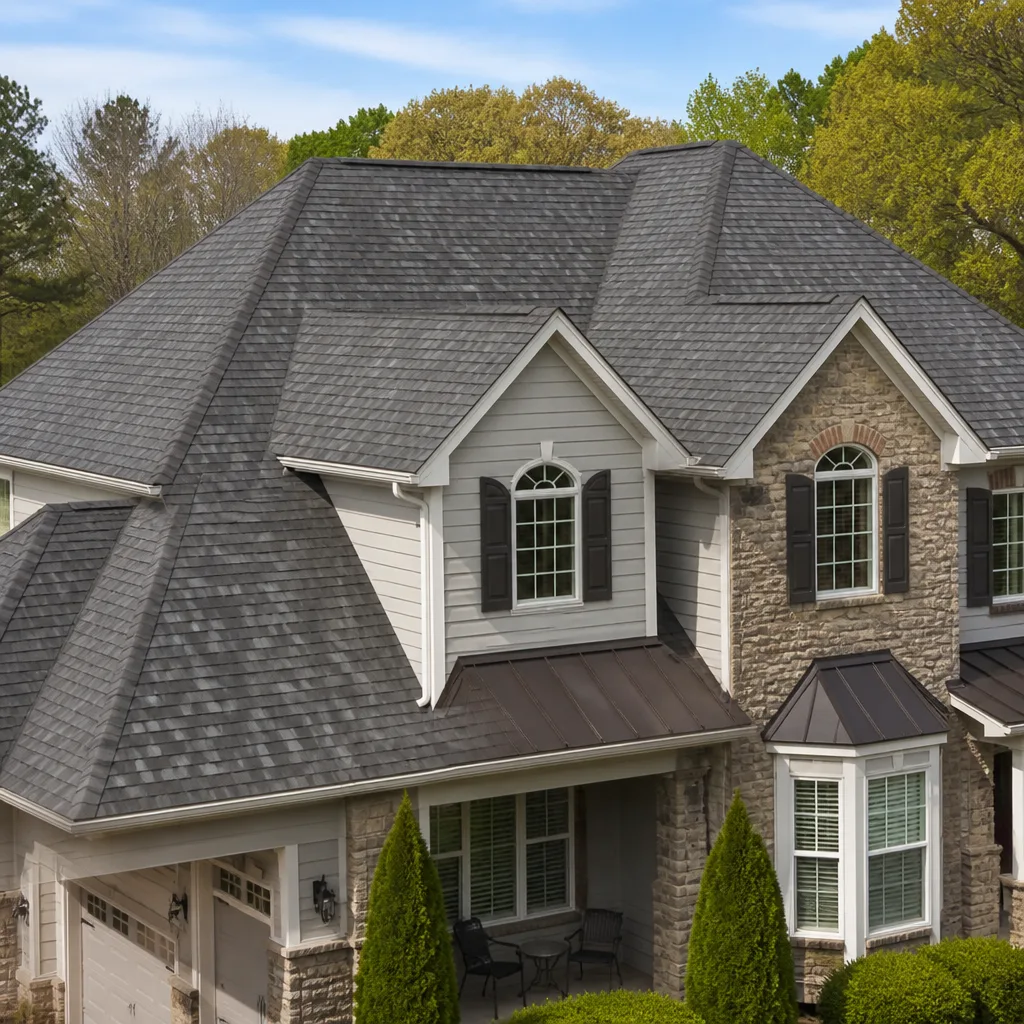
Asphalt Shingle Roofs (Most Common in Hollywood)
Asphalt shingles, including architectural lines from GAF, CertainTeed, Owens Corning, and IKO, dominate Hollywood’s residential roofing stock. Their warning sign timeline is the most predictable:
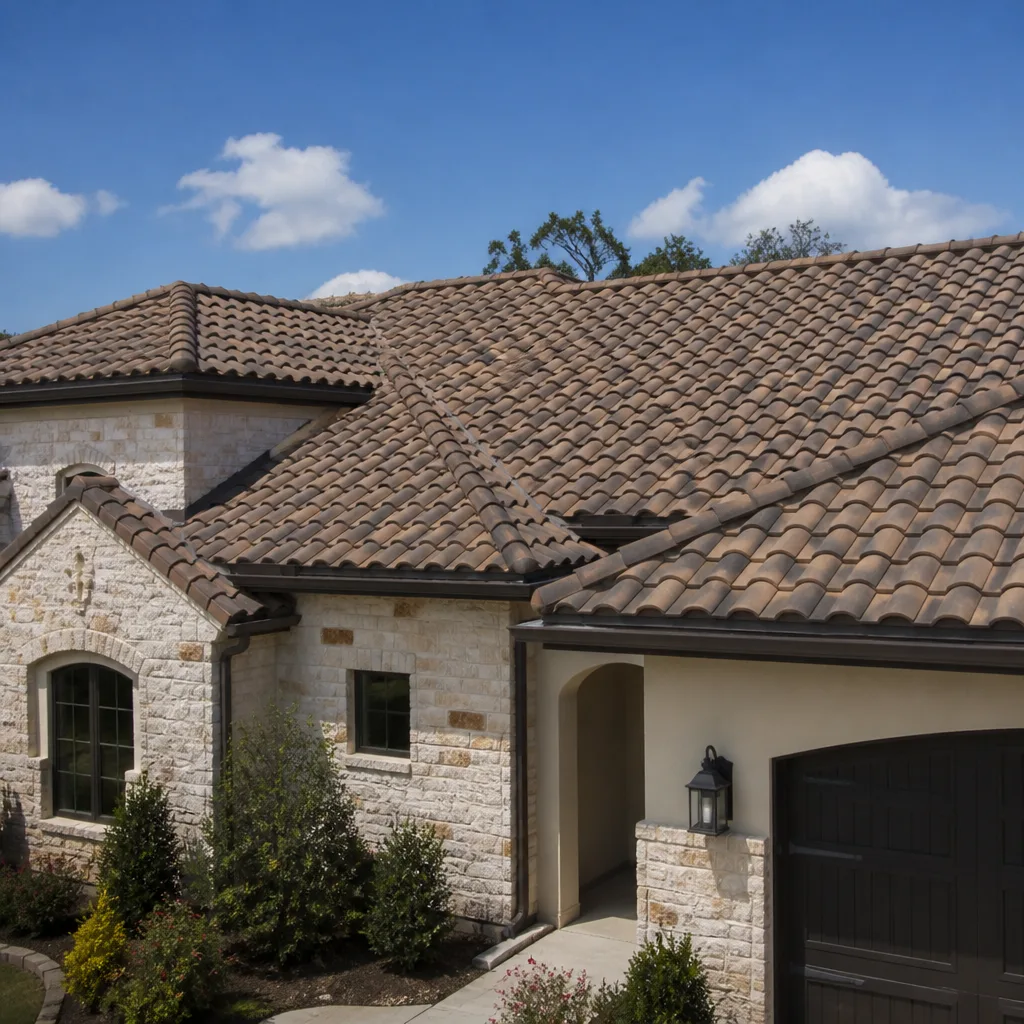
Tile Roofs (Common in the Hollywood Hills)
Clay and concrete tile roofs – including Boral and select tile lines from other manufacturers – have a much longer lifespan than asphalt, but they have a different and often overlooked weakness: the underlayment. Tile itself may last 50 years or more. The underlayment beneath it rarely survives 30 years in Hollywood. Warning signs for tile roofs are:
Tile roofs in Hollywood benefit from underlayment replacement as a standalone project on a 20 – 30 year cycle, independent of the tile itself. That is an issue most generic roofing guides ignore entirely, but it is one of the most common findings on our Hollywood inspections.
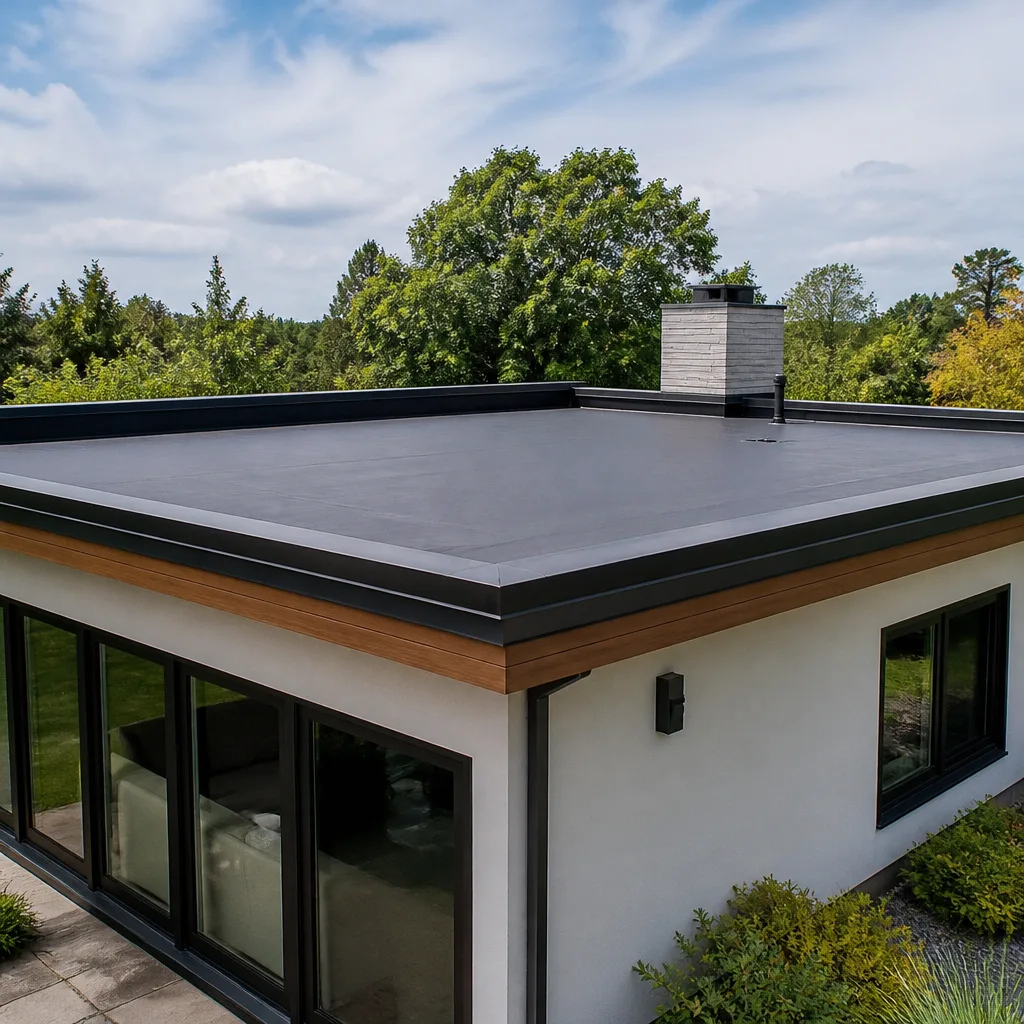
Flat or Low-Slope Roof Sections
Many Hollywood homes, particularly mid-century builds and additions, have flat or low-slope sections with modified bitumen, built-up roofing, or single-ply membranes. The warning signs here are entirely different from sloped roofs:
Material matters. The warning sign that means “minor repair” on a GAF asphalt shingle roof can mean “immediate replacement” on a flat membrane. We assess each material on its own terms because the failure mode is never the same.
Common Mistakes to Avoid
Hollywood homeowners make predictable errors when they first notice a roofing warning sign. Most of these mistakes come from good intentions and incomplete information. Here are the ones we see most often, and what to do instead.
When to Call a Professional
You will need professional assessment when your roof is showing structural warning signs, when interior water intrusion is active, or when the roof has entered the decision zone of its material-specific lifespan and you need a condition report to plan ahead. Some homeowners hesitate because they do not want to be “sold a new roof.” That hesitation makes sense, and it is exactly why Hollywood Roofing Co offers roof inspection as a standalone service, separate from any repair or replacement conversation. The inspection tells you what you have. You decide what to do with that information.
Call a professional same-day if you see sagging decking, daylight through the attic, or active leaking that continues after rain stops. Schedule an inspection within 30 days if you see granule-heavy gutters, edge curling on sun-exposed slopes, or flashing gaps that have not yet leaked. Hollywood Roofing Co offers free estimates in Hollywood – call (833) 589-7971. We will assess the roof, give you a written line-item condition report, and match any needed work to the right material for your home and budget from the seven brands we install.
Frequently Asked Questions
Minor targeted repairs in Hollywood – flashing resealing, vent boot replacement, or replacing a few missing shingles – typically run between $350 and $900 depending on access and materials. More extensive slope-specific repair work, such as replacing a sun-damaged roof plane or re-flashing a chimney, commonly ranges from $1,500 to $4,500. The exact figure depends on what the Roof Inspection in Hollywood reveals, and we provide written line-item estimates so you know exactly what you are paying for. Call (833) 589-7971 for a free estimate on your specific repair.
Our pricing is a fixed quote, not an estimate that drifts upward. The written line-item quote you receive before work begins is the price you pay unless the project scope changes because we discover damage that was not visible during the initial assessment. If that happens, we show you what we found, explain the revised price, and get your written approval before any additional work proceeds. No change orders happen without your explicit consent.
The determining factors are the roof’s age, the extent of the damage, and the condition of the underlying decking and underlayment. A roof under 15 years old with localized damage is typically a repair candidate. A roof over 20 years old with multiple structural warning signs, interior leaks, or compromised decking is usually a replacement candidate. We show you the evidence in the inspection report and let you make the decision at your own pace. Our Roof Replacement in Hollywood service is available when replacement is the right answer, and our Roof Repair in Hollywood work handles everything short of it.
The most common warranty issue we encounter is not a manufacturing defect but improper installation by the previous contractor. Manufacturer warranties from GAF, CertainTeed, Owens Corning, and IKO cover material defects, but they do not cover workmanship errors such as incorrect nailing patterns, unsealed flashing joints, or inadequate underlayment. This is why we recommend homeowners verify the installation quality during an inspection, not just the shingle brand.
We recommend a professional roof inspection every three years for roofs under 15 years old, and every year for roofs past the 15-year mark. Homes in the Hollywood Hills with tile roofs and older underlayment should also consider annual inspection if the underlayment is beyond 20 years old. The inspection cost is minor compared to the repair cost that follows an undetected issue.
For roof repairs that are limited in scope, permits are often not required by the City of Los Angeles. For full roof replacements, a building permit is generally required, and we handle the permit application and manage any required inspections through the city. We include permit fees in our written estimates for replacement work so there are no surprise line items later. Call (833) 589-7971 and we’ll tell you what your specific project requires.
The Bottom Line
Your roof talks. The early warning signs – granule-heavy gutters, edge curling on sun-blasted slopes, ceiling stains that come and go with the rain – are not random annoyances. They are specific, readable indicators of what is failing and how much time you have. The skill is in reading them correctly. Cosmetic issues let you wait. Structural issues do not. Hollywood’s climate adds its own signature: thermal cycling that attacks flashing, UV that ages sun-exposed slopes faster than shaded ones, and rain patterns that conceal leak sources. Learn the signs, document what you find, and get a professional verdict when you are unsure. The difference between a $600 repair and a full replacement is often just twelve months of attention.
Written by the team at Hollywood Roofing Co, serving Hollywood since 2016.
See the difference
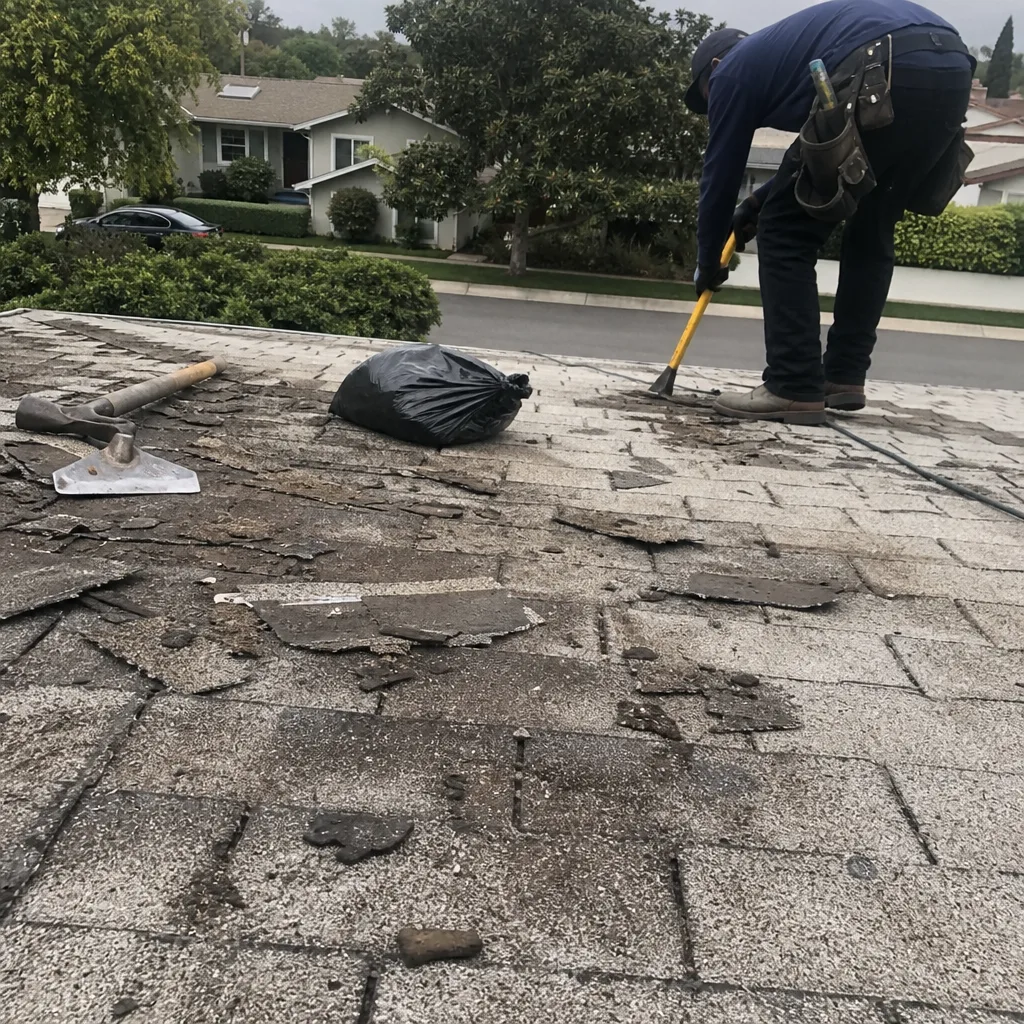 Before
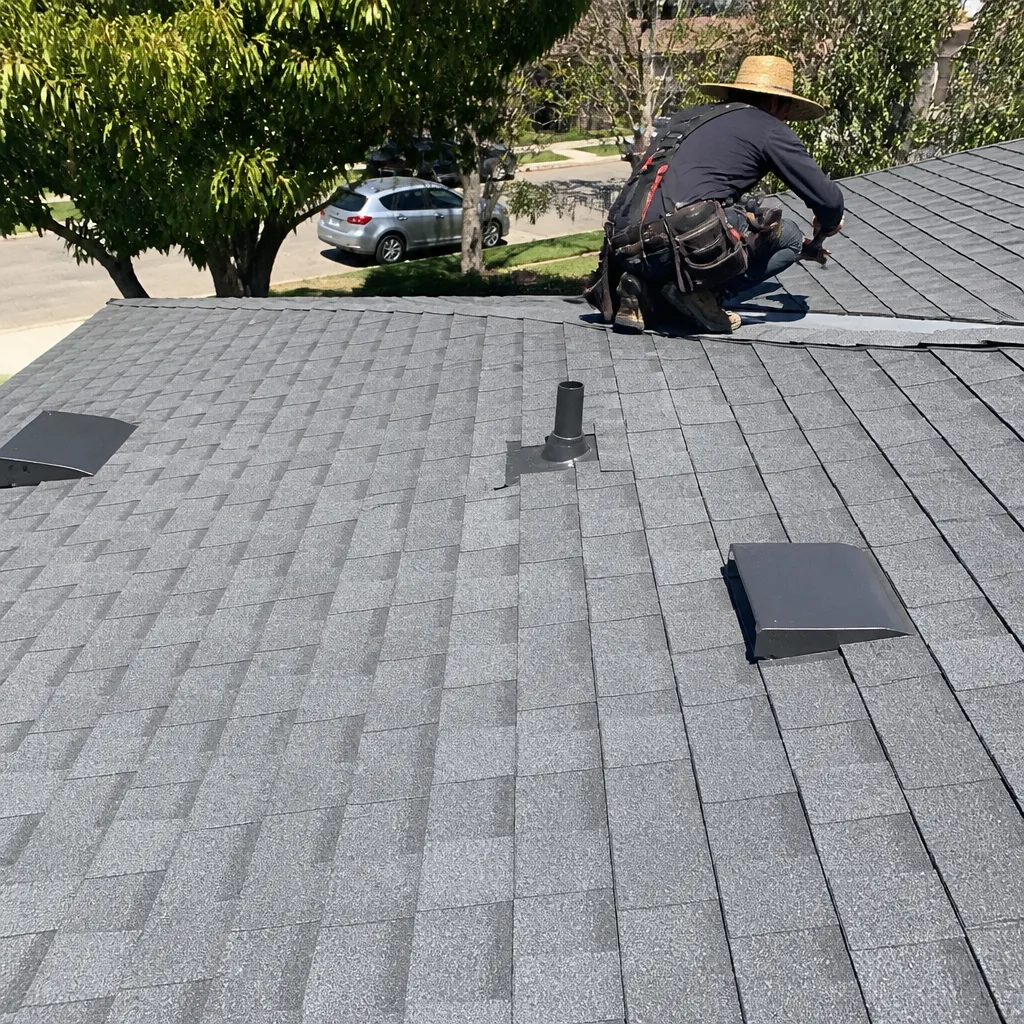 After
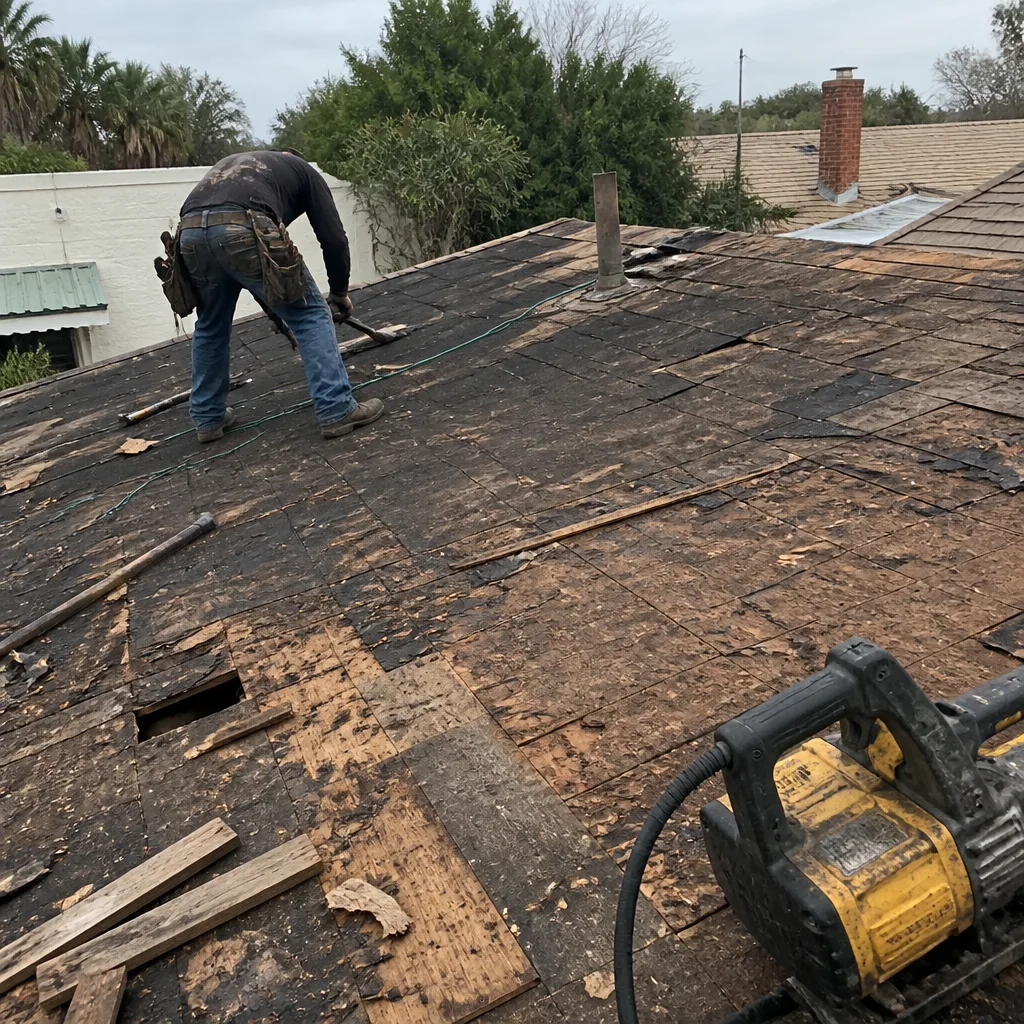 Before
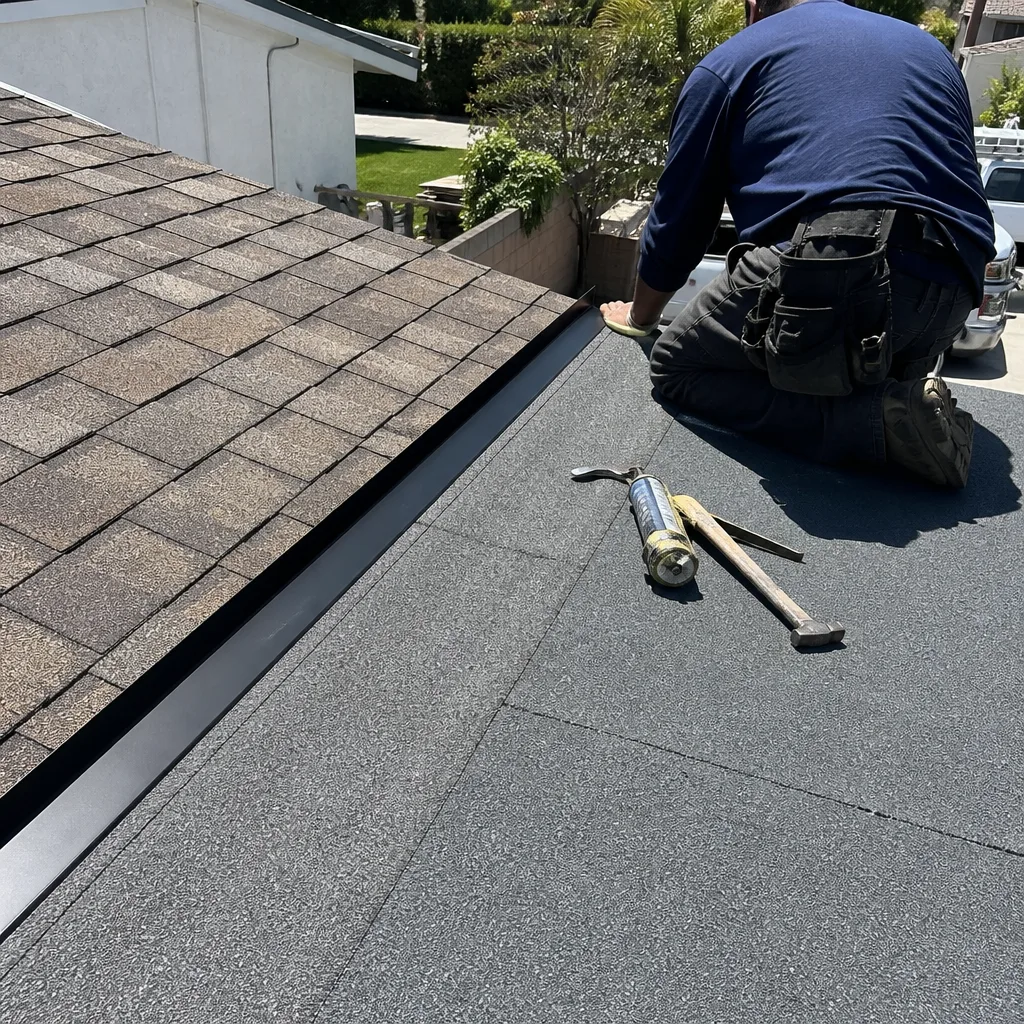 After
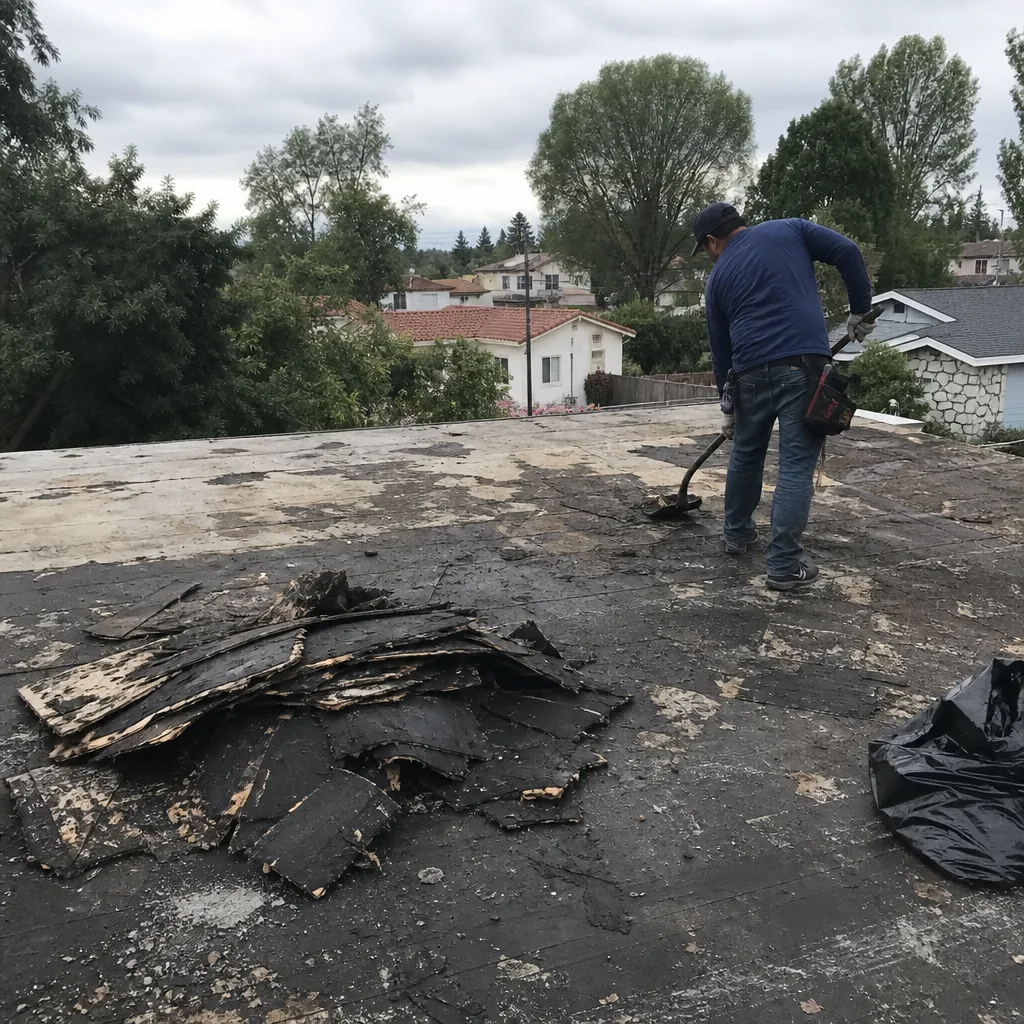 Before
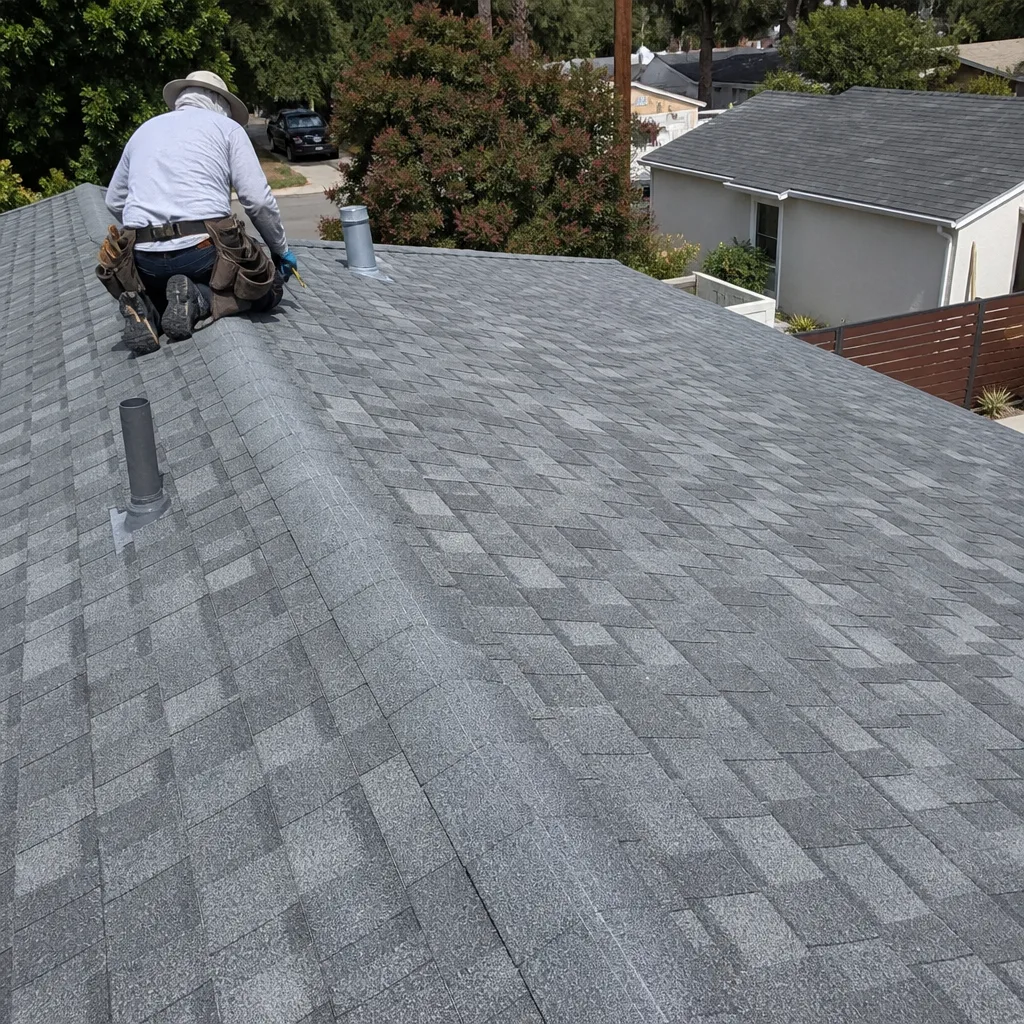 After