Emergency Roof Repair Near Me: What Hollywood Homeowners Should Do First
If you have water coming through your ceiling in Hollywood, start by containing the interior damage with buckets and tarps, then document everything with photos and video before you move anything. Your next call should be to your insurance company, not a contractor. Getting this sequence wrong is the most expensive mistake we see after storms in the Hollywood Hills, Beachwood Canyon, and the flats. If the damage is severe and you’d rather have help right now, call (833) 589-7971.
The worst decision Hollywood homeowners make after a roof emergency isn’t about the roof. It’s signing a contractor’s authorization form before they’ve called their insurance company. We’ve watched neighbors hand away claim control because a persuasive stranger showed up at the door with a clipboard and a sense of urgency. Here’s what to do instead.
The First 90 Minutes: A Sequence That Protects Your Claim
The 90 minutes after a roof emergency are the most consequential. Not for the repair work itself. For the documentation, temporary protection, and contractor decisions that determine whether your insurance claim succeeds and whether you avoid a predatory storm chaser. Here’s the order that works.
Step 1: Stop the interior bleeding first
Move furniture, electronics, and anything you care about out of the water’s path. Put buckets under active drips. If the ceiling is bulging with water, poke a small hole with a screwdriver to release it in a controlled spot rather than letting it collapse across the room. Then lay plastic sheeting or a tarp over furniture that can’t be moved. In Hollywood homes built in the 1920s and 1930s, plaster ceilings hold surprising amounts of water, and they come down hard when they finally let go.
This is mitigation, not repair. Insurance expects it. They want you to prevent further damage. They don’t want you tearing out drywall or pulling up flooring before an adjuster sees it.
Step 2: Photograph everything before you touch anything else
Walk the interior and photograph every wet spot, stain, drip, and bulge. Use your phone’s timestamp feature or shoot a video narrating what you see. Then go outside and photograph the roof area from the ground. Do not climb a ladder onto a wet roof in Hollywood after a storm. Clay tile from the 1940s gets slick, and the pitch on hillside homes in Beachwood Canyon and Laurel Canyon makes conditions worse.
Take wide shots showing the whole roof, then close-ups of any visible damage, lifted flashing, missing shingles, or debris. Your adjuster may never see the damage in person, and these photos become your claim’s foundation.
Step 3: Call your insurance company before any contractor
This is the step most people get backwards. A contractor who shows up unsolicited after a storm will often ask you to sign a work authorization before you’ve spoken to your insurer. That signature can bind you to a scope of work your insurance hasn’t approved and a price you haven’t compared. Once signed, you’ve given away leverage.
Call your insurance company first. Tell them you have roof damage and need to file a claim. Ask specifically: “Do I have coverage for emergency tarping and temporary mitigation?” and “How do I document temporary repairs so they’re covered?” Write down your claim number and the adjuster’s name and direct line.
Emergency Tarping: What’s “Reasonable Mitigation” vs. Unauthorized Repair
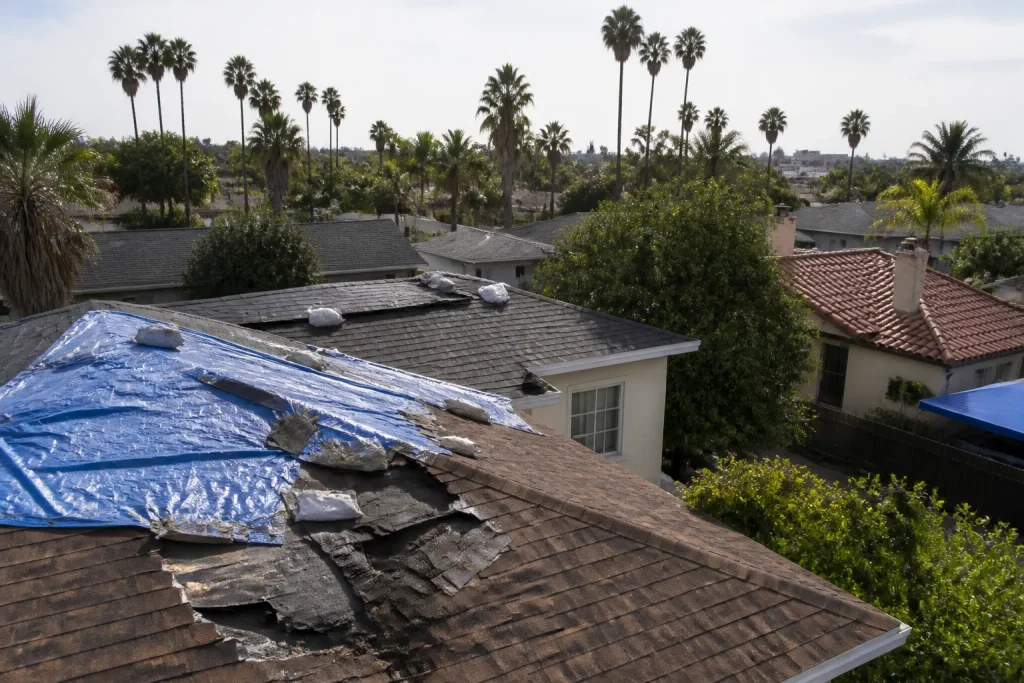
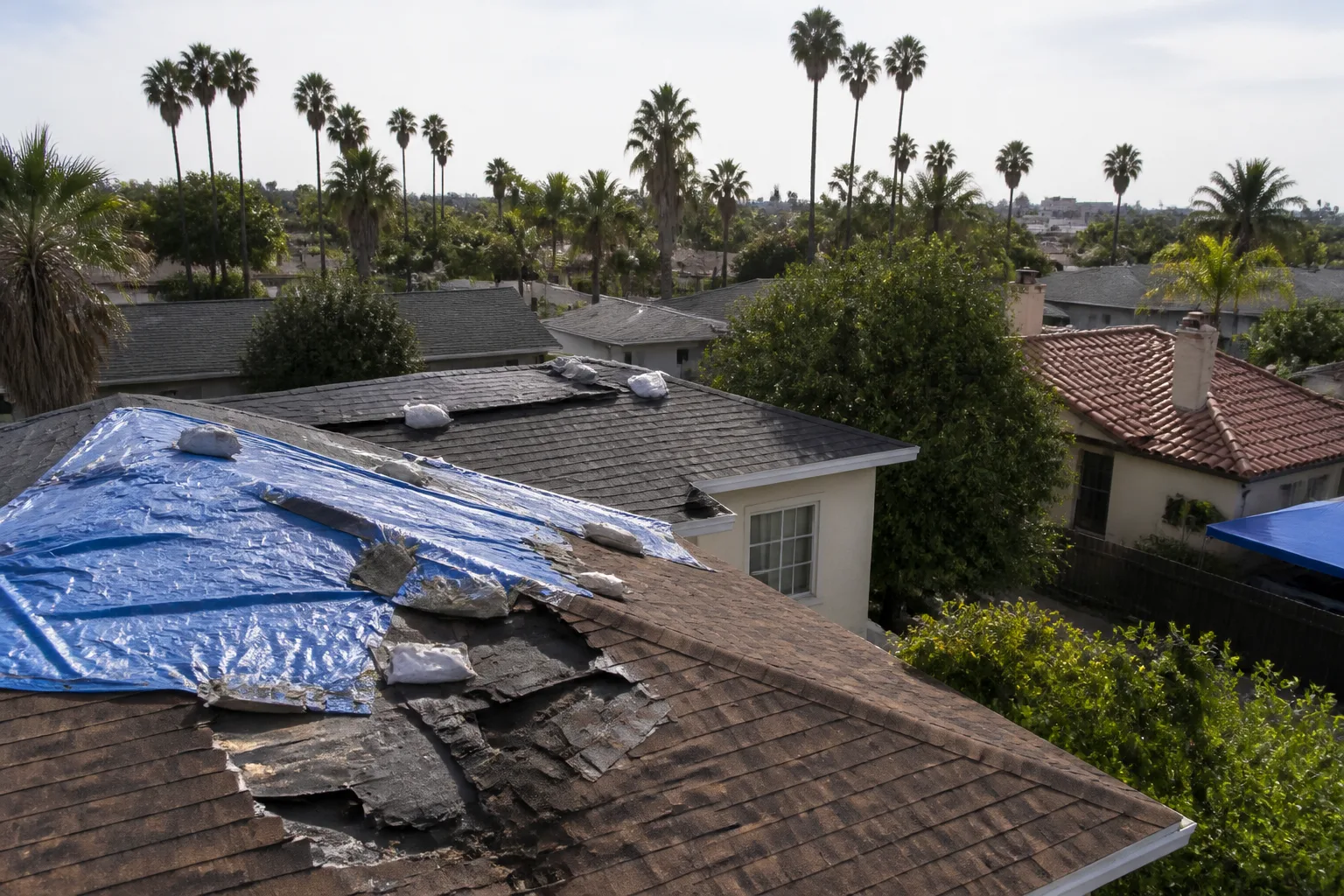
Insurance policies generally require you to prevent further damage. A tarp over a leaking section is reasonable mitigation. Replacing shingles, rebuilding flashing, or patching the roof yourself is not. That’s repair work, and doing it before your adjuster documents the damage can reduce or void coverage for that portion of the claim.
Here’s a simple test Hollywood homeowners can apply. If the action temporarily stops water from getting in, it’s mitigation. If it permanently restores the roof’s water-shedding function, it’s repair. Tarping is mitigation. Nailing down new shingles is repair. Keep everything in the mitigation column until your adjuster has seen the damage and you know what’s covered.
If you tarp the roof yourself, photograph the tarp in place and keep receipts for the tarp, sandbags, and fasteners. Most policies reimburse reasonable mitigation costs. If you’re not comfortable on a ladder, that’s the right instinct. Call Roof Repair in Hollywood professionals to handle the tarping and document it properly. The cost of professional tarping is almost always less than the deductible headache of a secondary leak.
A real-world note from our work across Hollywood. We pulled a tarp off a four-unit building over near Whitley Heights last winter where the owner had used blue painter’s tape to hold the tarp edges down. The tape failed in the first overnight wind, and the second leak caused more damage than the first. Tarps need to be secured with wooden furring strips or sandbags along the edges and overlap the ridge by at least four feet. If you’re going to tarp, tarp it right.
Storm Chasers: The Contractors Who Appear After Every LA Rain Event
Within 24 to 48 hours after a significant rain or wind event in Los Angeles, out-of-state contractors descend on neighborhoods from Los Feliz to the Hollywood Dell. They knock on doors, point at your roof, and offer a “free inspection.” Some are legitimate. Many are not. Here’s how to tell the difference before you let anyone on your property.
Red flags that take 5 minutes to spot
- Out-of-state plates or out-of-state license numbers. California roofing contractors must be licensed by the CSLB. Ask for the license number and check it at cslb.ca.gov. Takes five minutes on your phone.
- Pressure to sign today. Any contractor who needs a signature before you’ve talked to your insurance company or compared a second bid is working a script, not a roofing project.
- No local address. Ask where their office is. If the answer is a P.O. box or a city three states away, that tells you something.
- Promises that insurance will cover everything. Nobody can promise what your policy covers before an adjuster reviews the damage. A contractor who guarantees full coverage is lying or doesn’t understand how claims work. Neither is good.
- Discounts for “today only” or “storm special” pricing. Legitimate roofing companies in Hollywood have steady demand. They don’t run storm specials.
The CSLB lookup is the single most underused tool in California roofing. Every licensed contractor has a public record showing license status, workers’ comp coverage, and any disciplinary actions. Check it before you sign anything. If the person at your door won’t give you a license number, close the door.
What to Tell Your Insurance Adjuster (And What Not to Say)
The first call with your adjuster sets the tone for your entire claim. Specific language protects you. Vague language can accidentally limit your coverage. Here’s what we’ve learned helping Hollywood homeowners through claims.
Say this: “I have water entering my home from roof damage sustained during [specific storm/date]. I’ve documented the interior and exterior damage with photos. I’ve taken temporary mitigation steps to prevent further damage. I need to schedule an adjuster inspection.”
Avoid this: “It’s been leaking for a while” or “I think it might be old damage” or “It’s not that bad.”
Those phrases can trigger “pre-existing condition” or “deferred maintenance” exclusions that reduce your payout. If you genuinely don’t know when the damage occurred, say “I noticed the leak on [date].” Stick to observable facts. Don’t speculate about causes. Let the adjuster draw their own conclusions from the evidence.
Also ask the adjuster directly: “Will my policy cover the cost of emergency tarping and temporary mitigation?” and “Do you have preferred contractors for this work, or can I choose my own?” In California, you have the right to choose your own contractor. The insurance company can’t require you to use their preferred vendor, though they may offer incentives to do so.
Verifying a Hollywood Roofing Contractor in 15 Minutes
Once your claim is filed and your adjuster visit is scheduled, you need a contractor. Here’s the verification sequence we recommend to every Hollywood homeowner, whether they hire us or someone else.
- CSLB license check (5 minutes). Go to cslb.ca.gov, enter the license number, and confirm the license is active, the classification is C-39 (roofing), and there’s no disciplinary record. Check that the name on the license matches the name on the contract.
- Insurance verification (5 minutes). Ask for a certificate of insurance naming you as additionally insured. Confirm general liability and workers’ comp coverage. If a contractor doesn’t carry workers’ comp and someone falls off your roof, that’s your homeowner’s policy on the hook.
- Review signals (5 minutes). Look for recent Google reviews from Hollywood, Los Feliz, Silver Lake, or the Hollywood Hills. Read the negative ones, not just the positive ones. Look for patterns: communication issues, missed deadlines, change orders after the fact. Do the reviews mention the actual work, or are they vague five-star blurbs?
This process screens out most of the contractors who cause problems. It also gives you a baseline for comparing bids because you’re evaluating apples to apples.
Why Material Choice Matters Even in an Emergency
When a roof is actively leaking, the instinct is to patch it as fast as possible with whatever’s available. That’s understandable. But the emergency repair you make today becomes part of your roof’s long-term performance, especially if the damage is extensive enough that you’re looking at a partial or full replacement.
This is where brand-agnostic guidance matters. If a contractor only installs one manufacturer’s products, their recommendation is limited by their inventory, not your home. We work across seven leading brands, including GAF, CertainTeed, and Atlas on the premium side, and Tamko and IKO for budget-conscious projects. Having the full range means the material recommendation is matched to your home’s architecture, your budget, and the specific weather exposure of your street. A hillside home in the Hollywood Hills faces different wind and sun than a flat-roof condo in the flats, and the right material for one isn’t automatically right for the other.
If you’re not sure whether your emergency calls for a patch or something bigger, a Roof Inspection in Hollywood gives you an honest condition report without the pressure of an immediate sale. We offer it as a standalone service precisely because homeowners deserve to know what they’re working with before deciding anything.
When to Call a Pro
You should call a professional if any of these apply: the leak is large enough that you can’t contain it with buckets and tarps; you see daylight through the roof from inside the attic; you have ceiling collapse or sagging; you’re not comfortable on a ladder; or your insurance claim requires a contractor’s written estimate before you can proceed. Roof work is dangerous work, and wet roofs in Hollywood are particularly treacherous. A steep hillside pitch turns a simple shingle check into a fall hazard.
If you’re in Hollywood and need a professional assessment, we handle everything from the first emergency tarp to the final inspection on a Roof Replacement in Hollywood. Same team, start to finish, no handoff between contractors who point fingers at each other.
The Bottom Line
The 90 minutes after a roof emergency decide whether your claim gets paid and whether you keep control of your repair process. Contain the interior damage. Document everything. Call insurance before signing anything with a contractor. Verify any contractor’s license, insurance, and local reputation before work starts. And choose materials based on what’s right for your Hollywood home, not what a single supplier happens to stock.
If you’re in Hollywood and need help, Hollywood Roofing Co offers free estimates. Call (833) 589-7971 and we’ll walk you through the next steps, whether that’s an emergency tarp, a claim-ready inspection report, or a full repair.
Frequently Asked Questions
Emergency tarping in Hollywood typically costs between $300 and $700 depending on roof size, pitch, and accessibility. Actual repair costs vary widely based on the extent of the damage: a simple shingle replacement might run $350 to $600, while storm damage requiring structural work can range from $2,000 to $15,000 or more. Most homeowners’ policies cover the repair cost minus your deductible once the claim is approved. Call (833) 589-7971 for a free estimate based on your specific damage.
Most California homeowners’ policies cover sudden, accidental roof damage from storms, wind, or falling debris, minus your deductible. They also typically reimburse reasonable emergency mitigation costs like tarping. What they don’t cover is damage from deferred maintenance or pre-existing conditions, which is why careful documentation and precise language in your first call matter so much. The key question to ask your adjuster is: “Does my policy cover emergency tarping and temporary mitigation?” Get the answer in writing or note the date, time, and name of who said yes.
A properly secured tarp can protect a roof for 30 to 90 days, which is usually enough time to complete the insurance claim process and schedule permanent repairs. Beyond 90 days, tarps begin to degrade from UV exposure and wind, and leaks can develop underneath. Hollywood’s strong spring winds and intense summer sun shorten tarp life compared to coastal areas. If your repair timeline extends beyond a month, ask your contractor to check the tarp periodically. If you’re waiting on a full Roof Replacement in Hollywood, ask about temporary weatherproofing options that last longer than a standard tarp.
Yes. California law gives you the right to choose your own contractor for insurance repairs. Your insurance company can recommend preferred vendors, but they cannot require you to use them. If an adjuster or insurance representative tells you that you must use their contractor, that’s incorrect and worth pushing back on. The important thing is choosing a licensed, insured contractor with a verifiable Hollywood or Los Angeles track record. The CSLB license check and review screening process we described above works for any contractor you’re considering. For exact pricing on your project, call (833) 589-7971.
Written by the team at Hollywood Roofing Co, serving Hollywood since 2016.
Need Roofing Help?
Call Hollywood Roofing Co — licensed & insured, here with fast after-hours help in Hollywood.
(833) 589-7971